
Kuwait Engages Air Defenses Against Drone Attacks Amid Iran-Gulf Tensions
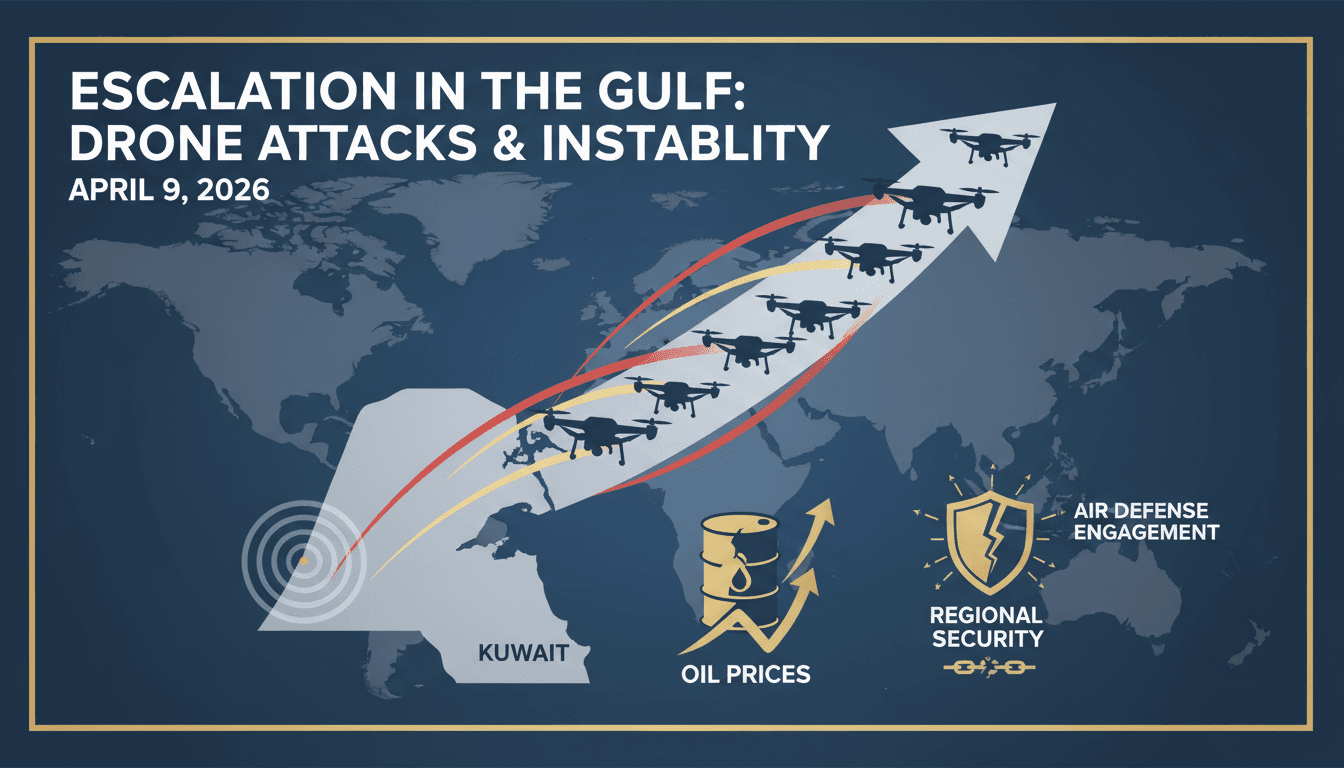
Here's what it means for you.
If you’re involved in global trade or energy markets, the ongoing conflict in the Gulf could impact supply chains and oil prices.
Why it matters
The escalation of drone attacks in the Gulf region threatens vital infrastructure and could disrupt global oil supplies.
What happened (in 30 seconds)
- Kuwait's air defenses intercepted hostile drones targeting vital facilities on April 9, 2026.
- Explosions were reported as part of the interception efforts, with no major casualties confirmed.
- This incident follows a U.S.-brokered ceasefire that has failed to halt Iranian drone and missile attacks.
The context you actually need
- The conflict escalated after U.S. and Israeli strikes on Iranian targets began on February 28, 2026, leading to increased tensions in the region.
- Kuwait's airspace has seen multiple drone incursions, with 28 drones intercepted on April 8 alone, indicating a sustained threat to Gulf states.
- Regional airspace restrictions have been heightened, affecting travel and trade, particularly in the UAE.
What's really happening
The recent drone incursions into Kuwait's airspace are a direct consequence of the escalating conflict between Iran and Gulf states, particularly following the U.S. and Israeli military actions against Iranian assets. The U.S.-brokered ceasefire, which was intended to provide a temporary respite, has proven ineffective as Iran continues its aggressive tactics, utilizing drones and missiles to target critical infrastructure across the Gulf.
Kuwait's Ministry of Defense confirmed that its air defenses were actively engaging these threats, underscoring the urgency of the situation. The interception of drones is not just a defensive measure; it reflects a broader strategy by Gulf states to protect their vital oil and power infrastructure from Iranian proxies. The successful interception of 28 drones on April 8 highlights the scale of the threat, as these drones were reportedly aimed at oil, power, and desalination facilities, which are essential for both local and global economies.
The ongoing attacks are testing the limits of the ceasefire and raising questions about the stability of the region. The volatility in oil markets, evidenced by fluctuations in Brent crude prices, indicates that investors are on high alert. Any disruption to oil supply from the Gulf could have far-reaching consequences, impacting global energy prices and economic stability.
Moreover, the situation is compounded by the involvement of Houthi forces, which have been launching attacks since late March. Their participation adds another layer of complexity to the conflict, as they are aligned with Iran and have the capability to strike further afield, potentially affecting other Gulf states like the UAE and Saudi Arabia.
As the situation unfolds, the implications for regional security and international trade are significant. The ongoing threat of drone attacks necessitates heightened security measures across Gulf states, which may lead to increased military spending and a reevaluation of defense strategies. For businesses and investors, the uncertainty surrounding the ceasefire and the potential for further escalations could influence market dynamics, particularly in the energy sector.
Who feels it first (and how)
- Energy sector professionals: Fluctuations in oil prices directly impact profitability and operational costs.
- Travel and logistics companies: Airspace restrictions and security alerts can disrupt operations and lead to increased costs.
- Local residents in Kuwait and the UAE: Heightened security measures and potential evacuations can affect daily life and economic stability.
What to watch next
- Continued drone incursions: Monitoring the frequency and scale of drone attacks will indicate the level of threat to Gulf infrastructure.
- Oil price volatility: Fluctuations in Brent crude prices will reflect market reactions to ongoing tensions and potential supply disruptions.
- International diplomatic efforts: Watch for any new ceasefire negotiations or interventions from global powers that could alter the conflict dynamics.
Kuwait's air defenses are actively engaging hostile drones.
Continued tensions and drone attacks will persist, affecting regional security.
The effectiveness of diplomatic efforts to stabilize the situation remains uncertain.
Frequently Asked Questions
- Why it matters?
- The escalation of drone attacks in the Gulf region threatens vital infrastructure and could disrupt global oil supplies.
- What happened (in 30 seconds)?
- Kuwait's air defenses intercepted hostile drones targeting vital facilities on April 9, 2026. Explosions were reported as part of the interception efforts, with no major casualties confirmed. This incident follows a U.S.-brokered ceasefire that has failed to halt Iranian drone and missile attacks.
- What's really happening?
- The recent drone incursions into Kuwait's airspace are a direct consequence of the escalating conflict between Iran and Gulf states, particularly following the U.S. and Israeli military actions against Iranian assets. The U.S.-brokered ceasefire, which was intended to provide a temporary respite, has proven ineffective as Iran continues its aggressive tactics, utilizing drones and missiles to target critical infrastructure across the Gulf. Kuwait's Ministry of Defense confirmed that its air def
- Who feels it first (and how)?
- Energy sector professionals: Fluctuations in oil prices directly impact profitability and operational costs. Travel and logistics companies: Airspace restrictions and security alerts can disrupt operations and lead to increased costs. Local residents in Kuwait and the UAE: Heightened security measures and potential evacuations can affect daily life and economic stability.
- What to watch next?
- Continued drone incursions: Monitoring the frequency and scale of drone attacks will indicate the level of threat to Gulf infrastructure. Oil price volatility: Fluctuations in Brent crude prices will reflect market reactions to ongoing tensions and potential supply disruptions. International diplomatic efforts: Watch for any new ceasefire negotiations or interventions from global powers that could alter the conflict dynamics.
Arabic-language UAE newspaper coverage focused on domestic affairs, public institutions, business, society, and regional developments.
"Al Khaleej coverage generally reflects a mainstream UAE editorial lens with strong attention to public affairs, institutions, and regional developments."
— A47 Editor
الكويت: دفاعاتنا الجوية تتعامل حالياً مع هجمات بمسيرات معادية
The Kuwaiti Ministry of Defense announced on Thursday that the country is currently facing attacks from hostile drones. Colonel Saud Al-Autwan, the ministry's spokesperson, confirmed that the air defenses are actively responding to these incursions, ...
Arabic-language political and world news coverage for UAE readers.
"Emarat Al Youm world coverage usually presents international developments through a UAE and Arab audience lens."
— A47 Editor
الدفاع الكويتية: الدفاعات الجوية تتعامل حالياً مع هجمات معادية من مسيرات استهدفت منشآت حيوية الدفاع الكويتية: الدفاعات الجوية تتعامل حالياً مع هجمات معادية من مسيرات استهدفت منشآت حيوية
The Kuwaiti Ministry of Defense announced that the country's air defenses are currently engaged in responding to hostile drone attacks targeting vital installations. This development highlights ongoing security challenges faced by Kuwait amid regiona...