
Trump Dismisses War Crimes Concerns as US-Iran Conflict Escalates
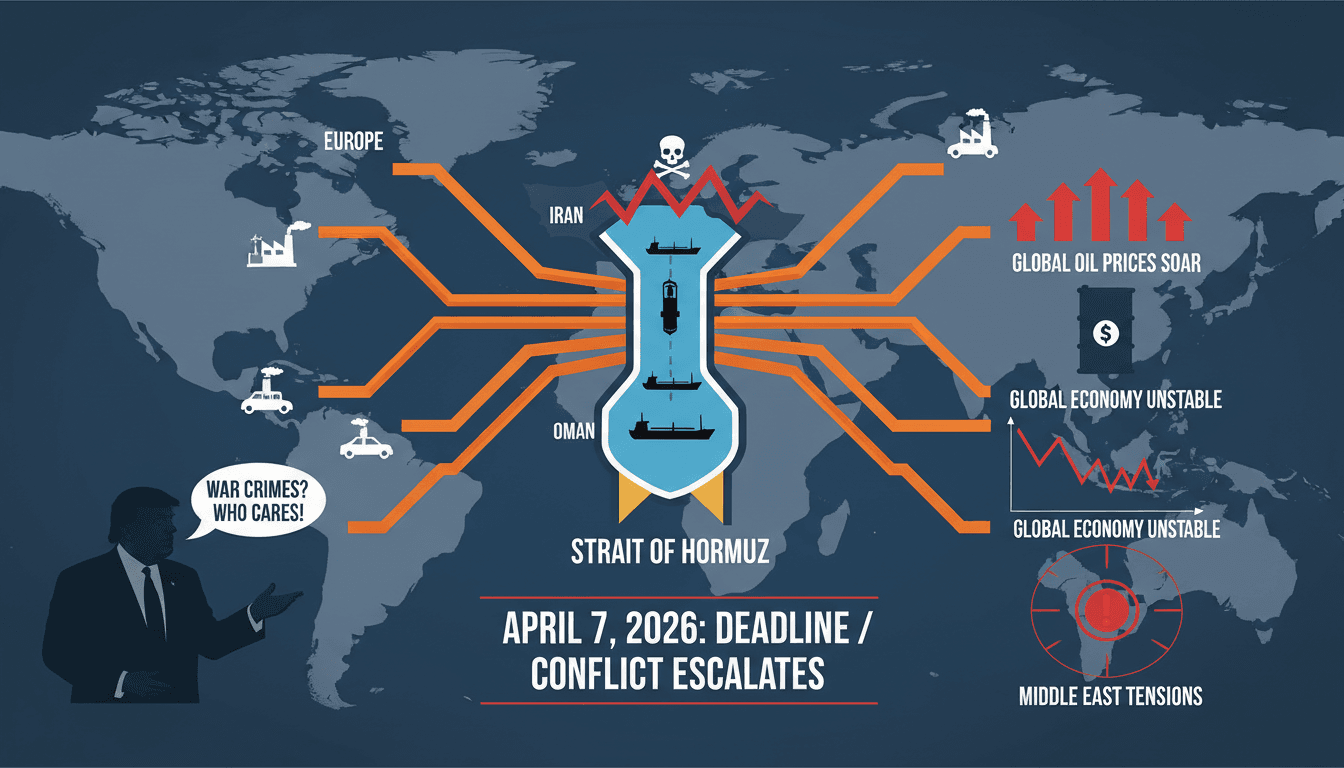
Here's what it means for you.
As tensions escalate in the Middle East, you could see significant increases in fuel prices and economic uncertainty in your region.
Why it matters
The ongoing conflict threatens global oil supply chains, directly impacting energy prices and economic stability worldwide.
What happened (in 30 seconds)
- On April 7, 2026, President Trump dismissed concerns over war crimes as he set a deadline for Iran to reopen the Strait of Hormuz.
- Iran rejected a proposed ceasefire, insisting on a permanent resolution to the conflict that has disrupted global oil supplies.
- US-Israeli airstrikes on April 6 killed over 25 individuals in Iran, escalating military tensions and prompting Iranian missile responses.
The context you actually need
- The conflict began on February 28, 2026, with surprise US-Israeli airstrikes targeting Iranian nuclear facilities and leadership, leading to Iran's closure of the Strait of Hormuz.
- The Strait of Hormuz is a critical shipping lane, through which approximately 20% of the world's oil passes, making its security vital for global energy markets.
- Negotiations for a ceasefire have stalled, with Iran demanding permanent solutions and the US maintaining aggressive military posturing.
What's really happening
The current conflict between the US and Iran is rooted in a complex web of geopolitical tensions, historical grievances, and strategic interests. The initial airstrikes by the US and Israel on February 28 targeted key Iranian nuclear sites and leadership figures, which Iran perceived as an existential threat. This prompted Iran to retaliate by closing the Strait of Hormuz, a vital maritime corridor for global oil shipments, effectively disrupting energy supplies and sending shockwaves through international markets.
As the situation escalated, President Trump’s ultimatum for Iran to reopen the Strait by April 7, 2026, reflects a broader strategy to exert maximum pressure on Tehran. By threatening to destroy critical infrastructure, such as bridges and power plants, the US aims to force Iran's compliance while downplaying the potential for war crimes. This stance prioritizes the US's strategic interests in curtailing Iran's nuclear ambitions over humanitarian concerns, which could lead to significant civilian casualties and further destabilization in the region.
Iran's rejection of a temporary ceasefire in favor of permanent demands underscores its unwillingness to capitulate under pressure. The Iranian leadership is likely motivated by a desire to maintain its sovereignty and deter future aggressions, which they view as a continuation of Western imperialism in the region. This dynamic creates a feedback loop of aggression, where military actions provoke further retaliation, perpetuating the cycle of violence.
The economic implications are profound. With oil prices already surging—West Texas Intermediate exceeding $115 per barrel—consumers worldwide are beginning to feel the pinch at the pump. In Dubai, for example, fuel prices have surged by 31-72%, causing immediate financial strain on residents. The UAE stock markets have also reacted negatively, losing approximately $120 billion in value despite elevated oil revenues, indicating a broader economic uncertainty that could affect investment and consumer confidence.
As the conflict continues, the potential for a broader regional war looms, which could further disrupt global oil supplies and exacerbate inflationary pressures. The interconnectedness of global markets means that the repercussions of this conflict will not be confined to the Middle East; they will ripple across economies worldwide, affecting everything from fuel prices to food costs.
Who feels it first (and how)
- Consumers in the UAE: Facing immediate fuel price increases and higher living costs.
- Global oil traders: Experiencing volatility in oil prices, impacting trading strategies and profit margins.
- Investors in Middle Eastern markets: Confronting significant losses and economic uncertainty, which could lead to reduced investment in the region.
- Businesses reliant on oil: Facing increased operational costs, which may lead to higher prices for goods and services.
What to watch next
- Oil price fluctuations: Monitor how the conflict impacts global oil prices, as sustained increases could lead to broader economic repercussions.
- Diplomatic negotiations: Watch for any shifts in diplomatic efforts, particularly from countries like Pakistan that have attempted to mediate the conflict.
- Military escalations: Keep an eye on military developments in the region, particularly any new strikes or retaliatory actions that could further destabilize the situation.
The conflict is ongoing, with military actions and threats from both sides.
Continued volatility in oil prices and economic uncertainty as the situation evolves.
The potential for a broader regional war and its implications for global markets.
Frequently Asked Questions
- Why it matters?
- The ongoing conflict threatens global oil supply chains, directly impacting energy prices and economic stability worldwide.
- What happened (in 30 seconds)?
- On April 7, 2026, President Trump dismissed concerns over war crimes as he set a deadline for Iran to reopen the Strait of Hormuz. Iran rejected a proposed ceasefire, insisting on a permanent resolution to the conflict that has disrupted global oil supplies. US-Israeli airstrikes on April 6 killed over 25 individuals in Iran, escalating military tensions and prompting Iranian missile responses.
- What's really happening?
- The current conflict between the US and Iran is rooted in a complex web of geopolitical tensions, historical grievances, and strategic interests. The initial airstrikes by the US and Israel on February 28 targeted key Iranian nuclear sites and leadership figures, which Iran perceived as an existential threat. This prompted Iran to retaliate by closing the Strait of Hormuz, a vital maritime corridor for global oil shipments, effectively disrupting energy supplies and sending shockwaves through in
- Who feels it first (and how)?
- Consumers in the UAE: Facing immediate fuel price increases and higher living costs. Global oil traders: Experiencing volatility in oil prices, impacting trading strategies and profit margins. Investors in Middle Eastern markets: Confronting significant losses and economic uncertainty, which could lead to reduced investment in the region. Businesses reliant on oil: Facing increased operational costs, which may lead to higher prices for goods and services.
- What to watch next?
- Oil price fluctuations: Monitor how the conflict impacts global oil prices, as sustained increases could lead to broader economic repercussions. Diplomatic negotiations: Watch for any shifts in diplomatic efforts, particularly from countries like Pakistan that have attempted to mediate the conflict. Military escalations: Keep an eye on military developments in the region, particularly any new strikes or retaliatory actions that could further destabilize the situation.
International coverage from The Guardian's global desks.
"The Guardian is known for its progressive editorial stance and in-depth analysis."
— A47 Editor
Middle East crisis live: Iran war ceasefire doesn’t include Lebanon, says Israel; Trump says uranium will be ‘taken care of’
A provisional ceasefire has been agreed upon between the U.S. and Iran, allowing for the reopening of the Strait of Hormuz for two weeks, despite Israel's assertion that the ceasefire does not extend to Lebanon. This agreement follows escalating tens...
Oil, metals, and agriculture: supply/demand headlines, OPEC chatter, inventories, and price action.
"Solid tape for energy and metals traders tracking macro and micro catalysts."
— A47 Editor
Iran rejects ceasefire as Trump ramps up threats ahead of deadline
Iran has officially rejected President Trump's ceasefire proposal as the deadline for reopening the Strait of Hormuz approaches, amidst escalating tensions between the two nations. Trump has issued stark warnings, threatening severe consequences if I...