
Hachette Book Group Cancels Publication of Horror Novel 'Shy Girl' Over AI Concerns
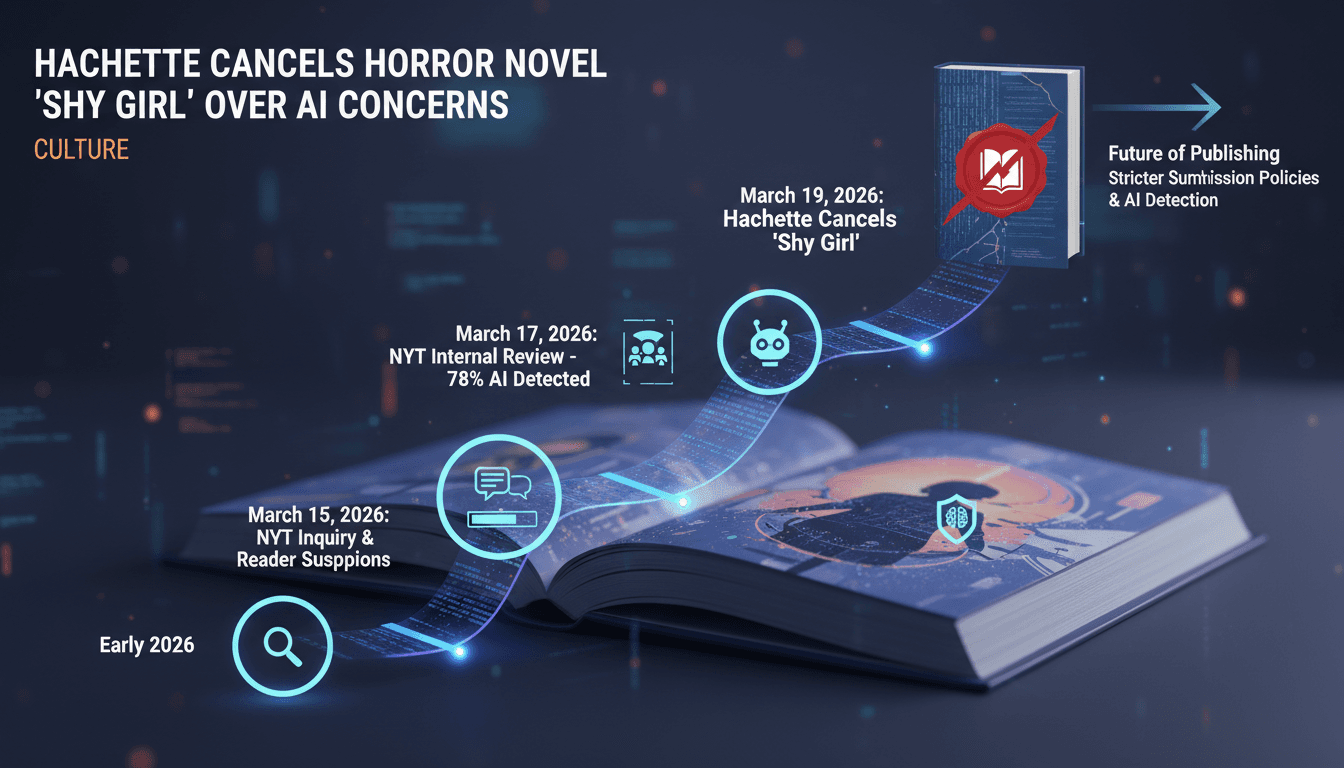
Here's what it means for you.
As the publishing industry grapples with AI-generated content, your reading choices may soon be influenced by stricter authenticity checks.
Why it matters
This incident signals a potential shift in publishing standards, emphasizing the importance of human authorship in a landscape increasingly influenced by AI.
What happened (in 30 seconds)
- March 19, 2026: Hachette Book Group cancels the U.S. release and discontinues the U.K. edition of ‘Shy Girl’ due to allegations of AI-generated content.
- Reader suspicions: Concerns arose from online discussions and a viral YouTube video analyzing the book's prose for AI characteristics.
- Detection results: AI detection tools flagged 78% of the novel's content as potentially generated by artificial intelligence.
The context you actually need
- Self-published origins: ‘Shy Girl’ was initially self-published by Mia Ballard in February 2025 before being acquired by Hachette.
- Viral scrutiny: A January 2026 video essay analyzing the book garnered 1.2 million views, fueling public skepticism.
- Industry unease: The publishing sector is increasingly concerned about undisclosed AI assistance, prompting calls for transparency and human-authorship certifications.
What's really happening
The decision by Hachette to withdraw ‘Shy Girl’ is a landmark moment in the publishing industry, reflecting broader anxieties surrounding the integration of AI in creative processes. As AI tools like ChatGPT become more sophisticated, they raise questions about authorship, originality, and the integrity of literary works. The allegations against ‘Shy Girl’ emerged from a growing trend of scrutiny over AI-generated content, with readers and critics alike becoming more vigilant about the authenticity of the texts they consume.
The internal review that led to Hachette's decision was likely influenced by the viral nature of the allegations. The New York Times inquiry and the subsequent findings from AI detection tools, which flagged 78% of the content as AI-generated, created a perfect storm of public relations pressure. This incident not only highlights the potential pitfalls of AI in creative writing but also sets a precedent for how publishers might handle similar allegations in the future.
Moreover, the fallout from this case is expected to reverberate throughout the publishing industry. As more authors and publishers face scrutiny over the use of AI, there may be a push for stricter submission policies and clearer guidelines regarding the use of AI in writing. This could lead to a bifurcation in the market, where works that are transparently human-authored are favored over those suspected of AI involvement.
The implications extend beyond just this one title; they could reshape how literary works are evaluated, marketed, and consumed. As readers become more discerning, the demand for authenticity in literature may increase, prompting publishers to invest in technologies that can verify authorship and originality. This could create a new layer of complexity in the publishing process, where the use of AI must be disclosed and managed carefully to maintain credibility.
In summary, Hachette's withdrawal of ‘Shy Girl’ is not just about one book; it represents a critical juncture in the ongoing dialogue about AI's role in creative industries. The decision underscores the need for transparency and the potential for stricter industry standards as the lines between human and machine-generated content continue to blur.
Who feels it first (and how)
- Authors: Writers may face increased scrutiny and pressure to prove their work is entirely human-generated.
- Publishers: Traditional publishers will need to adapt to new standards and possibly invest in AI detection technologies.
- Readers: Consumers may become more cautious about the authenticity of the books they choose, impacting sales and readership trends.
What to watch next
- Emergence of AI detection tools: As the demand for authenticity grows, the development and adoption of AI detection technologies will be crucial for publishers.
- Changes in submission policies: Watch for potential shifts in publishing standards that require transparency about AI use in manuscripts.
- Reader sentiment: Monitor how readers react to this incident and whether it influences their purchasing decisions in the future.
Hachette has canceled the U.S. release and discontinued the U.K. edition of ‘Shy Girl’.
Stricter submission policies regarding AI use in publishing will emerge.
The long-term impact on sales and reader trust in the publishing industry remains to be seen.
Frequently Asked Questions
- Why it matters?
- This incident signals a potential shift in publishing standards, emphasizing the importance of human authorship in a landscape increasingly influenced by AI.
- What happened (in 30 seconds)?
- March 19, 2026: Hachette Book Group cancels the U.S. release and discontinues the U.K. edition of ‘Shy Girl’ due to allegations of AI-generated content. Reader suspicions: Concerns arose from online discussions and a viral YouTube video analyzing the book's prose for AI characteristics. Detection results: AI detection tools flagged 78% of the novel's content as potentially generated by artificial intelligence.
- What's really happening?
- The decision by Hachette to withdraw ‘Shy Girl’ is a landmark moment in the publishing industry, reflecting broader anxieties surrounding the integration of AI in creative processes. As AI tools like ChatGPT become more sophisticated, they raise questions about authorship, originality, and the integrity of literary works. The allegations against ‘Shy Girl’ emerged from a growing trend of scrutiny over AI-generated content, with readers and critics alike becoming more vigilant about the authentic
- Who feels it first (and how)?
- Authors: Writers may face increased scrutiny and pressure to prove their work is entirely human-generated. Publishers: Traditional publishers will need to adapt to new standards and possibly invest in AI detection technologies. Readers: Consumers may become more cautious about the authenticity of the books they choose, impacting sales and readership trends.
- What to watch next?
- Emergence of AI detection tools: As the demand for authenticity grows, the development and adoption of AI detection technologies will be crucial for publishers. Changes in submission policies: Watch for potential shifts in publishing standards that require transparency about AI use in manuscripts. Reader sentiment: Monitor how readers react to this incident and whether it influences their purchasing decisions in the future.
Startup news with frequent AI coverage.
"Covers launches, funding, and product updates in AI."
— A47 Editor
Publisher pulls horror novel ‘Shy Girl’ over AI concerns
Hachette Book Group has decided to cancel the publication of the horror novel 'Shy Girl' by Mia Ballard due to concerns that artificial intelligence may have been used in its creation. The decision includes the withdrawal of the book's UK edition, wh...
Latest tech news, product reviews, and analysis for consumers and professionals.
"CNET delivers accessible and detailed technology reporting, including trusted product reviews and how-to guides."
— A47 Editor
This Book Just Became the First to Get Canceled for AI
Hachette has canceled the US release of the book 'Shy Girl' due to allegations that it contains AI-generated text. This marks a significant moment as it is the first instance of a book being scrapped for such reasons, highlighting the growing scrutin...
Conservative-leaning political and national coverage.
"The Washington Times is a conservative-leaning newspaper known for its political coverage and advocacy of right-of-center viewpoints."
— A47 Editor
Horror novel 'Shy Girl' pulled from publication after accusations of AI use
The horror novel 'Shy Girl' by Mia Ballard has been withdrawn from publication by its publisher following allegations that it was created using artificial intelligence. This decision comes amidst growing scrutiny over the use of AI in creative writin...
News and features on AI from The Guardian.
"Progressive-leaning international outlet with critical AI coverage."
— A47 Editor
Hachette pulls horror novel Shy Girl after suspected AI use
Hachette Book Group has canceled the US release of the horror novel 'Shy Girl' by Mia Ballard and withdrawn its UK edition following allegations that the author may have used artificial intelligence in its creation. The book was set to be published i...
Top international stories selected by The Guardian editors.
"The Guardian is known for its progressive editorial stance and in-depth analysis."
— A47 Editor
Hachette pulls horror novel Shy Girl after suspected AI use
Hachette Book Group has canceled the US release of the horror novel 'Shy Girl' by Mia Ballard and withdrawn its UK edition following allegations that the author may have used artificial intelligence in its creation. The book was set to be published i...
Arts, film, music, television, and cultural events.
"BBC News is widely regarded as a reputable international news organization, known for its impartial tone and public service mandate."
— A47 Editor
Publisher cancels horror novel's release over AI claims
Publisher has canceled the release of the horror novel 'Shy Girl' by author Mia Ballard due to allegations regarding the use of artificial intelligence in its creation. Ballard has publicly denied these claims, asserting that she did not utilize AI i...
International coverage of politics, culture, and current affairs.
"BBC News is widely regarded as a reputable international news organization, known for its impartial tone and public service mandate."
— A47 Editor
Publisher cancels horror novel's release over AI claims
Publisher has canceled the release of the horror novel 'Shy Girl' by author Mia Ballard due to allegations regarding the use of artificial intelligence in its creation. Ballard has publicly denied these claims, asserting that she did not utilize AI i...
U.S. business news, corporate developments, and economy.
"The Wall Street Journal is respected for deep financial and economic reporting with a center-right editorial perspective."
— A47 Editor
Publisher Pulls ‘Shy Girl’ Horror Novel After AI Allegations
Hachette has canceled the U.S. publication of the horror novel 'Shy Girl' and will not continue to publish the book in the U.K. following allegations related to artificial intelligence. This decision reflects growing concerns within the publishing in...