
Australia Increases Defence Spending by A$53 Billion Amid Escalating Global Tensions
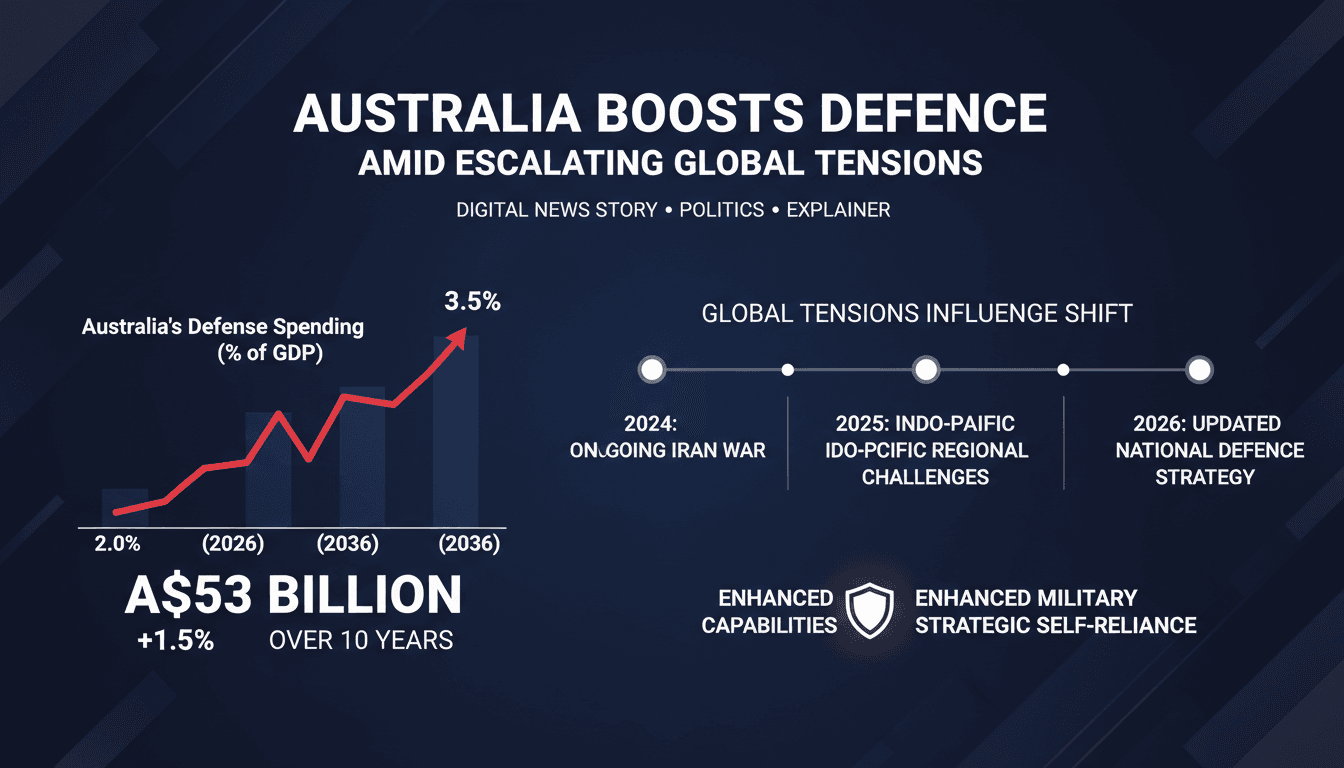
Here's what it means for you.
If you’re in the defence sector or rely on global stability, this shift could reshape your market landscape.
Why it matters
This significant increase in defence spending signals a strategic pivot that could influence global military dynamics and economic stability.
What happened (in 30 seconds)
- On April 17, 2026, Defence Minister Richard Marles announced an additional A$53 billion (US$38 billion) for defence over the next decade.
- Defence spending will rise from 2.8% of GDP in 2026 to 3% by 2033, reflecting heightened global tensions.
- The strategy prioritizes modernization, self-reliance, and industrial capacity amid ongoing conflicts, particularly the Iran war.
The context you actually need
- The 2026 update builds on the 2024 National Defence Strategy, addressing escalating global tensions, including the Iran war.
- Australia's military aid to Gulf states, including missiles and personnel, underscores its commitment to countering Iranian threats.
- The geopolitical climate necessitates enhanced capabilities and a review of prior commitments, particularly in the Indo-Pacific region.
What's really happening
The Australian government's announcement of an additional A$53 billion in defence spending over the next decade is a direct response to a rapidly evolving global security landscape. The 2026 National Defence Strategy update, presented by Defence Minister Richard Marles, reflects a recognition that the current strategic environment is the most complex since World War II. This complexity is largely driven by the ongoing Iran war, which has seen Australia actively engage in military support for Gulf states, including the UAE.
The decision to elevate defence expenditure from 2.8% of GDP in 2026 to 3% by 2033 indicates a significant shift in national priorities. This increase is not merely about spending more; it is about rethinking Australia's military capabilities and ensuring self-reliance in an era where global alliances are being tested. The focus on high-tech weapons and enhancements to northern bases is indicative of a broader strategy to modernize the Australian Defence Force (ADF) and bolster its industrial capacity for sovereign defence production.
The implications of this strategy extend beyond military readiness. By investing heavily in defence, Australia aims to secure its position in a region fraught with challenges, particularly in the Indo-Pacific. The emphasis on self-reliance suggests a pivot away from dependency on foreign military support, which could reshape Australia's defence procurement landscape and stimulate local industries.
Moreover, the announcement has already had tangible effects on the market. Defence-themed ETFs surged by 396% in assets, reaching A$665 million, as investors reacted positively to the news. This surge reflects a growing confidence in the defence sector's potential for growth, driven by government spending and the increasing importance of national security.
However, the announcement has not been without its critics. While analysts have praised the reforms, questions remain about the scale of spending and its effectiveness in addressing the immediate threats posed by regional conflicts. The lack of significant domestic opposition suggests a general consensus on the need for increased defence spending, but the long-term implications of this strategy will require careful monitoring.
Who feels it first (and how)
- Defence contractors: Increased contracts and opportunities for local firms involved in military production.
- Investors in defence ETFs: Potential for significant returns as defence spending rises.
- Residents in the Indo-Pacific: Heightened security measures may lead to increased stability or, conversely, escalated tensions in the region.
What to watch next
- Market reactions: Continued performance of defence stocks and ETFs will indicate investor confidence in the sector.
- Geopolitical developments: Monitoring the Iran war and its impact on Australian military commitments will be crucial.
- Domestic policy debates: Watch for discussions around the effectiveness and allocation of the increased defence budget.
Australia is increasing its defence spending significantly over the next decade.
The focus will remain on self-reliance and modernization of military capabilities.
The long-term effectiveness of this strategy in addressing immediate geopolitical threats.
Frequently Asked Questions
- Why it matters?
- This significant increase in defence spending signals a strategic pivot that could influence global military dynamics and economic stability.
- What happened (in 30 seconds)?
- On April 17, 2026, Defence Minister Richard Marles announced an additional A$53 billion (US$38 billion) for defence over the next decade. Defence spending will rise from 2.8% of GDP in 2026 to 3% by 2033, reflecting heightened global tensions. The strategy prioritizes modernization, self-reliance, and industrial capacity amid ongoing conflicts, particularly the Iran war.
- What's really happening?
- The Australian government's announcement of an additional A$53 billion in defence spending over the next decade is a direct response to a rapidly evolving global security landscape. The 2026 National Defence Strategy update, presented by Defence Minister Richard Marles, reflects a recognition that the current strategic environment is the most complex since World War II. This complexity is largely driven by the ongoing Iran war, which has seen Australia actively engage in military support for Gul
- Who feels it first (and how)?
- Defence contractors: Increased contracts and opportunities for local firms involved in military production. Investors in defence ETFs: Potential for significant returns as defence spending rises. Residents in the Indo-Pacific: Heightened security measures may lead to increased stability or, conversely, escalated tensions in the region.
- What to watch next?
- Market reactions: Continued performance of defence stocks and ETFs will indicate investor confidence in the sector. Geopolitical developments: Monitoring the Iran war and its impact on Australian military commitments will be crucial. Domestic policy debates: Watch for discussions around the effectiveness and allocation of the increased defence budget.
Arabic-language political and world news coverage for UAE readers.
"Emarat Al Youm world coverage usually presents international developments through a UAE and Arab audience lens."
— A47 Editor
أستراليا تضيف 38 مليار دولار للإنفاق العسكري أستراليا تضيف 38 مليار دولار للإنفاق العسكري
Australian Defense Minister Richard Marles announced an increase of $38 billion in military spending, citing the complexities of the global strategic landscape exacerbated by the Iran conflict. This significant financial commitment reflects Australia...
Arabic-language coverage of international news and geopolitics.
"RT Arabic is a Russian state-funded outlet often criticized for promoting Kremlin-aligned narratives."
— A47 Editor
أستراليا تعلن زيادة الإنفاق العسكري
Australian Defense Minister Richard Marles announced a significant increase in military spending, citing the complexities of the global strategic landscape exacerbated by the war in Iran. This decision reflects Australia's response to evolving securi...
Regional and international reporting focused on Middle Eastern politics, diplomacy, and economics.
"Asharq Al-Awsat is a Saudi-owned international newspaper reflecting mainstream Gulf political perspectives."
— A47 Editor
Australia to Boost Defense Spending Citing Growing Threats
Australia has announced a significant increase in its defense spending, citing growing threats in the region as a primary motivator. This decision reflects the country's commitment to enhancing its military capabilities amid rising geopolitical tensi...