
UAE President and Kuwaiti Foreign Minister Discuss Regional Security Amid Iranian Threats
Here's what it means for you.
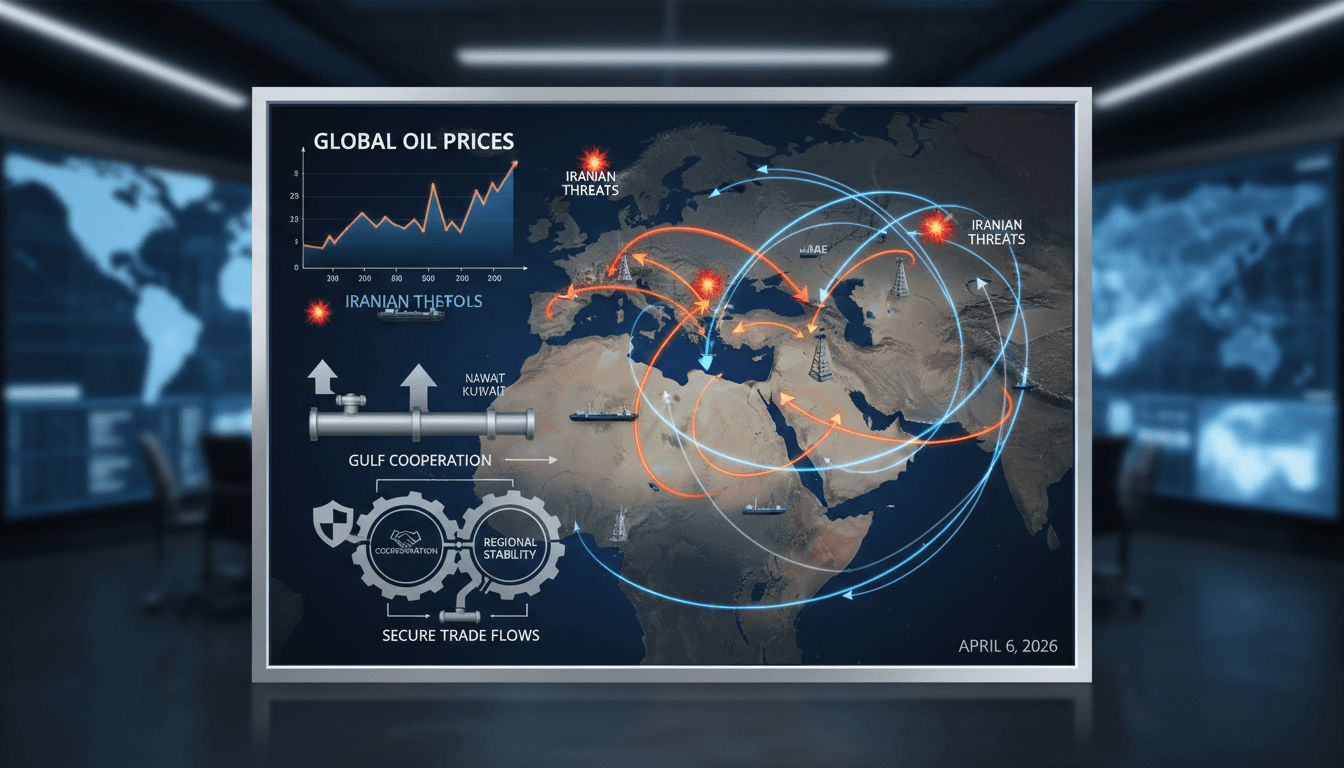
The stability of Gulf states directly impacts global oil markets, affecting prices and availability.
Why it matters
The ongoing Iranian attacks threaten not just regional security but also global energy supplies, which can influence economic conditions worldwide.
What happened (in 30 seconds)
- Sheikh Mohamed bin Zayed Al Nahyan hosted Kuwaiti Foreign Minister Sheikh Jarrah Jaber Al-Ahmad Al-Sabah in Abu Dhabi on April 6, 2026.
- Discussions focused on enhancing bilateral ties and addressing regional security threats, particularly Iranian missile and drone attacks.
- No immediate policy changes were announced, but the meeting underscored the importance of Gulf cooperation amid rising tensions.
The context you actually need
- Heightened regional tensions have escalated since late February 2026, with Iranian attacks targeting Gulf states' infrastructure.
- UAE air defenses intercepted hundreds of projectiles, while Kuwait experienced damage to oil facilities, impacting energy security.
- Bilateral trade between the UAE and Kuwait reached $14.8 billion in 2025, indicating strong economic ties that are crucial for regional stability.
What's really happening
The meeting between Sheikh Mohamed bin Zayed Al Nahyan and Sheikh Jarrah Jaber Al-Ahmad Al-Sabah reflects a critical moment in Gulf diplomacy amidst escalating threats from Iran. Since late February 2026, Iranian missile and drone strikes have increasingly targeted Gulf states, causing significant damage to energy infrastructure and civilian facilities. These attacks have not only raised alarms about national security but have also disrupted global oil supplies, given the strategic importance of the Strait of Hormuz.
The UAE and Kuwait have historically maintained strong bilateral relations, characterized by robust economic ties and mutual support in regional matters. The $14.8 billion non-oil trade volume in 2025, reflecting a 9.1% year-on-year growth, underscores the economic interdependence that both nations share. This economic collaboration is vital, as it positions Dubai as a key trade and investment hub, facilitating Kuwaiti investments and tourism that benefit the wider UAE economy.
The discussions during the meeting were not merely ceremonial; they highlighted the urgency of coordinated efforts among Gulf Cooperation Council (GCC) members to address shared security concerns. The Iranian attacks have prompted a reevaluation of defense strategies, emphasizing the need for enhanced military readiness and intelligence sharing among Gulf states. The UAE's successful interception of numerous projectiles demonstrates its commitment to safeguarding its sovereignty and civilian safety.
While the meeting concluded without immediate policy announcements, the implications are significant. The absence of new governmental directives does not diminish the urgency of the situation. Oil prices surged in response to the regional instability, reflecting market sensitivity to geopolitical tensions. Social media reactions primarily echoed news reports, indicating a general awareness of the situation but limited public discourse on potential solutions.
As the situation evolves, the GCC's ability to present a united front against external threats will be critical. The meeting serves as a reminder that regional stability is intertwined with global economic conditions, particularly in the energy sector.
Who feels it first (and how)
- Energy sector professionals: Fluctuating oil prices directly impact jobs and investments.
- Investors: Market volatility may affect investment strategies and risk assessments.
- Tourism and hospitality businesses in Dubai: Regional stability influences tourist confidence and travel patterns.
- Government officials: Increased pressure to enhance security measures and diplomatic efforts.
What to watch next
- Iranian military activity: Monitoring the frequency and scale of Iranian attacks will provide insight into regional security dynamics.
- Oil price fluctuations: Changes in oil prices will indicate market reactions to geopolitical developments and could affect global economic conditions.
- GCC diplomatic initiatives: Watch for new collaborations or agreements among Gulf states aimed at enhancing security and economic ties.
The UAE and Kuwait are committed to strengthening bilateral relations amidst regional threats.
Increased military coordination among GCC members in response to Iranian aggression.
The long-term impact of these tensions on global oil supply and pricing dynamics.
Frequently Asked Questions
- Why it matters?
- The ongoing Iranian attacks threaten not just regional security but also global energy supplies, which can influence economic conditions worldwide.
- What happened (in 30 seconds)?
- Sheikh Mohamed bin Zayed Al Nahyan hosted Kuwaiti Foreign Minister Sheikh Jarrah Jaber Al-Ahmad Al-Sabah in Abu Dhabi on April 6, 2026. Discussions focused on enhancing bilateral ties and addressing regional security threats, particularly Iranian missile and drone attacks. No immediate policy changes were announced, but the meeting underscored the importance of Gulf cooperation amid rising tensions.
- What's really happening?
- The meeting between Sheikh Mohamed bin Zayed Al Nahyan and Sheikh Jarrah Jaber Al-Ahmad Al-Sabah reflects a critical moment in Gulf diplomacy amidst escalating threats from Iran. Since late February 2026, Iranian missile and drone strikes have increasingly targeted Gulf states, causing significant damage to energy infrastructure and civilian facilities. These attacks have not only raised alarms about national security but have also disrupted global oil supplies, given the strategic importance of
- Who feels it first (and how)?
- Energy sector professionals: Fluctuating oil prices directly impact jobs and investments. Investors: Market volatility may affect investment strategies and risk assessments. Tourism and hospitality businesses in Dubai: Regional stability influences tourist confidence and travel patterns. Government officials: Increased pressure to enhance security measures and diplomatic efforts.
- What to watch next?
- Iranian military activity: Monitoring the frequency and scale of Iranian attacks will provide insight into regional security dynamics. Oil price fluctuations: Changes in oil prices will indicate market reactions to geopolitical developments and could affect global economic conditions. GCC diplomatic initiatives: Watch for new collaborations or agreements among Gulf states aimed at enhancing security and economic ties.
Arabic-language coverage of international news and geopolitics.
"RT Arabic is a Russian state-funded outlet often criticized for promoting Kremlin-aligned narratives."
— A47 Editor
الرئيس الإماراتي يستقبل وزير خارجية الكويت في أبوظبي
The President of the United Arab Emirates, Sheikh Mohammed bin Zayed Al Nahyan, received Kuwaiti Foreign Minister Jassem Al-Jabir Al-Ahmad Al-Sabah in Abu Dhabi on Monday, where they discussed regional developments.
Arabic-language digital news outlet covering UAE, regional, and international developments with broad general-news coverage.
"Al Ain News coverage typically blends UAE-focused reporting with wider Arab regional and international news."
— A47 Editor
محمد بن زايد يبحث مع وزير خارجية الكويت تطورات المنطقة
Sheikh Mohammed bin Zayed Al Nahyan, President of the United Arab Emirates, received Sheikh Jarrar Jaber Al Ahmad Al Sabah, the Kuwaiti Foreign Minister, on Monday to discuss regional developments. This meeting highlights the ongoing diplomatic engag...
Arabic-language UAE newspaper coverage focused on domestic affairs, public institutions, business, society, and regional developments.
"Al Khaleej coverage generally reflects a mainstream UAE editorial lens with strong attention to public affairs, institutions, and regional developments."
— A47 Editor
محمد بن زايد ووزير خارجية الكويت يبحثان الإرهاب الإيراني
Sheikh Mohammed bin Zayed Al Nahyan, the President of the UAE, received Sheikh Jarrar Jaber Al Ahmad Al Sabah, the Foreign Minister of Kuwait, to discuss Iranian terrorism. This meeting highlights the ongoing concerns regarding regional security and ...