
FDIC Proposes New Regulations for Stablecoin Issuers Under GENIUS Act
Here's what it means for you.
If you're involved in the stablecoin market, these new regulations could reshape how you interact with digital assets.
Why it matters
The FDIC's proposed regulations aim to stabilize a $316 billion market, impacting issuers and users alike.
What happened (in 30 seconds)
- The FDIC Board approved a 191-page notice of proposed rulemaking on April 7, 2026, establishing new standards for stablecoin issuers under the GENIUS Act.
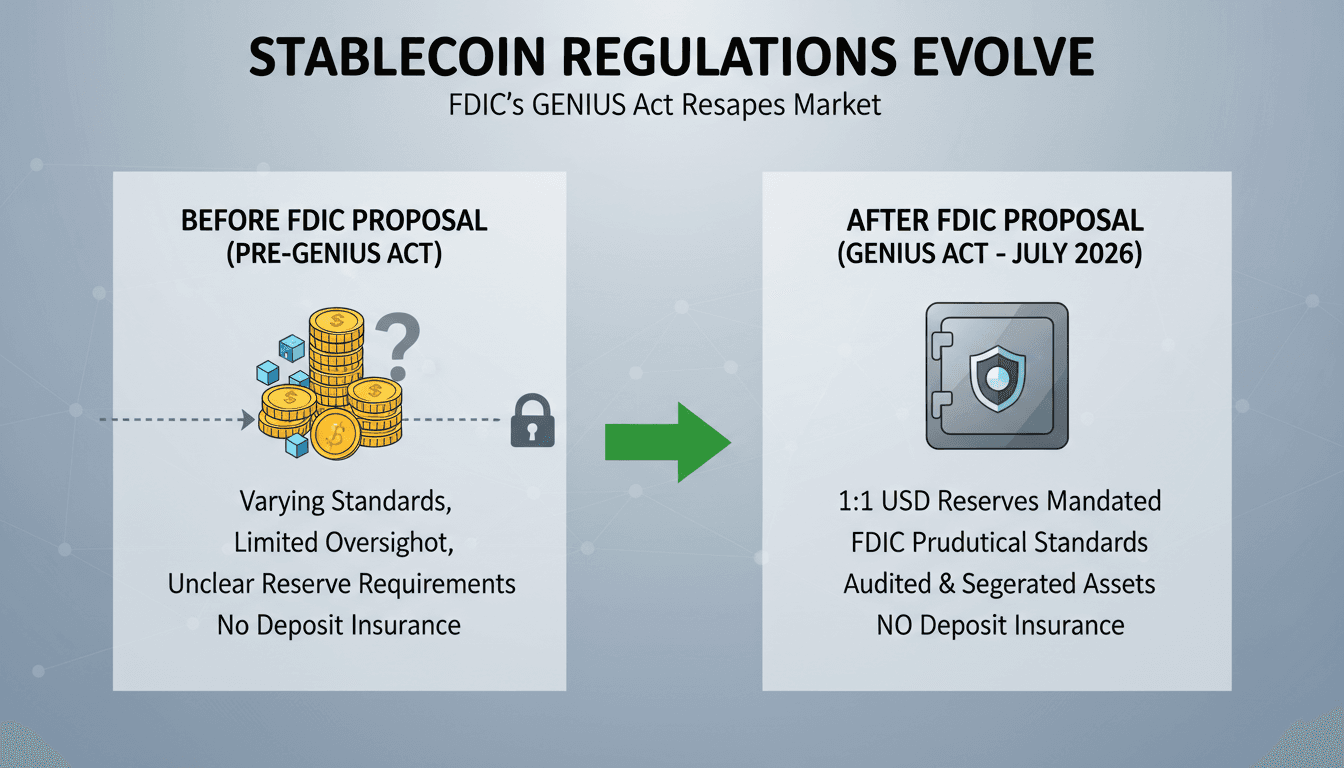
- Issuers must maintain 1:1 reserves in highly liquid assets and honor redemptions within two business days, enhancing consumer trust.
- Stablecoin holders will not receive federal deposit insurance, clarifying the risks associated with holding these digital assets.
The context you actually need
- The GENIUS Act was signed into law on July 18, 2025, mandating federal regulators to set standards for payment stablecoins by July 2026.
- The stablecoin market is currently valued at approximately $316 billion, showing significant growth and interest from both consumers and financial institutions.
- Previous regulatory efforts by the FDIC and OCC have laid the groundwork for this comprehensive proposal, aiming to create a safer environment for stablecoin transactions.
What's really happening
The FDIC's proposed rulemaking under the GENIUS Act is a significant step toward establishing a regulatory framework for stablecoins, which have surged in popularity and usage. By requiring issuers to maintain 1:1 reserves in highly liquid assets, the FDIC aims to mitigate risks associated with stablecoin volatility and ensure that consumers can redeem their assets promptly. This move is particularly crucial as the stablecoin market has ballooned to a staggering $316 billion, prompting regulatory bodies to take action to protect consumers and maintain market integrity.
The requirement for issuers to honor redemptions within two business days is designed to enhance consumer confidence, addressing concerns about liquidity and the ability to access funds when needed. Additionally, the proposal mandates capital and liquidity buffers tailored to the risks associated with stablecoin issuance, which will help stabilize the market and prevent potential systemic risks.
However, the explicit exclusion of stablecoin holders from federal deposit insurance is a critical point of contention. This means that while issuers are held to stringent standards, consumers who hold stablecoins will not have the same protections as traditional bank depositors. This could lead to a reevaluation of how consumers perceive the safety of their digital assets and may influence their decisions regarding which stablecoins to use.
The proposal also aligns with previous frameworks established by the Office of the Comptroller of the Currency (OCC), indicating a coordinated effort among U.S. regulators to create a cohesive regulatory landscape for stablecoins. As the comment period opens, stakeholders from various sectors will have the opportunity to weigh in, potentially shaping the final regulations.
Overall, the FDIC's proposed rulemaking reflects a balancing act between fostering innovation in the stablecoin space and ensuring consumer protection. As the market continues to evolve, these regulations will likely serve as a benchmark for other countries considering similar frameworks.
Who feels it first (and how)
- Stablecoin issuers: They will need to adapt their operations to comply with new reserve and redemption requirements.
- Consumers and investors: Those holding stablecoins will face increased scrutiny regarding the safety of their assets without deposit insurance.
- Financial institutions: Banks looking to enter the stablecoin market will benefit from clearer guidelines and standards.
- Regulatory bodies: Other countries may look to the U.S. framework as a model for their own stablecoin regulations.
What to watch next
- Public comment period outcomes: The responses from stakeholders could lead to adjustments in the proposed regulations, impacting the final framework.
- Market reactions: Watch for shifts in stablecoin usage and issuer strategies as they adapt to the new requirements.
- International regulatory developments: Other countries may follow suit with their own regulations, influencing global stablecoin dynamics.
The FDIC's proposed regulations require 1:1 reserves and prompt redemptions for stablecoin issuers.
There will be a significant response from industry stakeholders during the public comment period, potentially leading to regulatory adjustments.
The long-term impact on consumer confidence and stablecoin adoption remains to be seen.
Frequently Asked Questions
- Why it matters?
- The FDIC's proposed regulations aim to stabilize a $316 billion market, impacting issuers and users alike.
- What happened (in 30 seconds)?
- The FDIC Board approved a 191-page notice of proposed rulemaking on April 7, 2026, establishing new standards for stablecoin issuers under the GENIUS Act. Issuers must maintain 1:1 reserves in highly liquid assets and honor redemptions within two business days, enhancing consumer trust. Stablecoin holders will not receive federal deposit insurance, clarifying the risks associated with holding these digital assets.
- What's really happening?
- The FDIC's proposed rulemaking under the GENIUS Act is a significant step toward establishing a regulatory framework for stablecoins, which have surged in popularity and usage. By requiring issuers to maintain 1:1 reserves in highly liquid assets, the FDIC aims to mitigate risks associated with stablecoin volatility and ensure that consumers can redeem their assets promptly. This move is particularly crucial as the stablecoin market has ballooned to a staggering $316 billion, prompting regulator
- Who feels it first (and how)?
- Stablecoin issuers: They will need to adapt their operations to comply with new reserve and redemption requirements. Consumers and investors: Those holding stablecoins will face increased scrutiny regarding the safety of their assets without deposit insurance. Financial institutions: Banks looking to enter the stablecoin market will benefit from clearer guidelines and standards. Regulatory bodies: Other countries may look to the U.S. framework as a model for their own stablecoin regulations.
- What to watch next?
- Public comment period outcomes: The responses from stakeholders could lead to adjustments in the proposed regulations, impacting the final framework. Market reactions: Watch for shifts in stablecoin usage and issuer strategies as they adapt to the new requirements. International regulatory developments: Other countries may follow suit with their own regulations, influencing global stablecoin dynamics.
Real-time updates, analysis, and reports on the blockchain and cryptocurrency sectors.
"Crypto News delivers real-time updates, analysis, and reports on the blockchain and cryptocurrency sectors."
— A47 Editor
The FDIC’s Crypto Regulation Proposal: What the 191 Pages Actually Require for Stablecoin Holders
The Federal Deposit Insurance Corporation (FDIC) has proposed a 191-page rule under the GENIUS Act, establishing new standards for stablecoin issuers, including requirements for reserves, redemption, capital, and custody. This proposal aims to create...
Bitcoin news, technical analysis, and forecasts across crypto markets.
"NewsBTC covers Bitcoin news, technical analysis, and forecasts across crypto markets and major blockchain projects."
— A47 Editor
FDIC Advances Rulemaking For GENIUS Act: New Framework For Stablecoin Issuers
The Federal Deposit Insurance Corporation (FDIC) has proposed new regulatory guidance for stablecoin issuers under the GENIUS Act, establishing a prudential framework for banks and fintechs involved in stablecoin transactions. This proposal includes ...
Covers blockchain, cryptocurrency news, project analysis, and market insights.
"Cointelegraph is a leading crypto-focused media outlet known for timely news, analysis, and educational content related to blockchain and digital assets."
— A47 Editor
FDIC moves to regulate stablecoin issuers under the GENIUS Act
The Federal Deposit Insurance Corporation (FDIC) has proposed new rules to regulate stablecoin issuers under the GENIUS Act, clarifying that insurance for corporate deposits will not extend to stablecoin holders. This decision aligns with ongoing dis...
News, analysis, and thought leadership focusing exclusively on Bitcoin.
"Bitcoin Magazine is one of the original publications devoted to Bitcoin, offering in-depth news, analysis, and commentary."
— A47 Editor
FDIC Advances Stablecoin Oversight Framework Under GENIUS Act With New Prudential Rule Proposal
The Federal Deposit Insurance Corporation (FDIC) has advanced a new oversight framework for stablecoins under the GENIUS Act, proposing rules that will guide U.S. banks in issuing and managing these digital assets. This proposal indicates a significa...