
IRGC Navy Leader Challenges Trump Amid Strait of Hormuz Reclosure
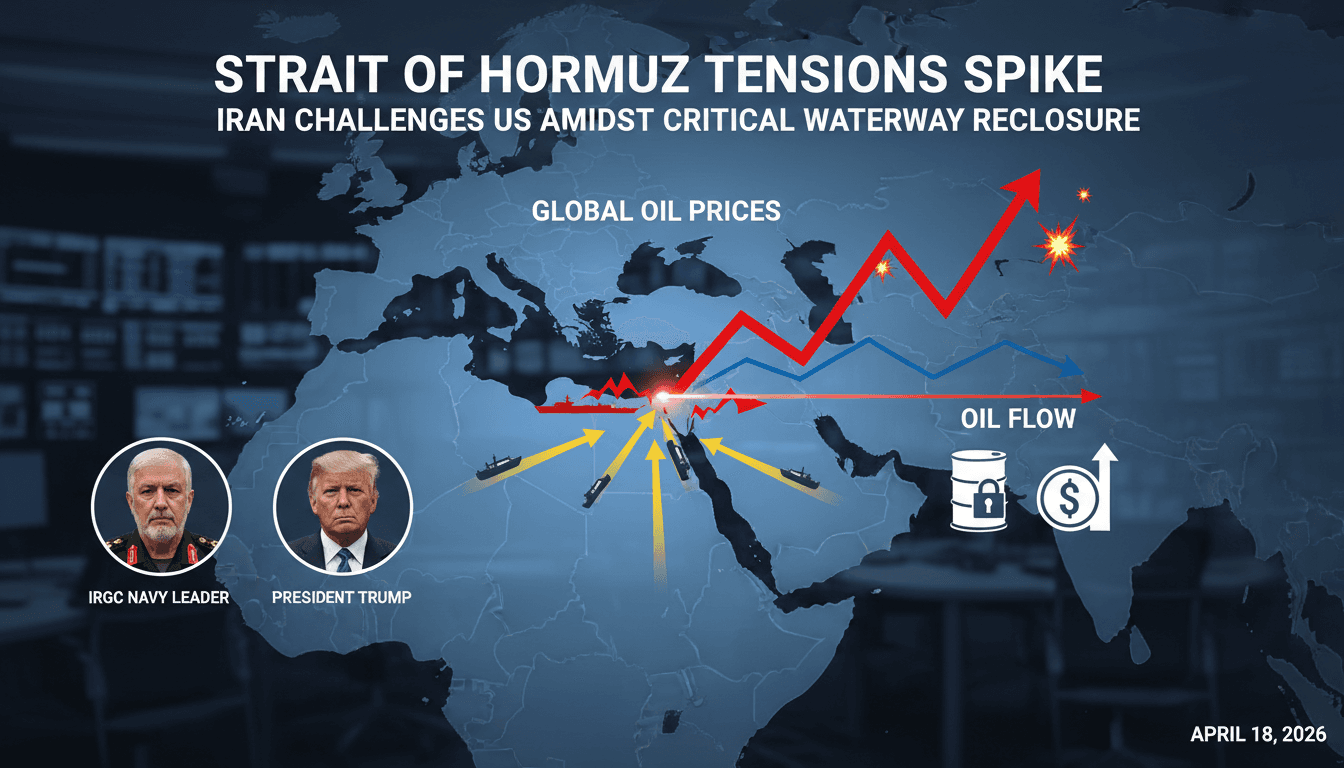
Here's what it means for you.
The ongoing tensions in the Strait of Hormuz could significantly impact global oil prices and supply chains, affecting your costs and investments.
Why it matters
The Strait of Hormuz is a critical chokepoint for global oil trade, with 25% of the world's seaborne oil passing through it annually.
What happened (in 30 seconds)
- On April 18, 2026, an IRGC Navy leader challenged U.S. President Trump to send warships to reopen the Strait of Hormuz, which Iran had just reclosed.
- The U.S. Navy is currently enforcing a blockade on Iranian ports, claiming to have destroyed Iran's naval capabilities, while Iran asserts its control over the strait.
- Tensions escalated following the assassination of Iran's Supreme Leader, leading to increased military posturing and attacks on merchant vessels.
The context you actually need
- The 2026 Strait of Hormuz crisis began on February 28, 2026, after U.S.-Israeli airstrikes killed Iran's Supreme Leader, prompting Iran to close the strait.
- Iran's strategic leverage over the Strait of Hormuz is significant, as it controls a vital route for oil shipments, making it a focal point in U.S.-Iran relations.
- Recent market reactions include a spike in oil prices and disruptions in shipping routes, impacting global supply chains and energy costs.
What's really happening
The Strait of Hormuz serves as a critical artery for global oil transportation, with approximately 25% of the world's seaborne oil trade passing through it annually. The recent escalation in tensions stems from a series of provocations, including the assassination of Iran's Supreme Leader Ali Khamenei, which has led to a military standoff between Iran and the United States. The IRGC's challenge to President Trump is not merely rhetorical; it reflects Iran's strategic intent to assert its sovereignty and deter U.S. naval operations in the region.
Following the U.S. blockade of Iranian ports, which Trump claimed was necessary due to the obliteration of Iran's naval capabilities, Iran's military response has been to tighten its control over the Strait. This includes threats to target vessels that do not comply with its patrols, effectively leveraging the strait as a bargaining chip in the ongoing conflict. The IRGC's actions are designed to showcase its deterrent capabilities and to signal to the U.S. that any military engagement could escalate into broader conflict, impacting global oil supply.
The economic implications are profound. Oil prices have already reacted to the heightened tensions, with Dubai crude peaking at $166 per barrel in March 2026. The UAE and Saudi Arabia have invoked force majeure, rerouting oil through alternative pipelines, which could lead to increased costs for consumers and businesses reliant on oil. Shipping companies are also feeling the pinch, with major players like Maersk suspending transits through the strait, further complicating global supply chains.
As the situation unfolds, the potential for military engagement remains a significant risk, which could lead to further disruptions in oil supply and price volatility. The IRGC's defiance serves as a reminder of the fragile balance of power in the region and the interconnectedness of geopolitical events and global markets.
Who feels it first (and how)
- Oil consumers: Increased fuel prices due to supply chain disruptions and heightened market volatility.
- Shipping companies: Operational challenges and increased costs from rerouted shipping lanes and insurance premiums.
- Investors: Market volatility affecting stock prices, particularly in energy sectors and related industries.
What to watch next
- U.S. military movements: Any deployment of naval forces in the region could escalate tensions and impact oil prices.
- Iran's military responses: Further provocations or military actions by Iran could lead to broader conflict and supply disruptions.
- Global oil prices: Watch for fluctuations in oil prices as markets react to developments in the Strait of Hormuz and the broader geopolitical landscape.
The Strait of Hormuz is critical for global oil trade, with 25% of seaborne oil passing through it.
Continued tensions between the U.S. and Iran will lead to increased volatility in oil markets and shipping routes.
The potential for military engagement and its impact on global supply chains remains uncertain.
Frequently Asked Questions
- Why it matters?
- The Strait of Hormuz is a critical chokepoint for global oil trade, with 25% of the world's seaborne oil passing through it annually.
- What happened (in 30 seconds)?
- On April 18, 2026, an IRGC Navy leader challenged U.S. President Trump to send warships to reopen the Strait of Hormuz, which Iran had just reclosed. The U.S. Navy is currently enforcing a blockade on Iranian ports, claiming to have destroyed Iran's naval capabilities, while Iran asserts its control over the strait. Tensions escalated following the assassination of Iran's Supreme Leader, leading to increased military posturing and attacks on merchant vessels.
- What's really happening?
- The Strait of Hormuz serves as a critical artery for global oil transportation, with approximately 25% of the world's seaborne oil trade passing through it annually. The recent escalation in tensions stems from a series of provocations, including the assassination of Iran's Supreme Leader Ali Khamenei, which has led to a military standoff between Iran and the United States. The IRGC's challenge to President Trump is not merely rhetorical; it reflects Iran's strategic intent to assert its soverei
- Who feels it first (and how)?
- Oil consumers: Increased fuel prices due to supply chain disruptions and heightened market volatility. Shipping companies: Operational challenges and increased costs from rerouted shipping lanes and insurance premiums. Investors: Market volatility affecting stock prices, particularly in energy sectors and related industries.
- What to watch next?
- U.S. military movements: Any deployment of naval forces in the region could escalate tensions and impact oil prices. Iran's military responses: Further provocations or military actions by Iran could lead to broader conflict and supply disruptions. Global oil prices: Watch for fluctuations in oil prices as markets react to developments in the Strait of Hormuz and the broader geopolitical landscape.
Jordanian news and regional updates.
"Roya News is a Jordanian outlet focused on breaking news and local affairs."
— A47 Editor
الحرس الثوري : إذا كان ترمب صادقا بتدمير قواتنا البحرية لماذا لا يرسل سفنه لفتح مضيق هرمز
The Iranian Revolutionary Guard Corps has questioned former President Donald Trump's claims about destroying its naval forces, suggesting that if he were truthful, he should send his ships to open the Strait of Hormuz. This statement comes amid heigh...
Pan-Arab news coverage spanning politics, business, sports, and regional affairs.
"Asharq Al-Awsat reflects a broad Arab editorial perspective with strong attention to regional geopolitics."
— A47 Editor
إيران تفتح «هرمز»... وترمب يرحب بـ«تنازلاتها»
U.S. President Donald Trump and Iranian Foreign Minister Abbas Araghchi announced the complete opening of the Strait of Hormuz to commercial vessels, marking a significant development in maritime trade in the region. This decision excludes military s...
Arabic-language UAE newspaper coverage focused on domestic affairs, public institutions, business, society, and regional developments.
"Al Khaleej coverage generally reflects a mainstream UAE editorial lens with strong attention to public affairs, institutions, and regional developments."
— A47 Editor
الأمم المتحدة ترحب بإعلان إيران فتح مضيق هرمز
Antonio Guterres, the Secretary-General of the United Nations, welcomed Iran's announcement to fully open the Strait of Hormuz to all commercial vessels during the ceasefire period. This decision marks a significant step in regional maritime security...
Arabic-language political and world news coverage for UAE readers.
"Emarat Al Youm world coverage usually presents international developments through a UAE and Arab audience lens."
— A47 Editor
ترامب: أبلغت حلف الأطلسي بأنه لا حاجة لمساعدة منهم بعد فتح مضيق هرمز ترامب: أبلغت حلف الأطلسي بأنه لا حاجة لمساعدة منهم بعد فتح مضيق هرمز
On Friday, U.S. President Donald Trump stated that he received a call from NATO inquiring whether the United States required assistance following the reopening of the Strait of Hormuz. Trump indicated that there was no need for help from the alliance...