
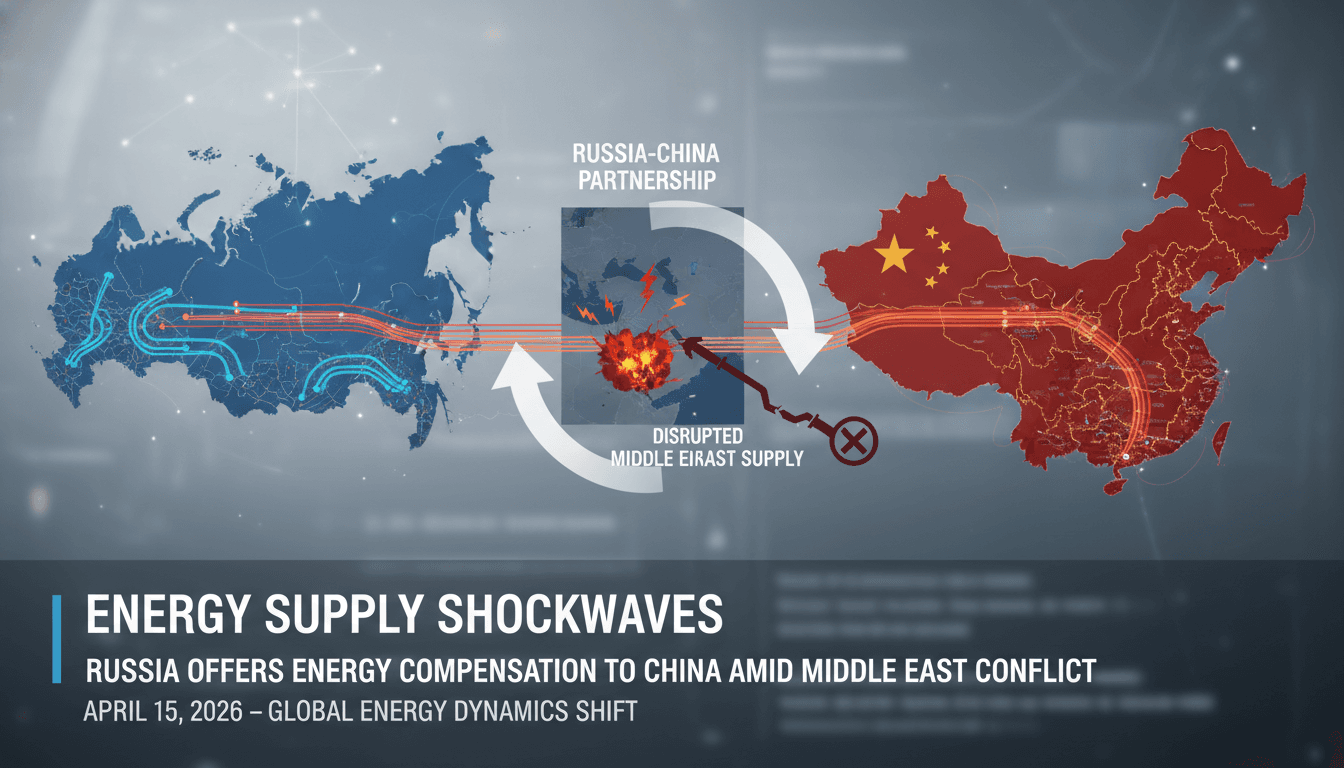
Russia Offers Energy Supply Compensation to China Amid Middle East Conflict
Here's what it means for you.
Rising energy costs and supply uncertainties could impact your budget and business operations.
Why it matters
The ongoing Middle East conflict is reshaping global energy dynamics, affecting prices and supply chains.
What happened (in 30 seconds)
- Lavrov's announcement: On April 15, 2026, Russian Foreign Minister Sergey Lavrov pledged that Russia could fully compensate for any energy supply shortages faced by China due to the Middle East conflict.
- Strategic partnership: This statement highlights the deepening energy cooperation between Russia and China amid disruptions in the Strait of Hormuz caused by the US-Israeli war against Iran.
- Market response: Global oil prices surged above $100 per barrel following the announcement, exacerbating inflationary pressures and prompting adjustments in fuel pricing in regions like Dubai.
The context you actually need
- Energy dependency: China imports over 50% of its crude oil from the Middle East, making it particularly vulnerable to supply disruptions.
- Pipeline infrastructure: Russia has expanded its energy export capabilities to China, notably through the Power of Siberia pipeline, which is now operating at full capacity.
- Geopolitical shifts: The US-Israeli conflict with Iran has led to significant maritime disruptions, prompting countries like China to seek alternative energy sources to ensure stability.
What's really happening
The backdrop of Lavrov's pledge is a complex interplay of geopolitical tensions and energy market dynamics. The US-Israeli war against Iran, which began on February 28, 2026, has severely disrupted maritime traffic in the Strait of Hormuz, a critical chokepoint for global oil and gas exports. Approximately 20% of the world's energy supply transits this strait, and the conflict has led to a US naval blockade of Iranian ports, further straining global energy markets.
In this context, Russia is positioning itself as a reliable energy partner for China, which is facing heightened vulnerabilities due to its heavy reliance on Middle Eastern oil. Prior to the disruptions, 54% of China's oil imports originated from this region, making it imperative for Beijing to secure alternative sources. Lavrov's assertion that Russia can fully compensate for any shortages is not just a diplomatic gesture; it reflects a strategic pivot towards strengthening energy ties with China, especially in light of Western sanctions imposed on Russia following its invasion of Ukraine in 2022.
The Power of Siberia pipeline, which has an annual capacity of 38 billion cubic meters, is a key asset in this relationship. Since the sanctions, Russia has intensified its energy exports to China, fostering a partnership that aims to counterbalance US influence in the region. This deepening alliance is underscored by Lavrov's remarks about the "precious" stability of bilateral ties, indicating a mutual interest in navigating the turbulent global landscape together.
As global oil prices rebound above $100 per barrel, the implications are significant. Inflationary pressures are mounting, and countries reliant on energy imports, like China and those in the UAE, are feeling the pinch. In Dubai, for instance, residents are facing elevated fuel costs as the local oil benchmark surges, straining household budgets and prompting authorities to implement price adjustments and stockpiling measures.
The structural implications of this energy shift are profound. As Russia and China deepen their cooperation, Western governments are increasingly concerned about the emergence of a Sino-Russian energy axis that could circumvent sanctions and reshape global energy flows. This evolving landscape will likely lead to further volatility in energy markets, impacting consumers and businesses worldwide.
Who feels it first (and how)
- Consumers in China: Higher energy prices could lead to increased costs for goods and services.
- Residents in Dubai: Elevated fuel prices strain household budgets and impact transportation costs.
- Energy companies: Firms involved in oil and gas may see fluctuating demand and pricing pressures.
- Global markets: Investors and businesses reliant on stable energy prices will face uncertainty and potential inflationary impacts.
What to watch next
- Energy price trends: Monitor fluctuations in global oil prices, as sustained increases could signal ongoing supply issues.
- China-Russia energy agreements: Watch for new bilateral agreements that may solidify energy cooperation and impact global supply chains.
- US and Western responses: Observe how Western governments react to the deepening Russia-China partnership, particularly regarding sanctions and diplomatic efforts.
Russia is positioned as a key alternative energy supplier for China amid Middle East disruptions.
Global energy prices will remain volatile as geopolitical tensions persist.
The long-term impact of the Russia-China energy partnership on global energy markets remains uncertain.
Frequently Asked Questions
- Why it matters?
- The ongoing Middle East conflict is reshaping global energy dynamics, affecting prices and supply chains.
- What happened (in 30 seconds)?
- Lavrov's announcement: On April 15, 2026, Russian Foreign Minister Sergey Lavrov pledged that Russia could fully compensate for any energy supply shortages faced by China due to the Middle East conflict. Strategic partnership: This statement highlights the deepening energy cooperation between Russia and China amid disruptions in the Strait of Hormuz caused by the US-Israeli war against Iran. Market response: Global oil prices surged above $100 per barrel following the announcement, exacerbat
- What's really happening?
- The backdrop of Lavrov's pledge is a complex interplay of geopolitical tensions and energy market dynamics. The US-Israeli war against Iran, which began on February 28, 2026, has severely disrupted maritime traffic in the Strait of Hormuz, a critical chokepoint for global oil and gas exports. Approximately 20% of the world's energy supply transits this strait, and the conflict has led to a US naval blockade of Iranian ports, further straining global energy markets. In this context, Russia is po
- Who feels it first (and how)?
- Consumers in China: Higher energy prices could lead to increased costs for goods and services. Residents in Dubai: Elevated fuel prices strain household budgets and impact transportation costs. Energy companies: Firms involved in oil and gas may see fluctuating demand and pricing pressures. Global markets: Investors and businesses reliant on stable energy prices will face uncertainty and potential inflationary impacts.
- What to watch next?
- Energy price trends: Monitor fluctuations in global oil prices, as sustained increases could signal ongoing supply issues. China-Russia energy agreements: Watch for new bilateral agreements that may solidify energy cooperation and impact global supply chains. US and Western responses: Observe how Western governments react to the deepening Russia-China partnership, particularly regarding sanctions and diplomatic efforts.
Jordanian news and regional updates.
"Roya News is a Jordanian outlet focused on breaking news and local affairs."
— A47 Editor
لافروف: روسيا مستعدة للتعويض عن نقص موارد الطاقة لدى الصين نتيجة الحرب
Russian Foreign Minister Sergey Lavrov, during his visit to Beijing, confirmed that Russia is prepared to compensate for China's energy resource shortages resulting from the ongoing war. This statement highlights the strengthening energy ties between...
Pan-Arab political news and analysis.
"Al-Quds Al-Arabi is a London-based Arabic newspaper known for political coverage."
— A47 Editor
لافروف: روسيا مستعدة للتعويض عن نقص موارد الطاقة لدى الصين
During a visit to Beijing, Russian Foreign Minister Sergey Lavrov stated that Russia is prepared to compensate for the energy resource shortages faced by China and other countries due to the ongoing conflict in the Middle East. He emphasized Russia's...
Pan-Arab news coverage spanning politics, business, sports, and regional affairs.
"Asharq Al-Awsat reflects a broad Arab editorial perspective with strong attention to regional geopolitics."
— A47 Editor
لافروف: مستعدُّون لتعويض نقص موارد الطاقة لدى الصين ودول أخرى نتيجة الحرب
Russian Foreign Minister Sergey Lavrov stated during his visit to Beijing that Russia is prepared to compensate for the energy resource shortages faced by China and other countries due to the ongoing war. This declaration highlights Russia's commitme...