
U.S.-sanctioned supertankers breach naval blockade in Persian Gulf
Here's what it means for you.
Rising oil prices could inflate your transportation and fuel costs, impacting your daily budget.
Why it matters
The defiance of U.S. sanctions by supertankers could destabilize oil markets and escalate geopolitical tensions.
What happened (in 30 seconds)
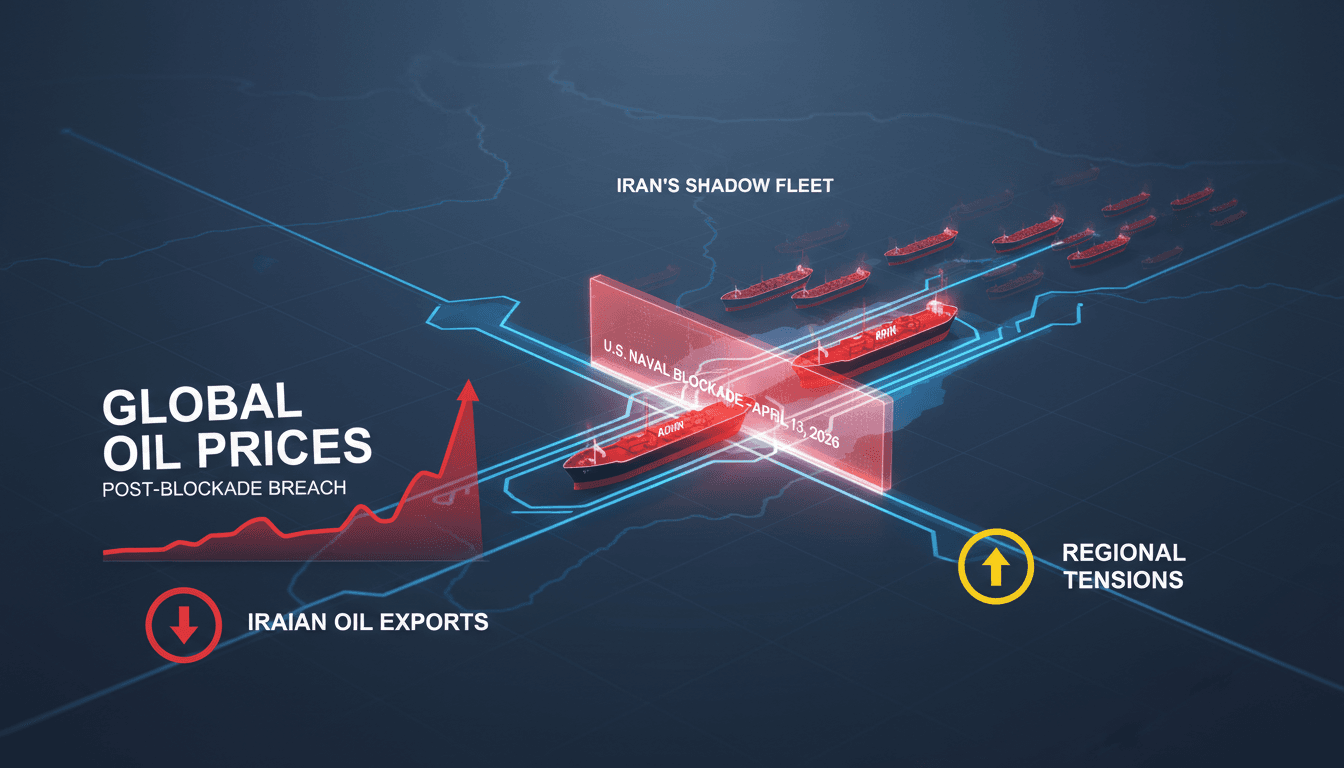
- April 15, 2026: U.S.-sanctioned VLCCs Alicia and RHN entered the Persian Gulf, breaching a U.S. naval blockade.
- April 12, 2026: President Trump announced the blockade following failed peace talks with Iran, aiming to curb Tehran's oil exports.
- U.S. Central Command reported turning back 10 vessels since the blockade began, despite evidence of successful transits.
The context you actually need
- U.S.-Iran tensions have escalated significantly after failed peace negotiations in April 2026, leading to a naval blockade aimed at restricting Iranian oil exports.
- Iran's shadow fleet has historically managed to evade sanctions, maintaining oil exports averaging 1.68 million barrels per day in 2025.
- Brent crude prices have surged over 60% in a month, now exceeding $116 per barrel, affecting global fuel costs and economic stability.
What's really happening
The recent entry of U.S.-sanctioned supertankers into the Persian Gulf is a significant challenge to the U.S. naval blockade, which was implemented to pressure Iran amid escalating tensions. The blockade, declared by President Trump on April 12, 2026, followed a breakdown in peace talks aimed at resolving ongoing conflicts related to Iran's nuclear program and oil exports. The U.S. Central Command's enforcement of this blockade has been met with defiance, as evidenced by the successful transit of VLCCs Alicia and RHN.
The blockade's primary goal is to restrict vessels visiting Iranian ports, thereby limiting Tehran's ability to export oil and sustain its economy. However, the presence of Iran's shadow fleet, which has adeptly navigated sanctions in the past, complicates enforcement efforts. These tankers have been known to operate under various flags and identities, making them difficult to track and sanction effectively.
Despite U.S. claims of maintaining the blockade, shipping data from Kpler and LSEG indicates that at least two sanctioned tankers successfully entered the Gulf. This contradiction raises questions about the effectiveness of the blockade and the U.S. military's ability to enforce it. The U.S. has reported turning back 10 vessels since the blockade's initiation, yet the successful entry of Alicia and RHN suggests that Iran may have found ways to circumvent these restrictions.
The implications of this situation extend beyond immediate geopolitical tensions. The surge in oil prices, driven by fears of supply disruptions and increased market volatility, has already begun to impact consumers. In Dubai, for instance, rising Brent crude prices are likely to inflate transportation and fuel costs, straining household budgets. The Jebel Ali port, a critical shipping hub in the UAE, may also face operational disruptions, further exacerbating economic pressures in the region.
As the situation unfolds, the potential for further escalation remains high. Iran has indicated a willingness to negotiate, but the U.S. has threatened secondary sanctions on oil buyers, complicating any diplomatic efforts. The interplay between military enforcement, economic sanctions, and market reactions will shape the future of U.S.-Iran relations and the global oil market.
Who feels it first (and how)
- Consumers in Dubai: Increased fuel prices will directly impact transportation costs and household budgets.
- Shipping companies: Disruptions in the Gulf could lead to higher operational costs and logistical challenges.
- Oil traders: Market volatility will affect trading strategies and profit margins.
What to watch next
- Oil price fluctuations: Continued volatility in Brent crude prices will indicate market reactions to geopolitical developments.
- U.S. military actions: Any changes in U.S. naval enforcement or additional sanctions could escalate tensions or lead to negotiations.
- Iran's response: Watch for Iran's potential offers for safe passage through Omani waters, which could signal shifts in diplomatic strategies.
The U.S. has declared a naval blockade targeting Iranian oil exports.
Oil prices will continue to fluctuate based on geopolitical tensions and market reactions.
The long-term effectiveness of the U.S. blockade and Iran's ability to circumvent sanctions.
Frequently Asked Questions
- Why it matters?
- The defiance of U.S. sanctions by supertankers could destabilize oil markets and escalate geopolitical tensions.
- What happened (in 30 seconds)?
- April 15, 2026: U.S.-sanctioned VLCCs Alicia and RHN entered the Persian Gulf, breaching a U.S. naval blockade. April 12, 2026: President Trump announced the blockade following failed peace talks with Iran, aiming to curb Tehran's oil exports. U.S. Central Command reported turning back 10 vessels since the blockade began, despite evidence of successful transits.
- What's really happening?
- The recent entry of U.S.-sanctioned supertankers into the Persian Gulf is a significant challenge to the U.S. naval blockade, which was implemented to pressure Iran amid escalating tensions. The blockade, declared by President Trump on April 12, 2026, followed a breakdown in peace talks aimed at resolving ongoing conflicts related to Iran's nuclear program and oil exports. The U.S. Central Command's enforcement of this blockade has been met with defiance, as evidenced by the successful transit o
- Who feels it first (and how)?
- Consumers in Dubai: Increased fuel prices will directly impact transportation costs and household budgets. Shipping companies: Disruptions in the Gulf could lead to higher operational costs and logistical challenges. Oil traders: Market volatility will affect trading strategies and profit margins.
- What to watch next?
- Oil price fluctuations: Continued volatility in Brent crude prices will indicate market reactions to geopolitical developments. U.S. military actions: Any changes in U.S. naval enforcement or additional sanctions could escalate tensions or lead to negotiations. Iran's response: Watch for Iran's potential offers for safe passage through Omani waters, which could signal shifts in diplomatic strategies.
Arabic-language coverage of international news and geopolitics.
"RT Arabic is a Russian state-funded outlet often criticized for promoting Kremlin-aligned narratives."
— A47 Editor
رغم الحصار.. ناقلات عملاقة خاضعة لعقوبات أمريكية تدخل الخليج
Shipping data indicates that a second giant tanker, subject to U.S. sanctions, has entered the Gulf through the Strait of Hormuz, despite the U.S. prohibiting vessels that visit Iranian ports from crossing.
Arabic-language coverage of international news and geopolitics.
"RT Arabic is a Russian state-funded outlet often criticized for promoting Kremlin-aligned narratives."
— A47 Editor
ناقلة نفط إيرانية عملاقة تتحدى الحصار الأمريكي على مضيق هرمز
An Iranian oil tanker, which is on the U.S. sanctions list, has openly crossed the Strait of Hormuz and entered Iranian waters while activating its location tracking device. This movement occurred without any attempts at concealment, highlighting the...
Pan-Arab news coverage spanning politics, business, sports, and regional affairs.
"Asharq Al-Awsat reflects a broad Arab editorial perspective with strong attention to regional geopolitics."
— A47 Editor
بيانات: ناقلة نفط خاضعة لعقوبات أميركية تعبر «هرمز» رغم الحصار
Shipping data indicates that an oil tanker, which is under U.S. sanctions, has successfully crossed the Strait of Hormuz today, despite the ongoing American blockade on this vital waterway.
Arabic-language UAE newspaper coverage focused on domestic affairs, public institutions, business, society, and regional developments.
"Al Khaleej coverage generally reflects a mainstream UAE editorial lens with strong attention to public affairs, institutions, and regional developments."
— A47 Editor
ناقلة نفط صينية خاضعة للعقوبات الأمريكية تعبر هرمز رغم الحصار الأمريكي
A Chinese oil tanker, currently under U.S. sanctions, successfully navigated the Strait of Hormuz on Tuesday, despite ongoing American restrictions in this critical maritime passage. Shipping data confirms the vessel's transit through the strategical...