
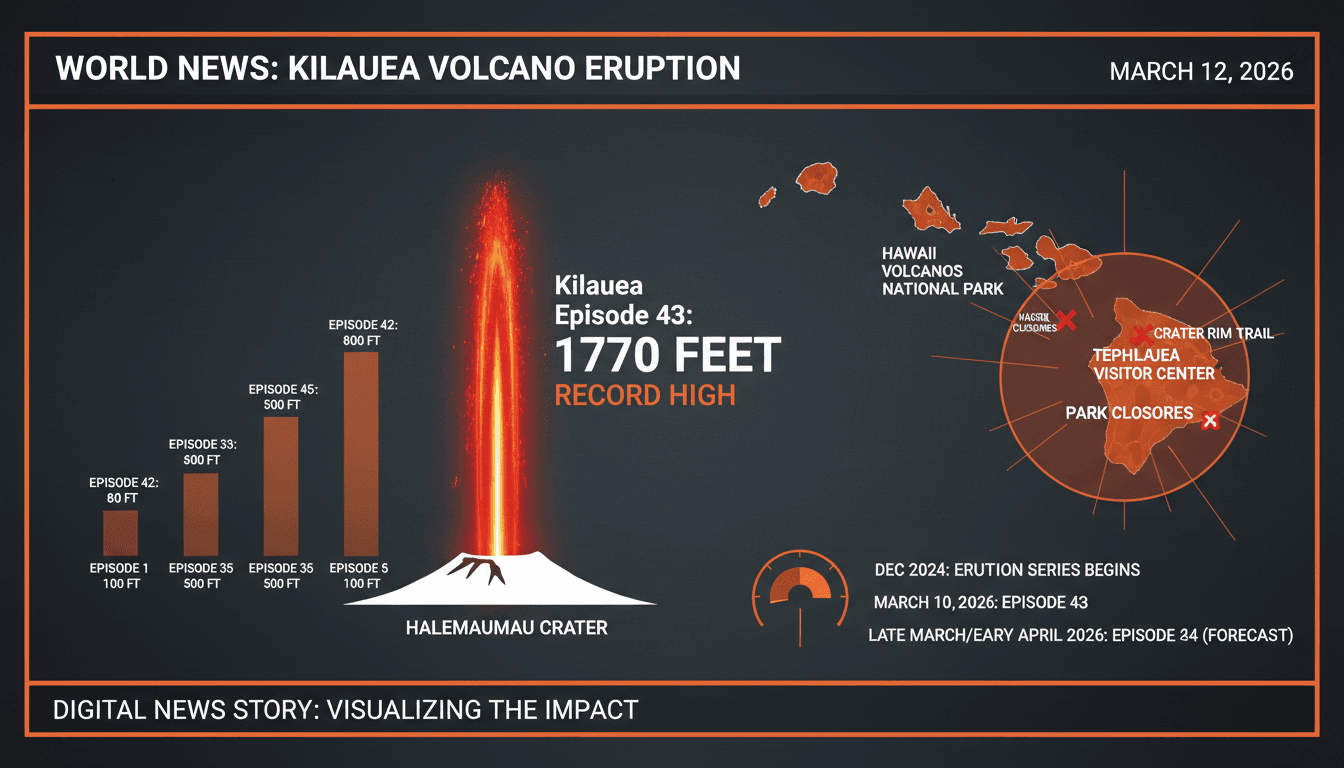
Kilauea episode 43 eruption produces record 1770-foot lava fountains prompting park closures
Here's what it means for you.
Understanding volcanic activity can inform risk management and safety protocols for professionals in tourism and environmental sectors.
What happened
On March 10, 2026, Kilauea's summit eruption produced record-high lava fountains and significant tephra fallout, leading to temporary safety closures in Hawaii Volcanoes National Park.
The Context
- Episodic Eruptions: Kilauea has been erupting intermittently since December 2024, with episodes characterized by intense lava fountaining.
- Wider Impact: Episode 43's tephra fallout dispersed more broadly due to wind patterns, affecting areas not previously impacted by prior eruptions.
- Safety Measures: Park staff responded quickly, clearing tephra and reopening affected roads within days, ensuring minimal disruption to visitors.
The Number
— This is the maximum height reached by the south vent lava fountain, setting a new record for the eruption series and showcasing the volcano's increased activity.
Takeaway
As Kilauea continues to show signs of activity, monitoring and preparedness will be crucial for both local authorities and visitors.
Conservative-leaning coverage of current events.
"Fox News is a highly influential conservative news outlet known for right-leaning political commentary and coverage."
— A47 Editor
Famous volcano blasts lava 1,000 feet high, triggering emergency closures at national park
Hawaii's Kilauea volcano erupted, sending lava fountains up to 1,000 feet high and prompting emergency closures of highways and Hawaii Volcanoes National Park as volcanic ash affected nearby Big Island communities.
Science and technology stories including AI.
"Longstanding science magazine with thoughtful AI coverage."
— A47 Editor
See Hawaii’s Kīlauea volcano erupt, shooting lava 1,300 feet into the air
Hawaii's Kīlauea volcano erupted, releasing 16 million cubic yards of lava over nine hours and sending a cloud of ash more than 30,000 feet into the air, with lava fountains reaching up to 1,300 feet.
Scientific research, technology, environment, and society.
"Scientific American is one of the oldest and most authoritative science magazines, known for deep dives into science, technology, and society."
— A47 Editor
See Hawaii’s Kīlauea volcano erupt, shooting lava 1,300 feet into the air
Hawaii's Kīlauea volcano erupted, releasing 16 million cubic yards of lava over nine hours and sending a cloud of ash more than 30,000 feet into the air, with lava fountains reaching up to 1,300 feet.