
US Naval Blockade on Iranian Vessels Escalates Strait of Hormuz Crisis
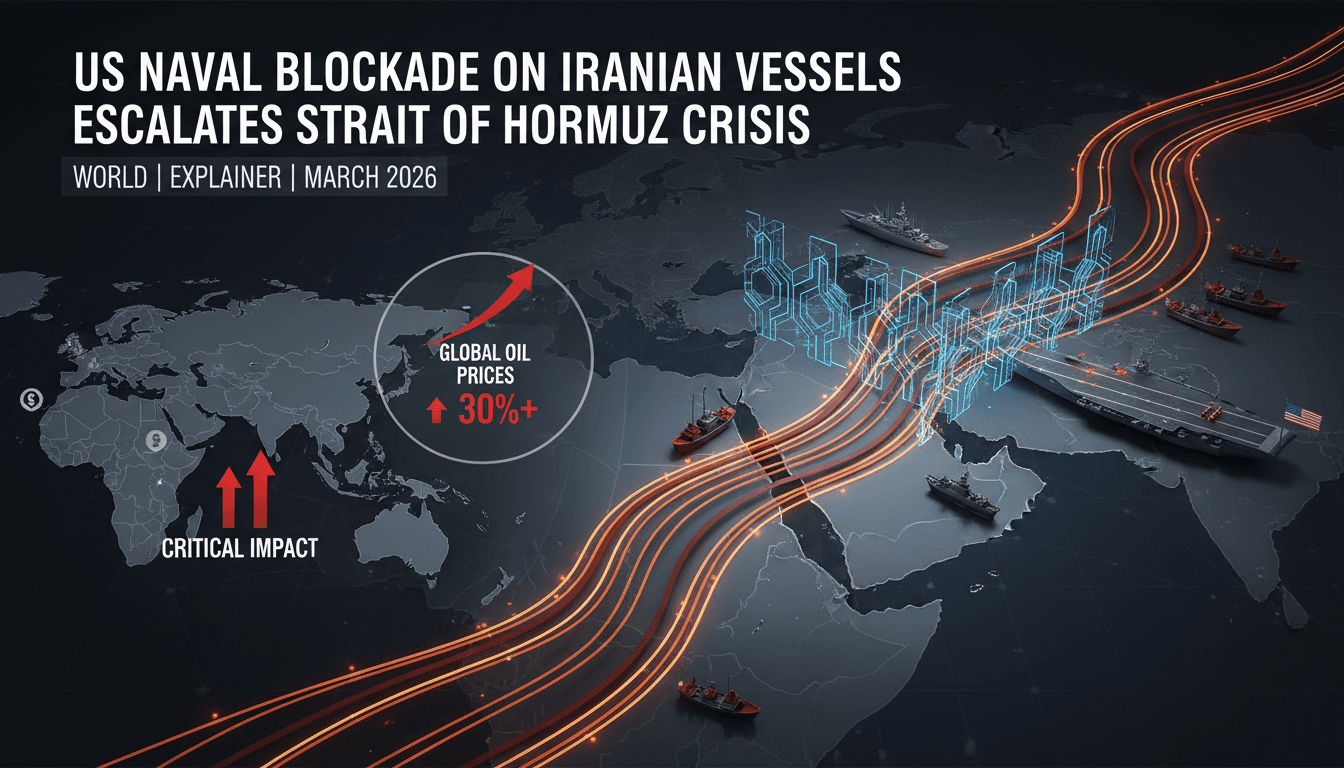
Here's what it means for you.
Rising oil prices and inflationary pressures could significantly impact your daily expenses and business operations.
Why it matters
The Strait of Hormuz is a critical chokepoint for global oil trade, and disruptions here can ripple through economies worldwide.
What happened (in 30 seconds)
- US imposed a naval blockade on Iranian vessels in April 2026 amid escalating tensions with Iran.
- Iran restricted access to the Strait of Hormuz in March 2026, drastically reducing shipping traffic.
- Oil prices surged globally, with forecasts predicting prices could reach $200 per barrel due to supply shocks.
The context you actually need
- The Strait of Hormuz is a vital waterway, facilitating approximately 20% of global oil trade, making it essential for energy security.
- Geopolitical tensions have been rising since early 2026, with Iran leveraging its control over the strait as a strategic asset amid ongoing conflicts.
- Asian economies, which absorb 80% of the oil flows through the strait, are particularly vulnerable to disruptions, impacting global supply chains.
What's really happening
The Strait of Hormuz has long been a critical artery for global energy, with over 20 million barrels of oil transiting daily. In late March 2026, Iran's decision to effectively close the strait was a direct response to military strikes on its infrastructure, showcasing its leverage in the ongoing US-Iran conflict. The US, under President Donald Trump, responded with ultimatums demanding the reopening of the strait, escalating tensions further.
On April 13, the US initiated a blockade targeting Iranian ports and vessels, allowing only non-Iranian ships to transit. This blockade has led to a dramatic reduction in shipping traffic, with reports indicating that vessel movement has fallen below 10% of normal levels. The implications of this blockade are profound, as it not only disrupts oil supplies but also creates a precarious situation for the thousands of sailors stranded on vessels in the region.
The economic fallout is immediate and severe. Oil prices have surged globally, with forecasts suggesting they could reach $200 per barrel. This spike is driven by fears of prolonged supply disruptions, which could lead to inflationary pressures across various sectors. The UAE's ADNOC CEO has called for an unconditional reopening of the strait, emphasizing the need for accountability from Iran. Meanwhile, China has urged for navigation security without military intervention, highlighting the delicate balance of international relations at play.
As the situation unfolds, major oil-exporting nations like Kuwait, Qatar, and Iraq, which rely heavily on the strait for their exports, are facing significant challenges. The interconnectedness of global energy markets means that disruptions in the Strait of Hormuz will have cascading effects, particularly for Asian economies that are the primary recipients of oil flows from this region.
Who feels it first (and how)
- Consumers: Higher fuel and grocery prices due to inflationary pressures.
- Businesses: Increased operational costs, particularly in energy-dependent sectors.
- Asian economies: Countries like China, India, and Japan may experience curtailed economic activity due to reduced oil supplies.
- Shipping companies: Significant delays and increased costs due to the blockade and reduced traffic.
What to watch next
- Oil price fluctuations: Monitor how prices respond to ongoing geopolitical developments, as sustained high prices could lead to broader economic impacts.
- Shipping traffic levels: Keep an eye on the volume of vessels transiting the Strait of Hormuz, as changes could indicate shifts in the geopolitical landscape.
- International diplomatic efforts: Watch for any negotiations or interventions aimed at de-escalating tensions between the US and Iran, which could influence the blockade's duration.
The Strait of Hormuz is a critical chokepoint for global oil trade.
Oil prices will remain volatile as long as the blockade and tensions persist.
The long-term geopolitical ramifications of the US-Iran conflict and its impact on global energy security.
Frequently Asked Questions
- Why it matters?
- The Strait of Hormuz is a critical chokepoint for global oil trade, and disruptions here can ripple through economies worldwide.
- What happened (in 30 seconds)?
- US imposed a naval blockade on Iranian vessels in April 2026 amid escalating tensions with Iran. Iran restricted access to the Strait of Hormuz in March 2026, drastically reducing shipping traffic. Oil prices surged globally, with forecasts predicting prices could reach $200 per barrel due to supply shocks.
- What's really happening?
- The Strait of Hormuz has long been a critical artery for global energy, with over 20 million barrels of oil transiting daily. In late March 2026, Iran's decision to effectively close the strait was a direct response to military strikes on its infrastructure, showcasing its leverage in the ongoing US-Iran conflict. The US, under President Donald Trump, responded with ultimatums demanding the reopening of the strait, escalating tensions further. On April 13, the US initiated a blockade targeting
- Who feels it first (and how)?
- Consumers: Higher fuel and grocery prices due to inflationary pressures. Businesses: Increased operational costs, particularly in energy-dependent sectors. Asian economies: Countries like China, India, and Japan may experience curtailed economic activity due to reduced oil supplies. Shipping companies: Significant delays and increased costs due to the blockade and reduced traffic.
- What to watch next?
- Oil price fluctuations: Monitor how prices respond to ongoing geopolitical developments, as sustained high prices could lead to broader economic impacts. Shipping traffic levels: Keep an eye on the volume of vessels transiting the Strait of Hormuz, as changes could indicate shifts in the geopolitical landscape. International diplomatic efforts: Watch for any negotiations or interventions aimed at de-escalating tensions between the US and Iran, which could influence the blockade's duration.
Saudi newspaper coverage spanning local, national, and public-interest stories.
"Makkah Newspaper generally reflects mainstream Saudi editorial priorities with an emphasis on domestic issues."
— A47 Editor
مضيق هرمز... شريان الطاقة الذي يربط العالم
The Strait of Hormuz is a crucial global energy corridor, through which 20% of the world's oil and 10% of global petrochemicals transit, highlighting its significance in international trade and energy security.
Arabic-language reporting focused on domestic developments in Saudi Arabia.
"Okaz is a mainstream Saudi newspaper that often reflects domestic priorities and official-facing coverage."
— A47 Editor
تدويل أمن الممرات البحرية
Maritime corridors are increasingly becoming a flexible conduit for international trade and economic exchange, yet current tensions, particularly involving Tehran's control over the Strait of Hormuz and threats to the Bab el-Mandeb Strait, are jeopar...
Arabic-language UAE newspaper coverage focused on domestic affairs, public institutions, business, society, and regional developments.
"Al Khaleej coverage generally reflects a mainstream UAE editorial lens with strong attention to public affairs, institutions, and regional developments."
— A47 Editor
كيف يتم تطبيق «حصار ترامب» على مضيق هرمز ؟
The Strait of Hormuz has recently been utilized by the Iranian government as a tool for international leverage, indicating a shift in its strategic importance in regional politics. This development comes after weeks of heightened tensions surrounding...