
SEC and CFTC Propose Major Amendments to Hedge Fund Reporting Requirements
Here's what it means for you.
If you’re involved in private fund management, these proposed changes could significantly reduce your compliance workload.
Why it matters
This proposal aims to streamline reporting for private fund advisers, potentially reshaping the regulatory landscape for hedge funds and impacting systemic risk monitoring.
What happened (in 30 seconds)
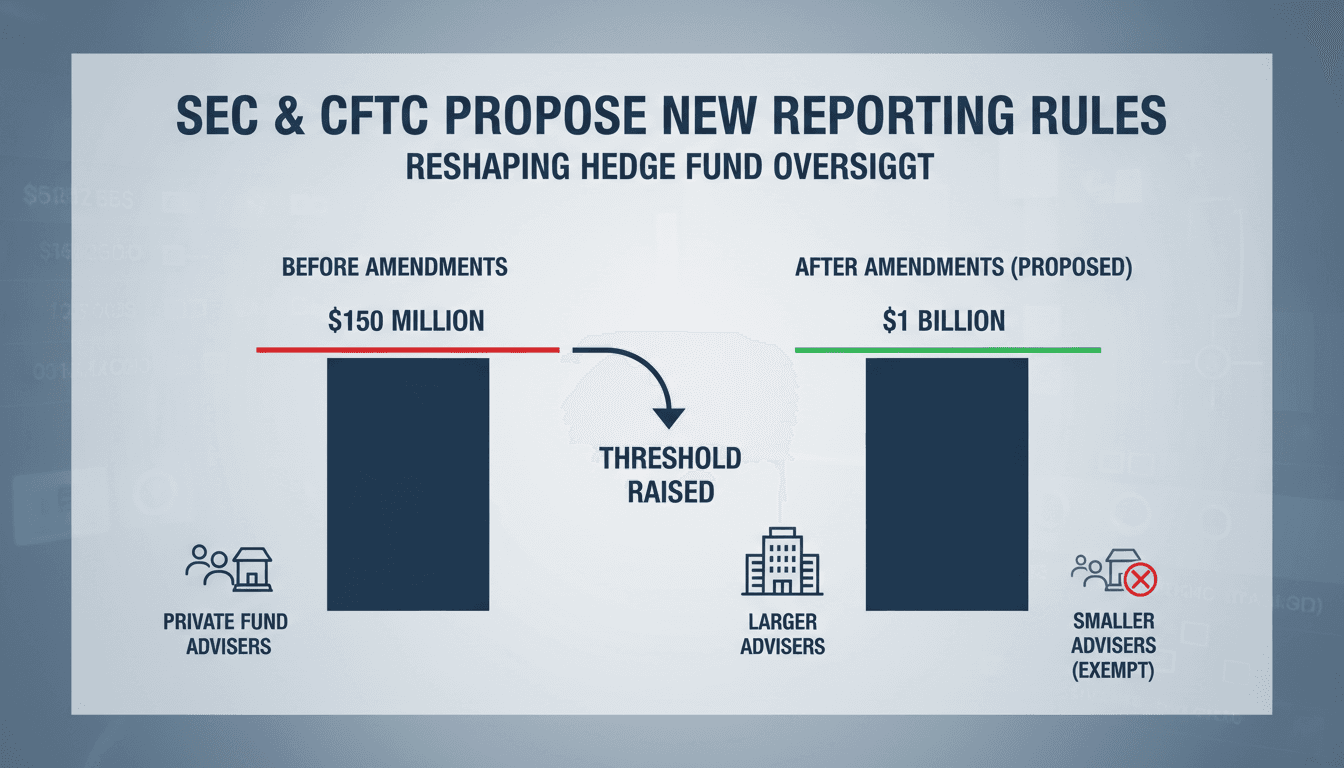
- On April 20, 2026, the SEC and CFTC proposed amendments to Form PF, raising the filing threshold for private fund advisers from $150 million to $1 billion in assets under management.
- Nearly 50% of current filers, primarily smaller advisers, would be exempt from reporting requirements under the new thresholds.
- The large hedge fund adviser threshold is set to increase from $1.5 billion to $10 billion, aiming to reduce compliance burdens while maintaining systemic risk oversight.
The context you actually need
- Form PF was established under the Dodd-Frank Act to collect data from private fund advisers for monitoring systemic risks.
- Current thresholds have remained unchanged since 2011, despite significant growth in private fund assets and the number of filers.
- Previous amendments have expanded reporting requirements, increasing compliance burdens without clear regulatory benefits.
What's really happening
The SEC and CFTC's joint proposal to amend Form PF reflects a significant shift in regulatory focus towards alleviating compliance burdens for private fund advisers. By raising the asset thresholds for reporting, the agencies aim to exempt a substantial portion of smaller advisers—nearly 50% of current filers—who typically manage less than $1 billion in assets. This change is particularly relevant as the private fund sector has seen its gross assets more than triple since 2013, yet the reporting requirements have remained static, leading to increased operational costs for smaller firms.
The proposed amendments also increase the threshold for large hedge fund advisers from $1.5 billion to $10 billion. This move is designed to streamline the reporting process, allowing larger funds to focus on their investment strategies rather than compliance paperwork. SEC Chair Paul S. Atkins and CFTC Chair Michael S. Selig have emphasized the importance of reducing unnecessary compliance costs, which can stifle innovation and growth in the private fund sector.
However, while the proposal aims to ease the burden on smaller advisers, it raises questions about the potential impact on systemic risk monitoring. The Financial Stability Oversight Council (FSOC) relies on data collected through Form PF to assess risks in the financial system. By exempting a significant number of advisers from reporting, there is a concern that the FSOC may have less visibility into the activities of smaller funds, which could pose risks to the broader financial system.
The proposal is currently in a 60-day public comment period, allowing stakeholders to voice their opinions and concerns. This feedback will be crucial in shaping the final amendments and determining how the regulatory landscape will evolve. The SEC and CFTC's approach reflects a balancing act between reducing compliance burdens for private fund advisers and ensuring adequate oversight to protect investors and maintain financial stability.
Who feels it first (and how)
- Small private fund advisers: They will benefit from reduced compliance costs and administrative burdens.
- Large hedge fund managers: They may experience less regulatory scrutiny, allowing for more focus on investment strategies.
- Regulatory bodies: The FSOC may face challenges in monitoring systemic risks due to reduced data from exempted advisers.
What to watch next
- Public comments: The responses during the 60-day comment period will indicate industry sentiment and potential adjustments to the proposal.
- Market reactions: Watch for any shifts in investment strategies or fund formations as advisers adjust to the new thresholds.
- Regulatory adjustments: Future amendments may emerge based on feedback, impacting compliance requirements and oversight mechanisms.
The SEC and CFTC have proposed raising reporting thresholds for private fund advisers.
Smaller advisers will experience reduced compliance burdens if the proposal is finalized.
The long-term impact on systemic risk monitoring and investor protection remains to be seen.
Frequently Asked Questions
- Why it matters?
- This proposal aims to streamline reporting for private fund advisers, potentially reshaping the regulatory landscape for hedge funds and impacting systemic risk monitoring.
- What happened (in 30 seconds)?
- On April 20, 2026, the SEC and CFTC proposed amendments to Form PF, raising the filing threshold for private fund advisers from $150 million to $1 billion in assets under management. Nearly 50% of current filers, primarily smaller advisers, would be exempt from reporting requirements under the new thresholds. The large hedge fund adviser threshold is set to increase from $1.5 billion to $10 billion, aiming to reduce compliance burdens while maintaining systemic risk oversight.
- What's really happening?
- The SEC and CFTC's joint proposal to amend Form PF reflects a significant shift in regulatory focus towards alleviating compliance burdens for private fund advisers. By raising the asset thresholds for reporting, the agencies aim to exempt a substantial portion of smaller advisers—nearly 50% of current filers—who typically manage less than $1 billion in assets. This change is particularly relevant as the private fund sector has seen its gross assets more than triple since 2013, yet the reporting
- Who feels it first (and how)?
- Small private fund advisers: They will benefit from reduced compliance costs and administrative burdens. Large hedge fund managers: They may experience less regulatory scrutiny, allowing for more focus on investment strategies. Regulatory bodies: The FSOC may face challenges in monitoring systemic risks due to reduced data from exempted advisers.
- What to watch next?
- Public comments: The responses during the 60-day comment period will indicate industry sentiment and potential adjustments to the proposal. Market reactions: Watch for any shifts in investment strategies or fund formations as advisers adjust to the new thresholds. Regulatory adjustments: Future amendments may emerge based on feedback, impacting compliance requirements and oversight mechanisms.
Global markets, investing, and macroeconomics from a premier financial newsroom.
"Bloomberg is respected for in-depth financial reporting and data-driven analysis."
— A47 Editor
SEC, CFTC Propose Narrowing Hedge Fund Reporting Requirements
The SEC and CFTC have proposed a plan to narrow the reporting requirements for hedge funds, aiming to ease compliance burdens on these financial entities. This initiative reflects a broader regulatory shift towards reducing the complexity of reportin...
Macro commentary, policy analysis, growth/inflation themes, and global outlooks.
"Contextual macro coverage that complements day-to-day market headlines."
— A47 Editor
Wall Street regulators jointly propose to trim Biden-era private fund reporting rules
Wall Street regulators have proposed to reduce the reporting requirements established during the Biden administration for private funds, aiming to streamline compliance processes for financial institutions. This move reflects ongoing adjustments in r...