
Fraudsters Target Shipping Firms in Strait of Hormuz with Cryptocurrency Scam
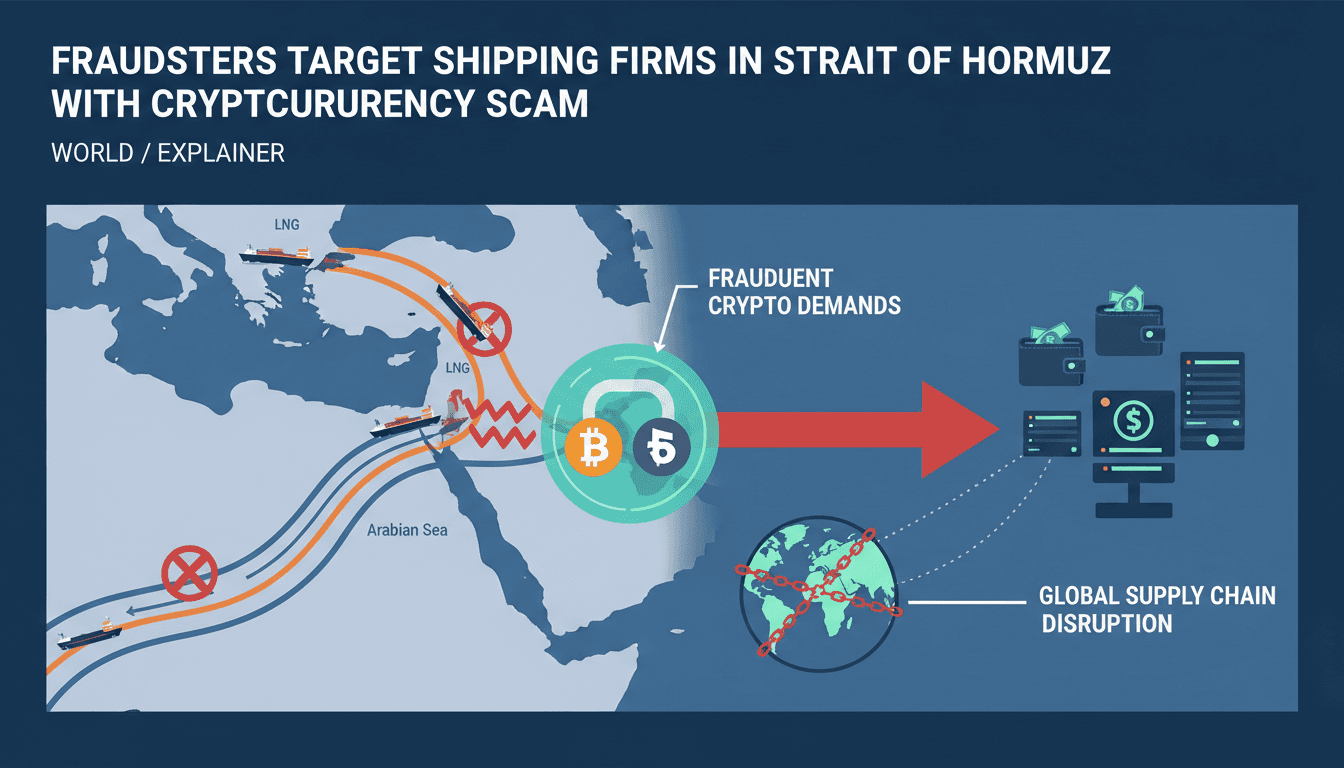
Here's what it means for you.
If you're involved in global shipping or logistics, this scam could disrupt your operations and increase costs.
Why it matters
This incident highlights vulnerabilities in maritime security and the potential for cryptocurrency to facilitate fraud during geopolitical crises.
What happened (in 30 seconds)
- Fraudsters targeted global shipping firms with fake demands for Bitcoin or Tether payments for transit clearances in the Strait of Hormuz.
- At least one vessel, the Indian-flagged tanker Sanmar Herald, reportedly paid fees before being fired upon by Iranian Revolutionary Guards.
- MARISKS issued alerts confirming the messages were fraudulent, urging shipowners to ignore them amid ongoing blockades.
The context you actually need
- Geopolitical tensions escalated in February 2026, leading to Iran's blockade of the Strait of Hormuz in response to US-Israel military actions.
- Hundreds of vessels are stranded in the strait, carrying one-fifth of global oil and LNG flows, creating desperation that scammers exploit.
- Iran's proposal for cryptocurrency tolls on April 9 aimed to circumvent sanctions, but the situation has led to confusion and vulnerability among shipping firms.
What's really happening
The recent scam targeting shipping firms in the Strait of Hormuz is a direct consequence of heightened geopolitical tensions and the resulting operational chaos. Following the US-Israel strikes on Iran in late February 2026, Iran responded by blocking the strait, a critical maritime route for global oil and LNG shipments. This blockade has left hundreds of vessels stranded, with approximately 20,000 seafarers affected, creating a ripe environment for exploitation.
On April 9, Iran proposed a cryptocurrency-based toll system for transit, aiming to navigate around international sanctions. This announcement coincided with a naval blockade imposed by the US on April 14, further complicating the situation. The strait briefly opened on April 18, but incidents of gunfire from Iranian forces led to immediate reversals for at least two vessels, including the Sanmar Herald.
The scammers, posing as Iranian officials, capitalized on the confusion and desperation of shipping companies. They sent messages demanding payments in Bitcoin or Tether for purported transit clearances, claiming that these fees would ensure "unimpeded" passage through the strait. The Sanmar Herald fell victim to this scheme, paying fees before being fired upon by Iranian Revolutionary Guards, illustrating the dangerous intersection of fraud and geopolitical conflict.
MARISKS, a Greek maritime risk firm, quickly issued alerts to warn shipping companies about the fraudulent messages. They emphasized the importance of verifying any communications through official channels to avoid falling prey to scams. The lack of a confirmed response from the Iranian government regarding these fraudulent activities raises questions about the effectiveness of maritime security in the region.
As the situation unfolds, the implications extend beyond individual shipping firms. The incident underscores the vulnerabilities in global supply chains, particularly in regions experiencing geopolitical instability. With oil prices already surging post-incident, the potential for increased operational costs and disruptions in logistics is significant. The International Transport Workers' Federation has also highlighted the welfare of seafarers, who are caught in the crossfire of these geopolitical tensions and scams.
Who feels it first (and how)
- Shipping companies: Increased operational costs and potential losses from scams.
- Seafarers: Heightened risks and uncertainty regarding their safety and employment.
- Logistics firms: Disruptions in supply chains leading to delays and increased prices.
- Oil and gas markets: Volatility in prices due to supply chain disruptions and geopolitical tensions.
- Dubai's economy: As a shipping hub, it faces potential impacts on trade and tourism.
What to watch next
- Shipping firm responses: Monitor how companies adapt their security protocols and verify communications to prevent future scams.
- Geopolitical developments: Watch for any changes in US-Iran relations that could affect maritime security in the Strait of Hormuz.
- Cryptocurrency regulations: Keep an eye on how governments respond to the use of cryptocurrencies in scams and their implications for maritime operations.
The scam is exploiting the current geopolitical crisis and the blockade of the Strait of Hormuz.
Increased scrutiny on maritime security and potential regulatory changes regarding cryptocurrency transactions.
The long-term impact on shipping routes and oil prices as the geopolitical situation evolves.
Frequently Asked Questions
- Why it matters?
- This incident highlights vulnerabilities in maritime security and the potential for cryptocurrency to facilitate fraud during geopolitical crises.
- What happened (in 30 seconds)?
- Fraudsters targeted global shipping firms with fake demands for Bitcoin or Tether payments for transit clearances in the Strait of Hormuz. At least one vessel, the Indian-flagged tanker Sanmar Herald, reportedly paid fees before being fired upon by Iranian Revolutionary Guards. MARISKS issued alerts confirming the messages were fraudulent, urging shipowners to ignore them amid ongoing blockades.
- What's really happening?
- The recent scam targeting shipping firms in the Strait of Hormuz is a direct consequence of heightened geopolitical tensions and the resulting operational chaos. Following the US-Israel strikes on Iran in late February 2026, Iran responded by blocking the strait, a critical maritime route for global oil and LNG shipments. This blockade has left hundreds of vessels stranded, with approximately 20,000 seafarers affected, creating a ripe environment for exploitation. On April 9, Iran proposed a cr
- Who feels it first (and how)?
- Shipping companies: Increased operational costs and potential losses from scams. Seafarers: Heightened risks and uncertainty regarding their safety and employment. Logistics firms: Disruptions in supply chains leading to delays and increased prices. Oil and gas markets: Volatility in prices due to supply chain disruptions and geopolitical tensions. Dubai's economy: As a shipping hub, it faces potential impacts on trade and tourism.
- What to watch next?
- Shipping firm responses: Monitor how companies adapt their security protocols and verify communications to prevent future scams. Geopolitical developments: Watch for any changes in US-Iran relations that could affect maritime security in the Strait of Hormuz. Cryptocurrency regulations: Keep an eye on how governments respond to the use of cryptocurrencies in scams and their implications for maritime operations.
News, analysis, and thought leadership focusing exclusively on Bitcoin.
"Bitcoin Magazine is one of the original publications devoted to Bitcoin, offering in-depth news, analysis, and commentary."
— A47 Editor
Scammers Target Stranded Ships in Strait of Hormuz With Fake Bitcoin Transit Fees
Scammers are targeting global shipping firms by demanding fake transit fees in Bitcoin and Tether for vessels stranded in the Strait of Hormuz, amidst rising geopolitical tensions in the region. This fraudulent activity highlights the vulnerabilities...
UAE-based English-language newspaper covering regional politics, economics, and global affairs.
"The National reflects Emirati policy perspectives while maintaining international editorial standards."
— A47 Editor
Fraudsters offer ships Strait of Hormuz passage in exchange for crypto
Fraudsters are reportedly targeting shipping companies by offering safe passage through the Strait of Hormuz in exchange for cryptocurrency, exploiting the ongoing tensions and disruptions in the region. This scam comes amid heightened military activ...
Arabic-language coverage of political affairs and current events.
"Okaz political coverage typically follows mainstream Saudi framing on national and regional affairs."
— A47 Editor
فوضى هرمز تفتح باب الاحتيال.. رسوم وهمية لعبور السفن
A Greek maritime risk management company, Marisks, has issued a warning about fraudulent messages targeting shipping companies, claiming to secure safe passage for vessels through the Strait of Hormuz in exchange for cryptocurrency payments. These me...
Covers blockchain, cryptocurrency news, project analysis, and market insights.
"CoinDesk is a well-established cryptocurrency and blockchain news provider, offering comprehensive insights, market data, and industry research."
— A47 Editor
Crypto scammers offer ‘safe passage’ through Hormuz. At least one ship may have been conned.
Marisks, a maritime risk company, has issued a warning about scammers posing as Iranian authorities, offering 'safe passage' through the Hormuz Strait in exchange for bitcoin or USDT. This warning comes amid ongoing tensions and blockades affecting m...
Real-time updates, analysis, and reports on the blockchain and cryptocurrency sectors.
"Crypto News delivers real-time updates, analysis, and reports on the blockchain and cryptocurrency sectors."
— A47 Editor
Scammers seek crypto payments from ships stranded near Strait of Hormuz
MARISKS has issued a warning about scammers posing as Iranian authorities who are demanding cryptocurrency payments, specifically bitcoin or USDT, from ships stranded near the Strait of Hormuz. This alarming trend highlights the vulnerabilities faced...
Business and economy coverage focused on Dubai, the UAE, Saudi Arabia, and the wider Middle East.
"Arabian Business is a well-known regional business outlet with strong focus on Gulf markets, leadership, and investment stories."
— A47 Editor
Scam messages offering ships safe transit through Hormuz, security firm warns
MARISKS, a maritime risk management firm, has issued a warning to shipowners about fraudulent messages from unknown actors claiming to represent Iranian authorities. These messages demand cryptocurrency payments, specifically Bitcoin or Tether, for s...
Covers blockchain, cryptocurrency news, project analysis, and market insights.
"Cointelegraph is a leading crypto-focused media outlet known for timely news, analysis, and educational content related to blockchain and digital assets."
— A47 Editor
Scammers demand crypto from stranded ships in Strait of Hormuz: Report
Shipping companies with vessels stranded near the Strait of Hormuz are facing threats from scammers impersonating Iranian authorities, who are demanding cryptocurrency payments, specifically Bitcoin or USDt, for safe passage. This alarming trend has ...
Research, news, and analysis on blockchain startups, DeFi, and regulations.
"Crypto Briefing provides research, news, and analysis on blockchain startups, DeFi, and crypto regulations with investor-focused coverage."
— A47 Editor
Iranian actors demand crypto for safe passage in Strait of Hormuz
Iranian actors have demanded cryptocurrency as a means for safe passage through the strategically vital Strait of Hormuz, a key route for global oil trade. This demand arises amid escalating geopolitical tensions that threaten to disrupt oil supplies...
Regional coverage and analysis focused on politics, diplomacy, and business across the Middle East.
"Al-Monitor is known for analytical reporting on Middle East politics and policy developments."
— A47 Editor
Scam messages offering ships safe transit through Hormuz, security firm warns
A Greek maritime risk management firm, MARISKS, has issued a warning about fraudulent messages that promise safe passage through the Strait of Hormuz in exchange for cryptocurrency. These scams target shipping companies with vessels stranded west of ...
Research, news, and analysis on blockchain startups, DeFi, and regulations.
"Crypto Briefing provides research, news, and analysis on blockchain startups, DeFi, and crypto regulations with investor-focused coverage."
— A47 Editor
Iran accepts Bitcoin for oil tolls in Strait of Hormuz, stablecoins dominate
Iran has officially accepted Bitcoin as a payment method for oil tolls in the Strait of Hormuz, a strategic maritime passage crucial for global oil trade. This move reflects Iran's intent to leverage cryptocurrency amidst ongoing geopolitical tension...
Research, news, and analysis on blockchain startups, DeFi, and regulations.
"Crypto Briefing provides research, news, and analysis on blockchain startups, DeFi, and crypto regulations with investor-focused coverage."
— A47 Editor
Iran closes Strait of Hormuz, Bitcoin drops from $78K amid tensions
Iran's recent closure of the Strait of Hormuz has led to a significant drop in Bitcoin's price, which fell from a high of $78,000 amid escalating geopolitical tensions. This strategic maritime route is crucial for global oil trade, and its closure ha...