
Massive Fish Die-Off in Iraq's Wasit Province Due to Pollution
Here's what it means for you.
The mass die-off of fish in Iraq could ripple through seafood markets, affecting prices and availability.
Why it matters
This incident highlights the fragility of water resources and agricultural systems in Iraq, which can have broader implications for regional food security.
What happened (in 30 seconds)
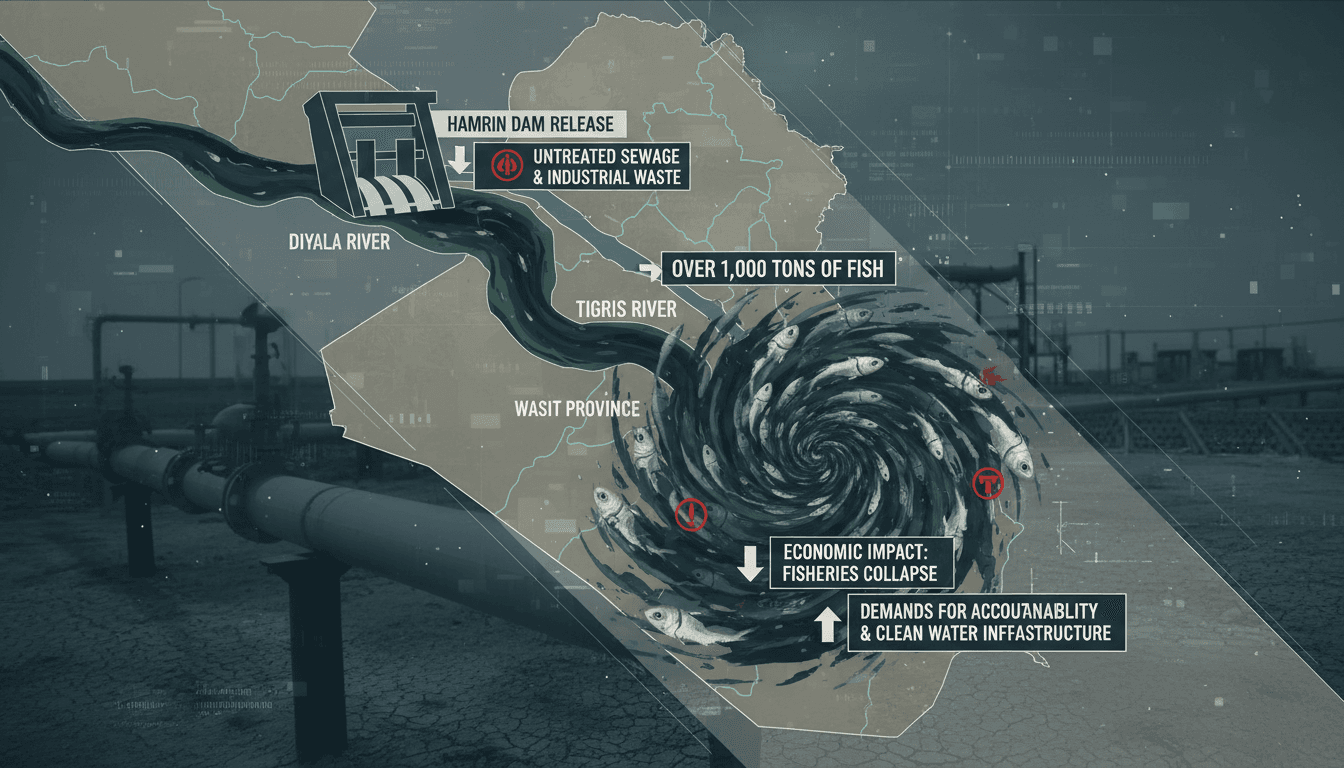
- Over 1,000 tons of fish died in fish farms along the Tigris River due to pollution from the Diyala River.
- Farmers faced losses exceeding $1 million as untreated sewage contaminated their ponds without prior warning.
- Health incidents prompted water restrictions in Wasit Province, raising concerns about public health and environmental safety.
The context you actually need
- Iraq is highly vulnerable to climate change, facing prolonged droughts and declining water levels in major rivers, exacerbated by upstream damming.
- The Diyala River is a chronic source of pollution, receiving untreated sewage that worsens during heavy rainfall, leading to toxic influxes into the Tigris.
- Infrastructure issues plague Iraq, with decades of conflict resulting in inadequate water management systems and environmental protections.
What's really happening
In late March 2026, heavy rainfall in Iraq prompted authorities to open the gates of the Hamrin Dam, releasing a surge of untreated sewage from the Diyala River into the Tigris. This influx was visually confirmed by satellite imagery, showing a dark stream of contaminated water flowing downstream. By April 5, the polluted water reached fish farms in Zubaydiya, where Haidar Kazem lost 300 tons of carp within hours. The situation escalated in mid-April when Mazen Mansour's farm in al-Numaniyah experienced a similar catastrophe, resulting in the loss of 38,000 fish overnight despite attempts to oxygenate the water.
The total toll across Wasit Province exceeded 1,000 tons, as reported by Arkan al-Shimari, head of the Wasit agriculture department. This incident not only devastated local fish stocks but also highlighted the systemic issues plaguing Iraq's water management. The lack of advance warnings for farmers compounded their losses, revealing a significant gap in communication and preparedness from local authorities.
As farmers like Kazem and Mansour buried dead fish and cleaned their cages, they called for state compensation and accountability for the lack of warnings. The aftermath saw authorities restricting water supplies sourced from the Tigris and documenting health incidents related to the pollution. In response, officials committed to improving wastewater treatment measures, including plans to operationalize seven additional treatment plants in Baghdad.
The broader implications of this event extend beyond immediate economic losses. It underscores the vulnerability of Iraq's agricultural sector to environmental shocks, which are likely to increase in frequency and severity due to climate change. The ongoing water crisis, driven by drought, upstream damming, and inadequate sewage treatment, poses a significant threat to food security and public health in the region.
Who feels it first (and how)
- Local fish farmers: Directly impacted by the loss of fish stocks and income.
- Consumers in Iraq: Potentially face higher seafood prices and reduced availability.
- Health officials: Must address rising health incidents linked to water pollution.
- Environmental agencies: Tasked with improving water management and pollution control measures.
What to watch next
- Compensation measures: Monitor how quickly and effectively the Iraqi government responds to farmers' demands for compensation, as this will impact local economic recovery.
- Water treatment initiatives: Watch for the operationalization of new wastewater treatment plants, which could mitigate future pollution events.
- Market reactions: Keep an eye on seafood prices in Iraq and the broader region, as supply disruptions could lead to price increases.
The die-off resulted in over 1,000 tons of fish killed and significant economic losses for farmers.
The Iraqi government will face pressure to improve water management and treatment infrastructure.
The long-term impacts on local seafood markets and public health remain to be fully assessed.
Frequently Asked Questions
- Why it matters?
- This incident highlights the fragility of water resources and agricultural systems in Iraq, which can have broader implications for regional food security.
- What happened (in 30 seconds)?
- Over 1,000 tons of fish died in fish farms along the Tigris River due to pollution from the Diyala River. Farmers faced losses exceeding $1 million as untreated sewage contaminated their ponds without prior warning. Health incidents prompted water restrictions in Wasit Province, raising concerns about public health and environmental safety.
- What's really happening?
- In late March 2026, heavy rainfall in Iraq prompted authorities to open the gates of the Hamrin Dam, releasing a surge of untreated sewage from the Diyala River into the Tigris. This influx was visually confirmed by satellite imagery, showing a dark stream of contaminated water flowing downstream. By April 5, the polluted water reached fish farms in Zubaydiya, where Haidar Kazem lost 300 tons of carp within hours. The situation escalated in mid-April when Mazen Mansour's farm in al-Numaniyah exp
- Who feels it first (and how)?
- Local fish farmers: Directly impacted by the loss of fish stocks and income. Consumers in Iraq: Potentially face higher seafood prices and reduced availability. Health officials: Must address rising health incidents linked to water pollution. Environmental agencies: Tasked with improving water management and pollution control measures.
- What to watch next?
- Compensation measures: Monitor how quickly and effectively the Iraqi government responds to farmers' demands for compensation, as this will impact local economic recovery. Water treatment initiatives: Watch for the operationalization of new wastewater treatment plants, which could mitigate future pollution events. Market reactions: Keep an eye on seafood prices in Iraq and the broader region, as supply disruptions could lead to price increases.
Regional and international reporting focused on Middle Eastern politics, diplomacy, and economics.
"Asharq Al-Awsat is a Saudi-owned international newspaper reflecting mainstream Gulf political perspectives."
— A47 Editor
Iraq Fish Die-off Leaves Farmers Mourning Lost Livelihoods
A significant fish die-off in Iraq's Tigris River has resulted in the loss of approximately 300 tonnes of fish, devastating local farmers like Haidar Kazem, who attribute the disaster to pollution from contaminated water. This incident underscores th...
Regional coverage of Middle East politics, diplomacy, and security issues.
"Arab News Middle East coverage often reflects Saudi and Gulf strategic interests in regional affairs."
— A47 Editor
Iraq fish die-off leaves farmers mourning lost livelihoods
A significant fish die-off occurred in Iraq's Tigris River, resulting in the loss of 300 tons of fish for farmer Haidar Kazem, who attributed the disaster to a flood of polluted water. This incident highlights the critical state of water supplies in ...