
Israeli airstrike in Ain Saada kills three civilians including Lebanese Forces leader
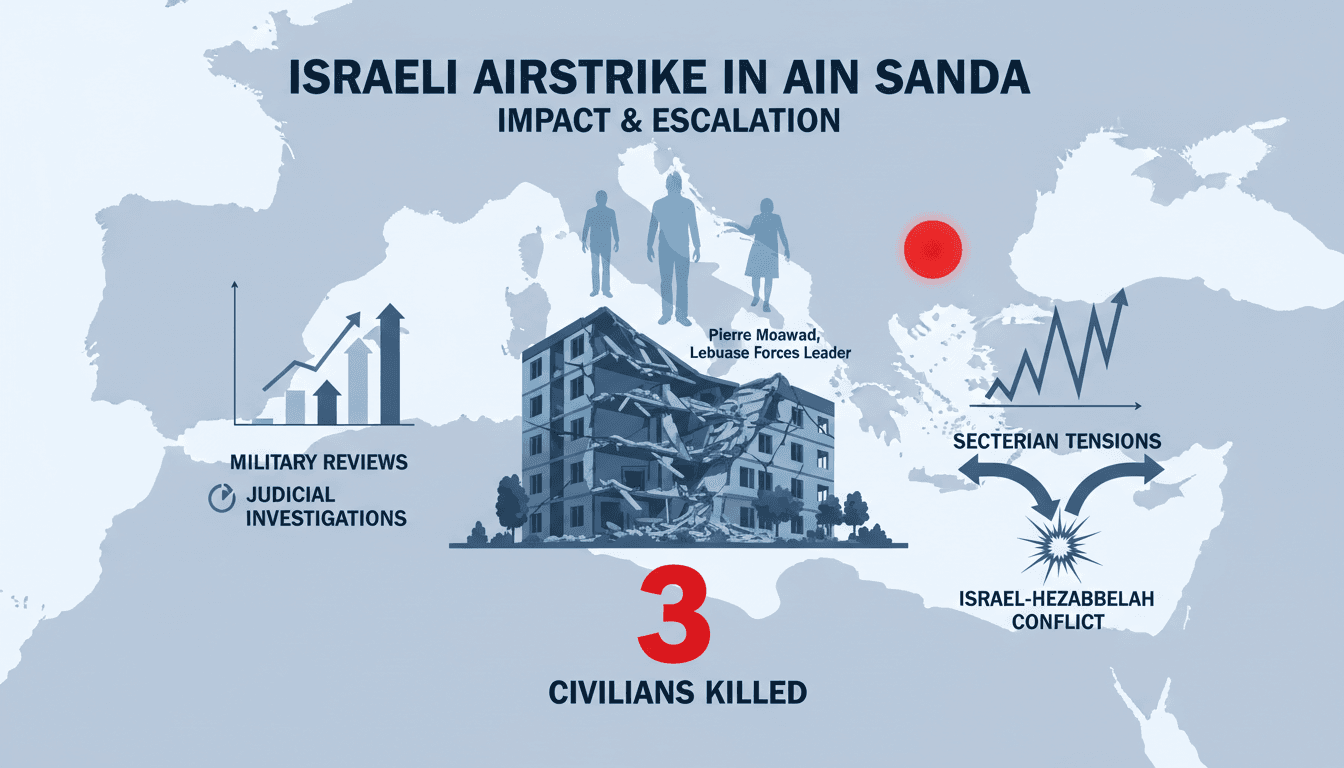
Here's what it means for you.
Increased tensions in Lebanon could affect travel and remittances for UAE residents with ties to the region.
Why it matters
The airstrike underscores the fragility of regional stability and its potential ripple effects on international markets and diplomatic relations.
What happened (in 30 seconds)
- Israeli airstrike on a residential building in Ain Saada, targeting a Hezbollah official, occurred on 5 April 2026.
- Three civilians killed, including Lebanese Forces leader Pierre Moawad and his wife, while the intended target escaped unharmed.
- Israeli military review initiated due to civilian casualties, with Lebanese investigations confirming the Hezbollah affiliation of the target.
The context you actually need
- Intensified conflict: The airstrike is part of a broader escalation in the Israel-Hezbollah conflict, with operations extending into previously unaffected areas of Beirut.
- Civilian embedding: Hezbollah's presence in diverse neighborhoods, including Christian-majority areas, raises the risk of collateral damage and sectarian tensions.
- Judicial investigations: Lebanese authorities are probing the incident, reflecting ongoing sectarian divides and the complex dynamics between Shia militants and anti-Hezbollah factions.
What's really happening
On 5 April 2026, the Israel Defense Forces (IDF) executed an airstrike in Ain Saada, targeting a mid-level Hezbollah official believed to be visiting a female resident. The strike resulted in the deaths of three civilians, including prominent political figure Pierre Moawad, head of the Lebanese Forces party, and his wife. The intended target managed to evade the strike, highlighting the challenges of precision in urban warfare, particularly in densely populated areas where Hezbollah operates.
The Israeli military confirmed the airstrike was aimed at a "terrorist target," but the collateral damage has prompted a review of operational protocols regarding civilian casualties. This incident is emblematic of the ongoing Israel-Hezbollah conflict, which has seen an uptick in hostilities amid broader regional tensions involving Iran. The airstrike's location in a residential area, previously considered safe from heavy bombardment, signals a dangerous escalation in military tactics and a potential shift in the conflict's dynamics.
The aftermath has sparked outrage among the Lebanese populace, with funerals for the victims drawing significant public anger directed at both Israel and Hezbollah. Lebanese officials have initiated investigations, emphasizing the need to address the rising sectarian divides exacerbated by such incidents. Analysts warn that the strike could deepen existing rifts between Shia and Christian factions in Lebanon, particularly given the Lebanese Forces' political stance against Hezbollah.
The broader implications of this airstrike extend beyond immediate casualties; it raises questions about the stability of Lebanon and the potential for increased violence in the region. As tensions escalate, the likelihood of retaliatory actions from Hezbollah or further Israeli strikes increases, which could destabilize not only Lebanon but also neighboring countries and impact international diplomatic relations.
Who feels it first (and how)
- Lebanese civilians: Increased risk of violence and instability in their neighborhoods.
- Political leaders: Pressure to respond to public outrage and manage sectarian tensions.
- UAE residents with Lebanese ties: Potential disruptions to travel and remittances as regional instability grows.
- International investors: Heightened risk perception affecting market stability and investment decisions in the region.
What to watch next
- Lebanese judicial outcomes: Investigations into the airstrike may influence public sentiment and political stability in Lebanon.
- Hezbollah's response: Any retaliatory actions could escalate the conflict and affect regional security dynamics.
- International diplomatic efforts: Watch for calls for restraint from global powers, which may impact foreign relations and economic conditions in the region.
Three civilians were killed in the airstrike, including a prominent political figure.
Increased sectarian tensions and potential retaliatory actions from Hezbollah.
The long-term impact on regional stability and international diplomatic relations.
Frequently Asked Questions
- Why it matters?
- The airstrike underscores the fragility of regional stability and its potential ripple effects on international markets and diplomatic relations.
- What happened (in 30 seconds)?
- Israeli airstrike on a residential building in Ain Saada, targeting a Hezbollah official, occurred on 5 April 2026. Three civilians killed, including Lebanese Forces leader Pierre Moawad and his wife, while the intended target escaped unharmed. Israeli military review initiated due to civilian casualties, with Lebanese investigations confirming the Hezbollah affiliation of the target.
- What's really happening?
- On 5 April 2026, the Israel Defense Forces (IDF) executed an airstrike in Ain Saada, targeting a mid-level Hezbollah official believed to be visiting a female resident. The strike resulted in the deaths of three civilians, including prominent political figure Pierre Moawad, head of the Lebanese Forces party, and his wife. The intended target managed to evade the strike, highlighting the challenges of precision in urban warfare, particularly in densely populated areas where Hezbollah operates. T
- Who feels it first (and how)?
- Lebanese civilians: Increased risk of violence and instability in their neighborhoods. Political leaders: Pressure to respond to public outrage and manage sectarian tensions. UAE residents with Lebanese ties: Potential disruptions to travel and remittances as regional instability grows. International investors: Heightened risk perception affecting market stability and investment decisions in the region.
- What to watch next?
- Lebanese judicial outcomes: Investigations into the airstrike may influence public sentiment and political stability in Lebanon. Hezbollah's response: Any retaliatory actions could escalate the conflict and affect regional security dynamics. International diplomatic efforts: Watch for calls for restraint from global powers, which may impact foreign relations and economic conditions in the region.
Pan-Arab news coverage spanning politics, business, sports, and regional affairs.
"Asharq Al-Awsat reflects a broad Arab editorial perspective with strong attention to regional geopolitics."
— A47 Editor
غارة الأحد على مبنى شرق بيروت كانت تستهدف مسؤولاً من «حزب الله»
A judicial source revealed to Agence France-Presse that the Israeli airstrike on a building in eastern Beirut over the past weekend targeted a Hezbollah official.
Arabic-language UAE newspaper coverage focused on domestic affairs, public institutions, business, society, and regional developments.
"Al Khaleej coverage generally reflects a mainstream UAE editorial lens with strong attention to public affairs, institutions, and regional developments."
— A47 Editor
بعد قصف بيروت المرعب.. إسرائيل تعلن استهداف قيادي في حزب الله
The Israeli military announced on Wednesday that it targeted a Hezbollah leader in Beirut, following reports from Lebanese state media about the incident. This development comes amid heightened tensions in the region, particularly concerning the ongo...