
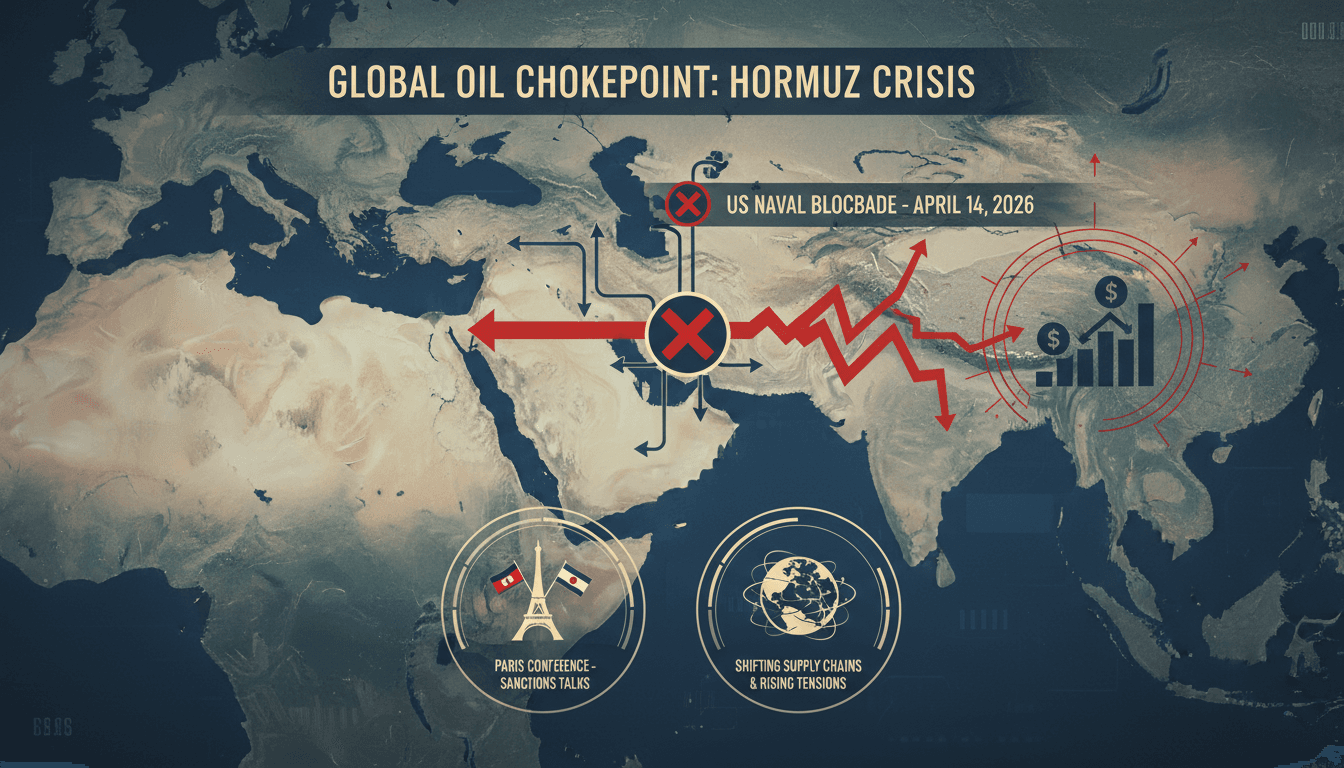
US Naval Blockade on Iran Escalates Strait of Hormuz Crisis as Paris Conference Plans Sanctions
Here's what it means for you.
If you rely on global oil markets or have investments in the UAE, this crisis could significantly impact your financial landscape.
Why it matters
The Strait of Hormuz is a critical chokepoint for global oil and gas shipments, and disruptions here can lead to widespread economic repercussions.
What happened (in 30 seconds)
- April 14, 2026: The US imposes a maritime blockade on Iranian ports following Iran's restrictions on the Strait of Hormuz.
- April 17, 2026: A Paris conference, co-chaired by French President Emmanuel Macron and UK Prime Minister Keir Starmer, aims to coordinate multinational efforts to restore navigation freedom.
- Ongoing: The blockade is causing an estimated $276 million in daily losses to Iran's exports, while Dubai's stock markets have lost approximately $120 billion since the conflict began.
The context you actually need
- Geopolitical tensions: The crisis follows a 40-day war between US-Israel forces and Iran, which ended with a ceasefire brokered by Pakistan.
- Economic stakes: Approximately one-fifth of global oil and gas shipments pass through the Strait of Hormuz, making its stability crucial for energy markets.
- Failed negotiations: Direct talks between the US and Iran in Islamabad on April 12 did not yield an agreement, prompting the US to escalate its response.
What's really happening
The current crisis in the Strait of Hormuz is rooted in a complex interplay of military, economic, and diplomatic factors. Following a 40-day conflict between US-Israel forces and Iran, tensions escalated when Iran restricted access to the Strait of Hormuz, a vital maritime route for global oil and gas shipments. This restriction was a retaliatory measure against military actions perceived as aggressive by Iran.
In response, the United States initiated a comprehensive naval blockade on April 14, 2026, targeting Iranian ports to exert economic pressure and compel compliance. This blockade is not merely a tactical maneuver; it is a strategic effort to reassert US influence in the region and ensure the free flow of maritime trade. The blockade has immediate economic implications, with estimates suggesting that Iran is losing approximately $276 million daily in export revenues due to the restrictions.
The Paris conference scheduled for April 17, 2026, represents a critical moment for international diplomacy. Co-chaired by Macron and Starmer, the conference aims to unify efforts among over 40 countries to restore navigation freedom in the Strait. The discussions may lead to economic sanctions against Iran if the strait remains closed, further complicating the geopolitical landscape.
The economic ramifications extend beyond Iran. The UAE, particularly Dubai and Abu Dhabi, has already felt the impact, with stock markets losing around $120 billion in value since the onset of the conflict. This decline is attributed to reduced air traffic, declining tourism, and a slump in the property market, leading to widespread furloughs and layoffs. The UAE government is under pressure to ensure the security of maritime navigation, as the economic stability of the region hinges on the resolution of this crisis.
As the situation unfolds, the potential for escalation remains high. Iran has warned that the blockade threatens the ceasefire, indicating that further military actions could be on the horizon. The international community is closely monitoring these developments, as the outcomes will have far-reaching implications for global energy markets and geopolitical alliances.
Who feels it first (and how)
- Investors in oil markets: Fluctuations in oil prices directly affect investment returns.
- Residents of Dubai and Abu Dhabi: Economic strain from stock market losses and job insecurity.
- Shipping and logistics companies: Disruptions in maritime routes impact supply chains and operational costs.
- Tourism sector: Reduced travel and tourism due to heightened tensions and economic uncertainty.
What to watch next
- Paris Conference Outcomes: The decisions made on April 17 will shape the international response and could lead to new sanctions against Iran.
- Oil Price Movements: Watch for fluctuations in global oil prices as the blockade continues and geopolitical tensions escalate.
- Iran's Military Response: Any military escalation from Iran could further destabilize the region and impact global markets.
The US naval blockade is currently in effect, causing significant economic losses to Iran.
The Paris conference will result in coordinated international efforts, potentially including sanctions against Iran.
The long-term implications of the crisis on global oil markets and regional stability remain uncertain.
Frequently Asked Questions
- Why it matters?
- The Strait of Hormuz is a critical chokepoint for global oil and gas shipments, and disruptions here can lead to widespread economic repercussions.
- What happened (in 30 seconds)?
- April 14, 2026: The US imposes a maritime blockade on Iranian ports following Iran's restrictions on the Strait of Hormuz. April 17, 2026: A Paris conference, co-chaired by French President Emmanuel Macron and UK Prime Minister Keir Starmer, aims to coordinate multinational efforts to restore navigation freedom. Ongoing: The blockade is causing an estimated $276 million in daily losses to Iran's exports, while Dubai's stock markets have lost approximately $120 billion since the conflict began.
- What's really happening?
- The current crisis in the Strait of Hormuz is rooted in a complex interplay of military, economic, and diplomatic factors. Following a 40-day conflict between US-Israel forces and Iran, tensions escalated when Iran restricted access to the Strait of Hormuz, a vital maritime route for global oil and gas shipments. This restriction was a retaliatory measure against military actions perceived as aggressive by Iran. In response, the United States initiated a comprehensive naval blockade on April 1
- Who feels it first (and how)?
- Investors in oil markets: Fluctuations in oil prices directly affect investment returns. Residents of Dubai and Abu Dhabi: Economic strain from stock market losses and job insecurity. Shipping and logistics companies: Disruptions in maritime routes impact supply chains and operational costs. Tourism sector: Reduced travel and tourism due to heightened tensions and economic uncertainty.
- What to watch next?
- Paris Conference Outcomes: The decisions made on April 17 will shape the international response and could lead to new sanctions against Iran. Oil Price Movements: Watch for fluctuations in global oil prices as the blockade continues and geopolitical tensions escalate. Iran's Military Response: Any military escalation from Iran could further destabilize the region and impact global markets.
Arabic-language coverage of political affairs and current events.
"Okaz political coverage typically follows mainstream Saudi framing on national and regional affairs."
— A47 Editor
أزمة «هرمز» تتصدّر المناقشات .. مؤتمر باريس يلوح بتدابير اقتصادية ضد إيران
The French presidency announced that President Emmanuel Macron and British Prime Minister Keir Starmer will lead a video conference in Paris on Friday to discuss the crisis in the Strait of Hormuz, amid ongoing U.S. maritime sanctions on Iranian port...
Regional coverage and analysis focused on politics, diplomacy, and business across the Middle East.
"Al-Monitor is known for analytical reporting on Middle East politics and policy developments."
— A47 Editor
France, UK to host Hormuz talks Friday: French presidency
France and the UK are set to co-host a video conference on Friday to discuss a defensive mission aimed at securing the Strait of Hormuz, as announced by the French presidency. This meeting will be co-chaired by French President Emmanuel Macron and Br...
Global news coverage with extensive reporting on Middle Eastern conflicts and geopolitics.
"Al Jazeera is a Qatar-based broadcaster known for wide regional coverage and alternative perspectives."
— A47 Editor
Starmer announces talks to address the Strait of Hormuz crisis
UK Prime Minister Keir Starmer has announced that talks will be held this week, co-hosted with France, to seek a diplomatic resolution to the ongoing crisis in the Strait of Hormuz, which has been exacerbated by tensions with Iran.
Comprehensive coverage of Middle Eastern and global issues.
"Al Jazeera is a prominent voice from the Global South, especially the Middle East, with an emphasis on underreported stories."
— A47 Editor
Starmer announces talks to address the Strait of Hormuz crisis
UK Prime Minister Keir Starmer has announced that talks will be held this week, co-hosted with France, to seek a diplomatic resolution to the ongoing crisis in the Strait of Hormuz, which has been exacerbated by tensions with Iran.
International coverage from The Guardian's global desks.
"The Guardian is known for its progressive editorial stance and in-depth analysis."
— A47 Editor
Starmer says ‘highly fragile’ ceasefire with Iran should include Lebanon – UK politics live
UK Prime Minister Keir Starmer has emphasized the need for a 'highly fragile' ceasefire with Iran to include Lebanon, highlighting the importance of regional cooperation to reopen the Strait of Hormuz. This statement comes amid rising tensions follow...
Arabic-language coverage of political affairs and current events.
"Okaz political coverage typically follows mainstream Saudi framing on national and regional affairs."
— A47 Editor
بعثة دفاعية بطابع سلمي.. فرنسا وبريطانيا تخططان لـ«مهمة سلمية» في «هرمز»
French President Emmanuel Macron announced that Paris and London will soon organize talks aimed at establishing a "multinational mission with a peaceful character" to help restore navigation through the Strait of Hormuz. Macron emphasized that the mi...
English-language reporting on Saudi politics, policy, and society.
"Saudi Gazette reflects mainstream Saudi institutional perspectives."
— A47 Editor
Starmer says UK will not support US blockade of Hormuz Strait
British Prime Minister Keir Starmer announced that the UK will not support the US blockade of the Strait of Hormuz, a decision made in light of the recent tensions following the collapse of peace talks between the US and Iran. Starmer emphasized the ...
UAE-based English-language newspaper covering regional politics, economics, and global affairs.
"The National reflects Emirati policy perspectives while maintaining international editorial standards."
— A47 Editor
Starmer and Macron challenge Trump over US blockade of Strait of Hormuz
British Prime Minister Keir Starmer and French President Emmanuel Macron have publicly challenged U.S. President Donald Trump's announcement of a blockade on the Strait of Hormuz, a vital maritime route for global oil shipments, amid escalating tensi...
Macro commentary, policy analysis, growth/inflation themes, and global outlooks.
"Contextual macro coverage that complements day-to-day market headlines."
— A47 Editor
Starmer says UK will not join Iran blockade
UK Prime Minister Keir Starmer has stated that the UK will not participate in the blockade of Iran, which is set to be implemented by the U.S. military starting Monday. This decision comes amid escalating tensions following the collapse of peace nego...
Regional and international reporting focused on Middle Eastern politics, diplomacy, and economics.
"Asharq Al-Awsat is a Saudi-owned international newspaper reflecting mainstream Gulf political perspectives."
— A47 Editor
Starmer: UK Will Not Back Blockade of Strait of Hormuz
British Prime Minister Keir Starmer announced that the UK will not support a U.S. blockade of the Strait of Hormuz, emphasizing the importance of keeping this critical maritime route open for global oil transport. This decision comes amid rising tens...