
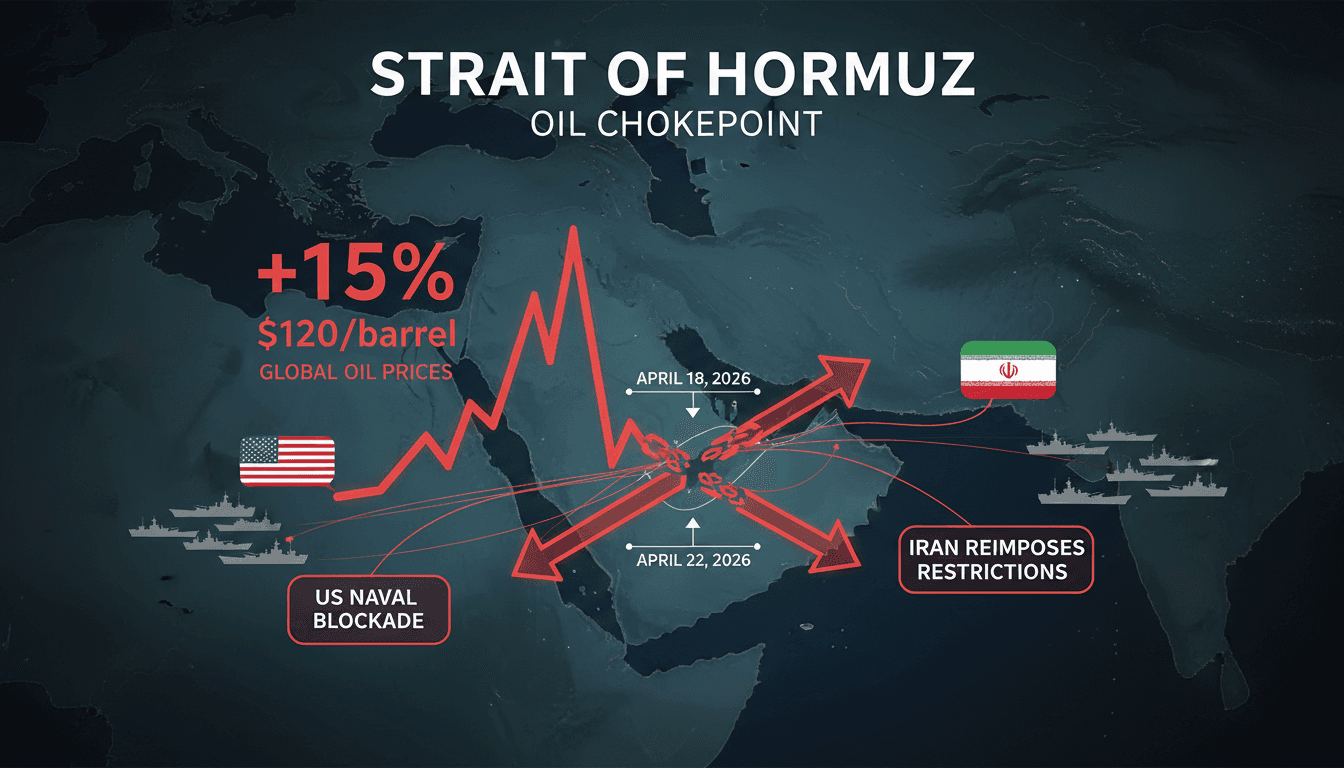
Iran Reimposes Restrictions on Strait of Hormuz Amid US Naval Blockade
Here's what it means for you.
Expect fluctuations in oil prices and potential disruptions in global supply chains.
What happened
On April 18, 2026, Iran reimposed restrictions on the Strait of Hormuz, closing the vital waterway to most commercial traffic.
The Context
- 20% of global oil trade passes through the Strait of Hormuz, making it a critical chokepoint for energy supplies.
- Ongoing tensions between the U.S. and Iran have escalated since a U.S.-Israeli air campaign in February 2026, leading to military confrontations and shipping disruptions.
- Market reactions include rising oil prices and increased shipping insurance premiums, reflecting heightened risk in global markets.
The Number
— the peak price of Dubai crude amid March 2026 disruptions, highlighting the volatility that can impact your operational costs.
Takeaway
As negotiations resume, keep an eye on market trends that could affect energy prices and supply chain stability.
Global markets, investing, and macroeconomics from a premier financial newsroom.
"Bloomberg is respected for in-depth financial reporting and data-driven analysis."
— A47 Editor
Traders Brace for Renewed Turmoil on Hormuz Standoff
Traders are preparing for a turbulent week as tensions surrounding the Strait of Hormuz escalate, reviving uncertainties that Wall Street had previously overlooked. This comes after a week where the S&P 500 Index reached record highs and oil prices a...
Stock market news, investing ideas, and trading analysis.
"TheStreet provides market news and retail-investor-focused analysis."
— A47 Editor
Wall Street just sent oil stocks a brutal message after Iran’s move
On April 17, U.S. stocks surged as Iran announced that the Strait of Hormuz would remain operational during the ceasefire between Israel and Lebanon, alleviating fears of a significant oil supply disruption. The Dow Jones Industrial Average rose over...