
U.S. SEC Approves Elimination of Pattern Day Trader Rule
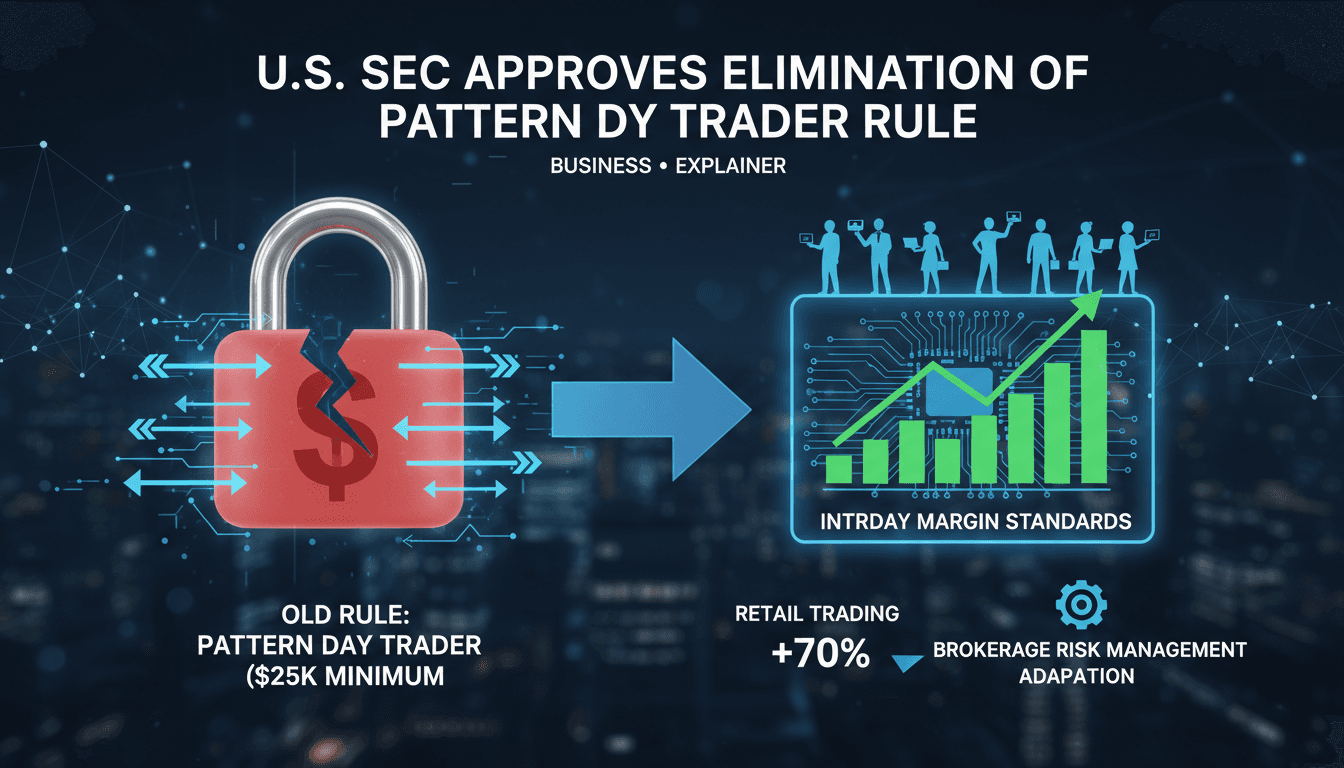
Here's what it means for you.
If you're a retail trader, this regulatory shift could lower your barriers to frequent trading and reshape your investment strategies.
Why it matters
This change modernizes trading regulations, potentially increasing retail trading activity and altering risk management practices in the market.
What happened (in 30 seconds)
- On April 14, 2026, the SEC approved FINRA's proposal to eliminate the Pattern Day Trader (PDT) rule, which mandated a $25,000 minimum equity for certain traders.
- The new rule introduces intraday margin standards that allow brokerages to monitor real-time risks and block trades that could lead to margin deficiencies.
- This reform aims to adapt to advancements in trading technology and the rise of zero-commission platforms, fostering a more accessible trading environment.
The context you actually need
- The PDT rule was established in 2001 to protect retail investors from excessive leverage risks following the dot-com crash.
- Critics argued that the $25,000 threshold acted as a wealth barrier, especially in the era of commission-free trading platforms like Robinhood.
- FINRA's proposal received significant public support, reflecting a shift in market access and the evolving landscape of retail trading.
What's really happening
The SEC's approval of FINRA's rule change (SR-FINRA-2025-017) marks a significant shift in the regulatory landscape for retail traders. The Pattern Day Trader rule, which has been in place for over 25 years, was designed to protect investors from the risks associated with high-frequency trading. By requiring a minimum equity of $25,000 in margin accounts for traders executing four or more day trades within five business days, the rule aimed to mitigate the potential for excessive leverage and losses.
However, as trading technology has evolved, so too have the needs of retail investors. The rise of zero-commission trading platforms has democratized access to the markets, allowing more individuals to engage in frequent trading without the traditional barriers. FINRA's proposal to eliminate the PDT rule reflects a recognition of this shift, as well as a desire to modernize margin requirements to better align with current market practices.
Under the new intraday margin standards, brokerages will be required to monitor trading activity in real-time or at the end of the day, allowing them to block trades that could lead to margin deficiencies. This approach not only enhances risk management for brokerages but also provides a more flexible trading environment for retail investors. Minor shortfalls under $1,000 or 5% of account value can be ignored, reducing the likelihood of punitive measures for small discrepancies.
The phased implementation of these changes over 18 months allows brokerages to adapt their systems and processes accordingly. As a result, retail traders can expect a more streamlined trading experience, with fewer barriers to entry and increased opportunities for active trading. The immediate market reaction has been positive, with stocks of retail brokerages like Robinhood and Webull seeing significant gains following the announcement. This enthusiasm reflects a broader sentiment among retail investors who are eager to capitalize on the newfound flexibility in their trading strategies.
However, while the elimination of the PDT rule may lower barriers for many, it also shifts the responsibility of risk management onto brokerages. They will need to implement robust systems to monitor trading activity and manage margin requirements effectively. This change could lead to increased scrutiny of trading patterns and a more dynamic approach to risk assessment in the retail trading space.
Who feels it first (and how)
- Retail traders: Individuals looking to engage in frequent trading without the $25,000 equity barrier will benefit directly.
- Brokerages: Firms like Robinhood and Webull will see increased trading volume and potentially higher revenues from active traders.
- Investors with small accounts: Those with less capital will have more opportunities to trade without facing restrictions.
What to watch next
- Increased trading volume: Monitor the trading activity on platforms like Robinhood and Webull to gauge the impact of the new rules on retail trading.
- Brokerage responses: Watch how brokerages adapt their risk management systems and whether they implement new features to accommodate increased trading activity.
- Market volatility: Keep an eye on potential shifts in market volatility as more retail traders enter the market, which could affect overall market dynamics.
The PDT rule has been eliminated, and new intraday margin standards are being implemented.
Retail trading activity will increase as barriers are lowered, leading to potential shifts in market dynamics.
The long-term effects on market volatility and brokerage risk management practices remain to be seen.
Frequently Asked Questions
- Why it matters?
- This change modernizes trading regulations, potentially increasing retail trading activity and altering risk management practices in the market.
- What happened (in 30 seconds)?
- On April 14, 2026, the SEC approved FINRA's proposal to eliminate the Pattern Day Trader (PDT) rule, which mandated a $25,000 minimum equity for certain traders. The new rule introduces intraday margin standards that allow brokerages to monitor real-time risks and block trades that could lead to margin deficiencies. This reform aims to adapt to advancements in trading technology and the rise of zero-commission platforms, fostering a more accessible trading environment.
- What's really happening?
- The SEC's approval of FINRA's rule change (SR-FINRA-2025-017) marks a significant shift in the regulatory landscape for retail traders. The Pattern Day Trader rule, which has been in place for over 25 years, was designed to protect investors from the risks associated with high-frequency trading. By requiring a minimum equity of $25,000 in margin accounts for traders executing four or more day trades within five business days, the rule aimed to mitigate the potential for excessive leverage and lo
- Who feels it first (and how)?
- Retail traders: Individuals looking to engage in frequent trading without the $25,000 equity barrier will benefit directly. Brokerages: Firms like Robinhood and Webull will see increased trading volume and potentially higher revenues from active traders. Investors with small accounts: Those with less capital will have more opportunities to trade without facing restrictions.
- What to watch next?
- Increased trading volume: Monitor the trading activity on platforms like Robinhood and Webull to gauge the impact of the new rules on retail trading. Brokerage responses: Watch how brokerages adapt their risk management systems and whether they implement new features to accommodate increased trading activity. Market volatility: Keep an eye on potential shifts in market volatility as more retail traders enter the market, which could affect overall market dynamics.
Business, investment, entrepreneurship, leadership, and innovation.
"Forbes is known for its coverage of business leaders, market trends, and entrepreneurial ventures with a pro-business editorial stance."
— A47 Editor
SEC Reverses Day Trading Rule In Boon For Retail Brokers
The U.S. Securities and Exchange Commission (SEC) has decided to eliminate the day-trading rule established during the dotcom crash era, a move that has positively impacted shares of retail trading platforms Robinhood and Webull.
Market-moving headlines impacting equities, bonds, and related risk assets.
"Real-time catalysts and volatility drivers across indices and sectors."
— A47 Editor
Robinhood, Webull jump after US SEC approves removal of day-trading limit for smaller investors
The US Securities and Exchange Commission (SEC) has approved the removal of day-trading limits for smaller investors, leading to a surge in shares for trading platforms Robinhood and Webull. This regulatory change is expected to enhance trading flexi...
Market-moving headlines impacting equities, bonds, and related risk assets.
"Real-time catalysts and volatility drivers across indices and sectors."
— A47 Editor
SEC approves plan to remove day-trading limit for small investors
The U.S. Securities and Exchange Commission (SEC) has approved a plan to eliminate the day-trading limit for small investors, allowing them greater flexibility in their trading activities. This decision is expected to enhance market participation amo...
Global markets, investing, and macroeconomics from a premier financial newsroom.
"Bloomberg is respected for in-depth financial reporting and data-driven analysis."
— A47 Editor
SEC Approves Plan Removing Day-Trading Limit for Small Investors
The US Securities and Exchange Commission (SEC) has approved a significant change to regulations governing day-trading activities for small investors, a decision that has been positively received by retail brokers. This move marks a shift in the regu...