
Israel Launches Airstrikes on Iranian Railway Infrastructure Amid Escalating Conflict
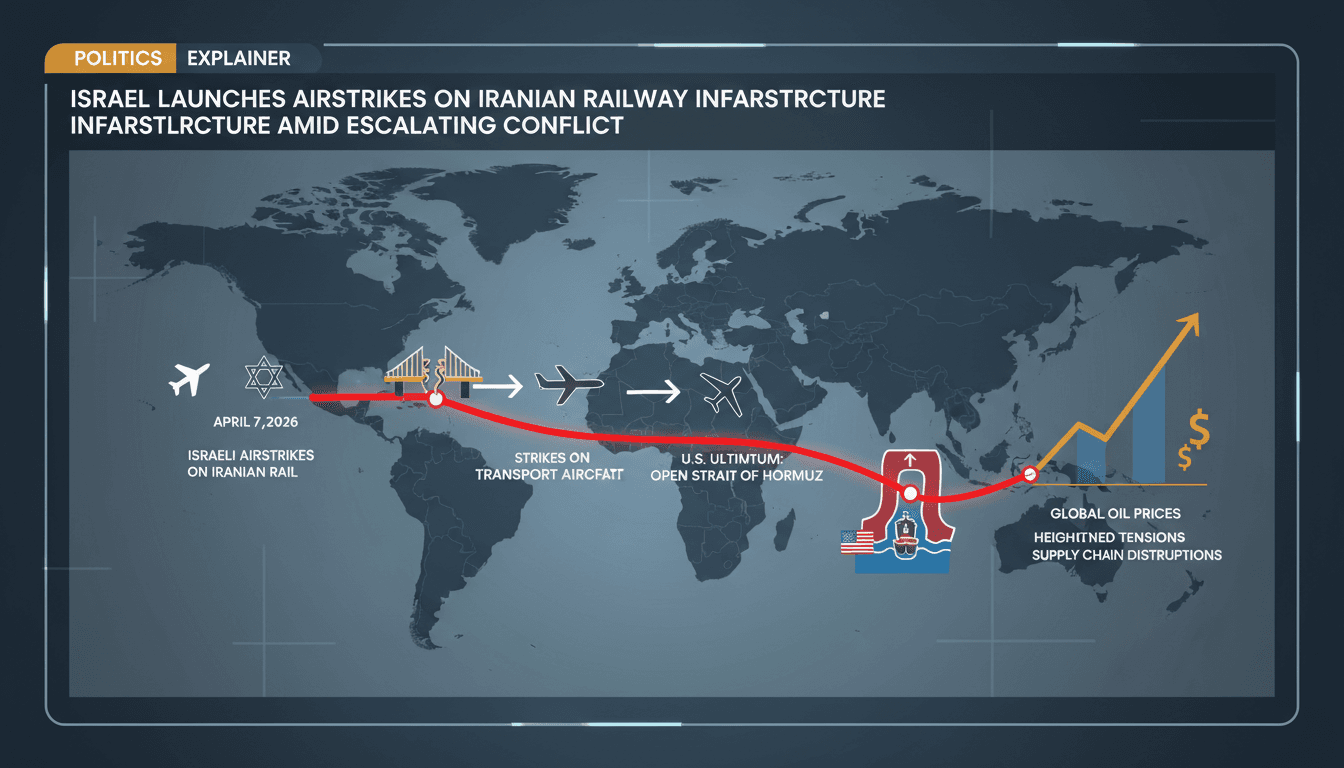
Here's what it means for you.
Rising tensions in the Middle East could lead to increased fuel prices and supply chain disruptions affecting global markets.
Why it matters
The escalating conflict between Israel and Iran threatens stability in the oil markets, which can impact energy prices worldwide.
What happened (in 30 seconds)
- Israeli airstrikes targeted 10 railway lines and bridges used by Iran's Islamic Revolutionary Guard Corps (IRGC) on April 7, 2026.
- U.S. military involvement escalated with simultaneous strikes on Iranian military sites, amid a deadline for Iran to reopen the Strait of Hormuz.
- Iranian officials reported infrastructure damage and casualties, with threats of retaliation against U.S. and allied targets.
The context you actually need
- U.S.-Israel tensions have been rising since early 2026, primarily due to Iranian disruptions in the Strait of Hormuz, a crucial oil shipping route.
- Recent military actions include the destruction of Iranian transport aircraft and helicopters by Israel, and extensive U.S. strikes on military targets in Iran.
- The IDF's warnings to civilians to avoid railways indicate a strategic shift towards targeting IRGC logistics, potentially escalating the conflict further.
What's really happening
The recent Israeli airstrikes on Iranian railway infrastructure represent a significant escalation in the ongoing conflict between Israel and Iran, fueled by a broader U.S.-Israeli military campaign. This campaign is primarily focused on crippling Iranian military logistics and infrastructure, which are critical for the IRGC's operations in the region. The strikes on April 7, 2026, were preceded by Israeli attacks on Iranian transport aircraft and helicopters, marking a decisive shift in tactics aimed at disrupting Iran's ability to project power.
The backdrop to these military actions is the U.S. ultimatum demanding that Iran reopen the Strait of Hormuz by a specific deadline. This strait is vital for global oil transportation, and any disruption can lead to significant fluctuations in oil prices. The U.S. has threatened "destructive attacks" on Iranian energy infrastructure if the deadline is not met, further heightening tensions. The IDF's actions, including the targeting of railway lines and bridges, signal a concerted effort to dismantle the IRGC's supply chains, which are essential for its operations across the region.
Iran's response has been predictably aggressive, with officials confirming damage and casualties from the airstrikes and threatening retaliation against U.S. and allied targets. This cycle of attack and counterattack raises the stakes not only for the involved parties but also for global markets, particularly in the energy sector. The immediate aftermath has seen oil prices spike due to fears of supply disruptions, which could have a cascading effect on economies reliant on stable energy prices.
As the situation unfolds, the potential for broader regional conflict looms large. The IDF continues to target Iranian sites, including petrochemical facilities, which could provoke further Iranian responses. The involvement of the U.S. adds another layer of complexity, as any escalation could draw in additional regional players and lead to a wider conflict.
Who feels it first (and how)
- Oil consumers: Increased fuel prices due to supply fears can lead to higher costs for consumers and businesses.
- Shipping and logistics companies: Disruptions in the Strait of Hormuz may delay shipments, impacting global supply chains.
- Investors in energy markets: Volatility in oil prices can affect investment strategies and market stability.
What to watch next
- Iran's military response: Monitor for any retaliatory actions against U.S. or allied targets, which could escalate the conflict further.
- Oil price fluctuations: Keep an eye on oil market trends, as sustained tensions may lead to prolonged price increases.
- Diplomatic efforts: Watch for any developments in mediation attempts, particularly from countries like Pakistan, which could influence the conflict's trajectory.
Israeli airstrikes have targeted Iranian infrastructure, leading to casualties and damage.
Iranian retaliation against U.S. and allied targets is expected, increasing regional tensions.
The long-term impact on global oil prices and supply chains remains uncertain as the situation evolves.
Frequently Asked Questions
- Why it matters?
- The escalating conflict between Israel and Iran threatens stability in the oil markets, which can impact energy prices worldwide.
- What happened (in 30 seconds)?
- Israeli airstrikes targeted 10 railway lines and bridges used by Iran's Islamic Revolutionary Guard Corps (IRGC) on April 7, 2026. U.S. military involvement escalated with simultaneous strikes on Iranian military sites, amid a deadline for Iran to reopen the Strait of Hormuz. Iranian officials reported infrastructure damage and casualties, with threats of retaliation against U.S. and allied targets.
- What's really happening?
- The recent Israeli airstrikes on Iranian railway infrastructure represent a significant escalation in the ongoing conflict between Israel and Iran, fueled by a broader U.S.-Israeli military campaign. This campaign is primarily focused on crippling Iranian military logistics and infrastructure, which are critical for the IRGC's operations in the region. The strikes on April 7, 2026, were preceded by Israeli attacks on Iranian transport aircraft and helicopters, marking a decisive shift in tactics
- Who feels it first (and how)?
- Oil consumers: Increased fuel prices due to supply fears can lead to higher costs for consumers and businesses. Shipping and logistics companies: Disruptions in the Strait of Hormuz may delay shipments, impacting global supply chains. Investors in energy markets: Volatility in oil prices can affect investment strategies and market stability.
- What to watch next?
- Iran's military response: Monitor for any retaliatory actions against U.S. or allied targets, which could escalate the conflict further. Oil price fluctuations: Keep an eye on oil market trends, as sustained tensions may lead to prolonged price increases. Diplomatic efforts: Watch for any developments in mediation attempts, particularly from countries like Pakistan, which could influence the conflict's trajectory.
Pan-Arab news coverage spanning politics, business, sports, and regional affairs.
"Asharq Al-Awsat reflects a broad Arab editorial perspective with strong attention to regional geopolitics."
— A47 Editor
نتنياهو: ضربنا سكك حديد وجسوراً في إيران
Israeli Prime Minister Benjamin Netanyahu announced that Israel has targeted railways and bridges in Iran that are allegedly used by the Revolutionary Guard. This military action highlights ongoing tensions between Israel and Iran, particularly regar...
Arabic-language UAE newspaper coverage focused on domestic affairs, public institutions, business, society, and regional developments.
"Al Khaleej coverage generally reflects a mainstream UAE editorial lens with strong attention to public affairs, institutions, and regional developments."
— A47 Editor
نتنياهو: نسحق إيران بحزم أكبر وبقوة متزايدة
Israeli Prime Minister Benjamin Netanyahu announced that Israel has targeted railways and bridges in Iran used by the Revolutionary Guard, claiming that the attacks have resulted in damage to at least two bridges and railway infrastructure. In a vide...