
Japan's Cabinet Approves Regulatory Reform for Cryptocurrencies as Financial Products
Here's what it means for you.
If you’re involved in digital assets, Japan's new regulatory landscape could reshape investment strategies and market dynamics globally.
Why it matters
This reform could enhance market transparency and attract institutional investment in cryptocurrencies, impacting global trading patterns.
What happened (in 30 seconds)
- On April 10, 2026, Japan's Cabinet approved a draft amendment to reclassify cryptocurrencies as financial products under the Financial Instruments and Exchange Act (FIEA).
- The reform introduces measures such as insider trading bans, mandatory disclosures, and penalties for non-compliance to protect investors.
- This shift aims to integrate digital assets into Japan's traditional financial framework, potentially reshaping the market structure for cryptocurrencies like Bitcoin.
The context you actually need
- Japan legalized cryptocurrencies as payment methods in 2017 but imposed strict regulations following high-profile exchange hacks, which created a cautious investment environment.
- The Financial Services Agency (FSA) has been working on reclassifying cryptocurrencies since late 2025, proposing tax reductions to align with equities, which could stimulate institutional participation.
- Geopolitical factors, such as yen depreciation and the maturation of global cryptocurrency markets, have prompted Japan to enhance its regulatory framework to maintain competitiveness as a Web3 hub.
What's really happening
Japan's recent regulatory reform marks a significant pivot in how cryptocurrencies are perceived and managed within the financial ecosystem. By reclassifying digital assets under the FIEA, Japan aims to address critical issues that have plagued the cryptocurrency market, such as information asymmetry and fraud. This is particularly relevant given the millions of domestic crypto accounts and the history of security breaches that have undermined investor confidence.
The FSA's initiative to introduce stricter regulations, including insider trading bans and mandatory disclosures, is designed to create a more transparent market environment. This is expected to attract institutional investors who have been hesitant to engage with cryptocurrencies due to the lack of regulatory clarity and the potential for market manipulation. The introduction of penalties, including imprisonment and hefty fines for violations, signals a serious commitment to enforcing these new rules.
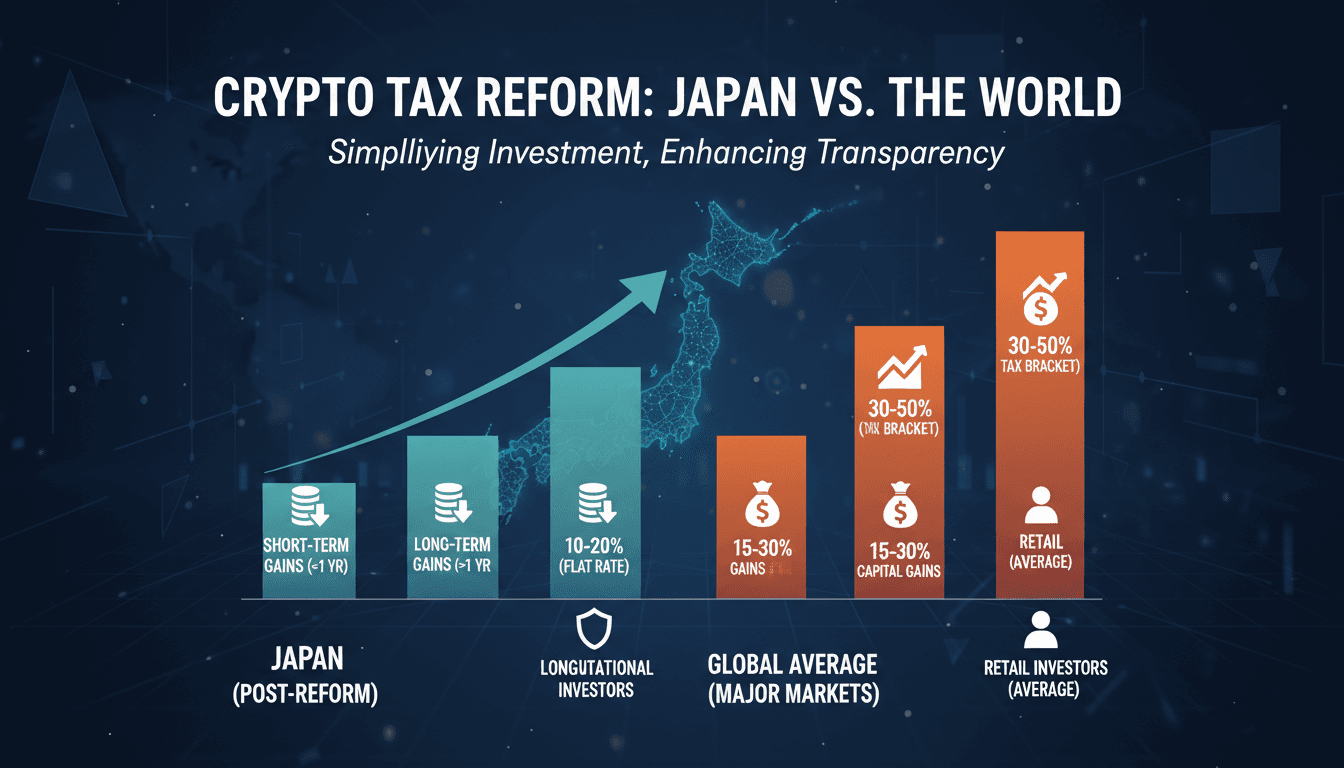
Moreover, the proposed reduction in the maximum tax rate on cryptocurrency gains from 55% to 20% aligns it with equity taxation, making it more appealing for investors. This change is crucial for fostering a competitive investment landscape, especially as other jurisdictions, like Dubai, offer favorable tax conditions for crypto activities.
The broader implications of this reform extend beyond Japan. As the country integrates digital assets into its financial framework, it could set a precedent for other nations grappling with how to regulate cryptocurrencies. This could lead to a domino effect, encouraging other governments to adopt similar measures, thereby standardizing regulations across borders.
In essence, Japan's move is not just about regulating cryptocurrencies; it is about reshaping the entire market structure to facilitate greater participation from institutional investors. This could lead to increased liquidity and stability in the cryptocurrency markets, ultimately benefiting all stakeholders involved.
Who feels it first (and how)
- Institutional investors: They will likely benefit from increased market transparency and reduced tax burdens, making crypto investments more attractive.
- Crypto exchanges: Enhanced regulations may lead to a more stable operating environment, encouraging growth and innovation.
- Retail investors: They could experience improved protections against fraud and market manipulation, fostering greater confidence in crypto investments.
- Tax professionals: A shift in tax policy will require adjustments in compliance strategies for clients involved in cryptocurrency transactions.
What to watch next
- Parliamentary approval: The bill is pending approval from Japan's National Diet, which will determine the timeline for implementation and any potential amendments.
- Market reactions: Monitor Bitcoin and other cryptocurrencies for any price movements or trading volume changes as institutional interest evolves.
- Global regulatory responses: Watch for how other countries might react to Japan's reforms, potentially leading to a wave of regulatory changes worldwide.
Japan's Cabinet has approved the draft amendment to reclassify cryptocurrencies as financial products.
Institutional participation in the cryptocurrency market will increase as a result of enhanced regulations and lower tax rates.
The specific timeline for the implementation of these reforms and their long-term impact on the global cryptocurrency landscape remains uncertain.
Frequently Asked Questions
- Why it matters?
- This reform could enhance market transparency and attract institutional investment in cryptocurrencies, impacting global trading patterns.
- What happened (in 30 seconds)?
- On April 10, 2026, Japan's Cabinet approved a draft amendment to reclassify cryptocurrencies as financial products under the Financial Instruments and Exchange Act (FIEA). The reform introduces measures such as insider trading bans, mandatory disclosures, and penalties for non-compliance to protect investors. This shift aims to integrate digital assets into Japan's traditional financial framework, potentially reshaping the market structure for cryptocurrencies like Bitcoin.
- What's really happening?
- Japan's recent regulatory reform marks a significant pivot in how cryptocurrencies are perceived and managed within the financial ecosystem. By reclassifying digital assets under the FIEA, Japan aims to address critical issues that have plagued the cryptocurrency market, such as information asymmetry and fraud. This is particularly relevant given the millions of domestic crypto accounts and the history of security breaches that have undermined investor confidence. The FSA's initiative to introd
- Who feels it first (and how)?
- Institutional investors: They will likely benefit from increased market transparency and reduced tax burdens, making crypto investments more attractive. Crypto exchanges: Enhanced regulations may lead to a more stable operating environment, encouraging growth and innovation. Retail investors: They could experience improved protections against fraud and market manipulation, fostering greater confidence in crypto investments. Tax professionals: A shift in tax policy will require adjustments
- What to watch next?
- Parliamentary approval: The bill is pending approval from Japan's National Diet, which will determine the timeline for implementation and any potential amendments. Market reactions: Monitor Bitcoin and other cryptocurrencies for any price movements or trading volume changes as institutional interest evolves. Global regulatory responses: Watch for how other countries might react to Japan's reforms, potentially leading to a wave of regulatory changes worldwide.
News and analysis on Bitcoin, altcoins, and blockchain innovation.
"Bitcoinist delivers news and analysis on Bitcoin, altcoins, and blockchain innovation with a focus on market trends and industry updates."
— A47 Editor
Japan’s Crypto Reform Could Reshape Bitcoin Market Structure – Here’s Why
Japan's government has officially passed a bill reclassifying cryptocurrencies, including Bitcoin, as financial instruments under the Financial Instruments and Exchange Act. This legislative change marks a significant shift from a payment-based frame...
News, analysis, and thought leadership focusing exclusively on Bitcoin.
"Bitcoin Magazine is one of the original publications devoted to Bitcoin, offering in-depth news, analysis, and commentary."
— A47 Editor
Japan Moves to Classify Bitcoin and Crypto as Financial Instruments Under New Bill
Japan is set to officially classify cryptocurrencies, including Bitcoin, as financial instruments under the Financial Instruments and Exchange Act, marking a significant shift from a payment-based framework to one aligned with traditional securities ...
Covers blockchain, cryptocurrency news, project analysis, and market insights.
"CoinDesk is a well-established cryptocurrency and blockchain news provider, offering comprehensive insights, market data, and industry research."
— A47 Editor
Japan moves to classify cryptocurrencies as financial products
Japan has officially moved to classify cryptocurrencies as financial products, implementing new regulations that include bans on insider trading, mandatory annual disclosures from issuers, and severe penalties for unregistered operations, which can r...