
Iran Becomes Dominant Power in Persian Gulf After US-Iran Ceasefire Agreement
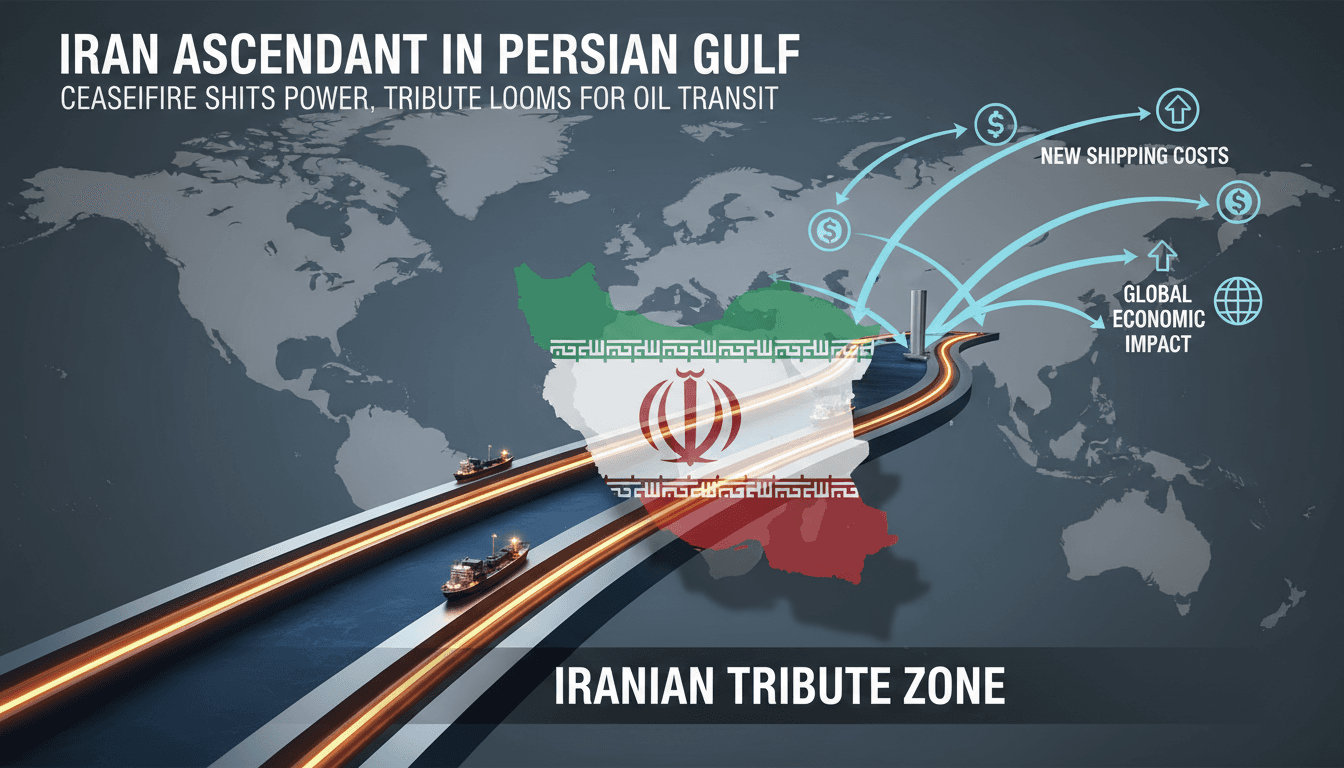
Here's what it means for you.
If you’re involved in global trade or energy markets, Iran’s strengthened position could impact shipping costs and security in the Persian Gulf.
Why it matters
This shift in power dynamics may lead to increased costs and risks for businesses relying on Gulf shipping routes.
What happened (in 30 seconds)
- On April 7, 2026, the United States and Iran agreed to a two-week ceasefire, mediated by Pakistan, amid escalating conflict.
- Iran's missile efficacy against Israeli targets reached a 27% hit rate, showcasing its military capabilities and strategic influence.
- Gulf Arab states are now considering tribute payments for safe passage through the contested Strait of Hormuz, highlighting a significant shift in regional power.
The context you actually need
- The Strait of Hormuz is crucial for global oil transit, accounting for 20-30% of the world's oil supply, making its control vital for economic stability.
- Gulf states' infrastructure, including ports and desalination plants, has shown vulnerabilities to Iranian missile strikes, raising concerns about security and operational continuity.
- The US's traditional role as a stabilizing force in the region is being challenged, prompting Gulf nations to reassess their defense strategies and alliances.
What's really happening
The ceasefire on April 7, 2026, marked a pivotal moment in the ongoing US-Iran conflict, which had intensified dramatically in early 2026. Following a series of US-Israeli strikes on Iranian targets, Iran retaliated with missile strikes that significantly impacted Israeli infrastructure, achieving a hit rate of 27%—a stark increase from an initial 3%. This escalation not only showcased Iran's military resilience but also highlighted the vulnerabilities of Gulf Arab states, whose coastal assets were increasingly at risk.
As tensions rose, the Strait of Hormuz became a focal point of conflict, with Iranian threats to partially close it and disrupt oil shipments. The strategic importance of this waterway, through which a substantial portion of global oil transits, made it a critical battleground. The ceasefire, while temporarily halting hostilities, has led to a reconfiguration of power dynamics in the region. Gulf Arab states, feeling the pressure of Iranian dominance, are now contemplating tribute payments to ensure safe passage for their shipping routes.
This shift is not merely a tactical maneuver; it reflects a broader trend of diminishing US influence in the region. The Gulf states, traditionally reliant on American military support, are now seeking to diversify their defense strategies, including acquiring advanced air defense systems and exploring alternative shipping routes. The aftermath of the ceasefire has seen oil prices plummet, leading to market rallies, but also to increased military spending by Gulf states as they prepare for potential future conflicts.
Iran's vow to "punish" any violations of the ceasefire, particularly from Israel, adds another layer of complexity. The potential for renewed hostilities remains, but the risks associated with escalation may deter immediate conflict. Instead, a scenario of normalized low-level clashes under Iranian dominance appears more plausible, as Gulf states navigate their new reality.
In summary, Iran's consolidation of power in the Persian Gulf is reshaping regional geopolitics, compelling Gulf Arab states to rethink their security strategies and economic dependencies.
Who feels it first (and how)
- Shipping companies: Increased security fees and risks could raise operational costs.
- Energy markets: Fluctuations in oil prices due to instability in the Gulf may impact profitability.
- Gulf Arab governments: They face pressure to enhance military capabilities and reconsider alliances.
- Investors in Dubai and Abu Dhabi: Significant losses in stock markets signal economic instability and potential future risks.
What to watch next
- Tribute negotiations: Monitor discussions among Gulf states regarding tribute payments for safe passage, as this could set a precedent for future maritime security.
- Military acquisitions: Keep an eye on Gulf states' defense spending, particularly on air defense systems, as this will indicate their response to perceived threats.
- Oil price fluctuations: Watch for changes in oil prices as they reflect market reactions to ongoing tensions and the stability of shipping routes.
The ceasefire is currently in effect, with accusations of violations already surfacing.
Gulf states will increase military spending and diversify their shipping routes to mitigate risks.
The long-term effectiveness of the ceasefire and whether it will lead to a stable resolution or renewed conflict.
Frequently Asked Questions
- Why it matters?
- This shift in power dynamics may lead to increased costs and risks for businesses relying on Gulf shipping routes.
- What happened (in 30 seconds)?
- On April 7, 2026, the United States and Iran agreed to a two-week ceasefire, mediated by Pakistan, amid escalating conflict. Iran's missile efficacy against Israeli targets reached a 27% hit rate, showcasing its military capabilities and strategic influence. Gulf Arab states are now considering tribute payments for safe passage through the contested Strait of Hormuz, highlighting a significant shift in regional power.
- What's really happening?
- The ceasefire on April 7, 2026, marked a pivotal moment in the ongoing US-Iran conflict, which had intensified dramatically in early 2026. Following a series of US-Israeli strikes on Iranian targets, Iran retaliated with missile strikes that significantly impacted Israeli infrastructure, achieving a hit rate of 27%—a stark increase from an initial 3%. This escalation not only showcased Iran's military resilience but also highlighted the vulnerabilities of Gulf Arab states, whose coastal assets w
- Who feels it first (and how)?
- Shipping companies: Increased security fees and risks could raise operational costs. Energy markets: Fluctuations in oil prices due to instability in the Gulf may impact profitability. Gulf Arab governments: They face pressure to enhance military capabilities and reconsider alliances. Investors in Dubai and Abu Dhabi: Significant losses in stock markets signal economic instability and potential future risks.
- What to watch next?
- Tribute negotiations: Monitor discussions among Gulf states regarding tribute payments for safe passage, as this could set a precedent for future maritime security. Military acquisitions: Keep an eye on Gulf states' defense spending, particularly on air defense systems, as this will indicate their response to perceived threats. Oil price fluctuations: Watch for changes in oil prices as they reflect market reactions to ongoing tensions and the stability of shipping routes.
Macro commentary, policy analysis, growth/inflation themes, and global outlooks.
"Contextual macro coverage that complements day-to-day market headlines."
— A47 Editor
Iran prepares for U.S. talks as Hormuz curbs and Lebanon fighting cloud truce
Iran is preparing for talks with the U.S. amid a fragile two-week ceasefire, which is intended to ease military tensions in the Middle East, particularly concerning the Strait of Hormuz and ongoing conflicts in Lebanon. The ceasefire is contingent up...
RT is a Russian state-funded network covering global events from a Russian perspective.
"RT is widely criticized for promoting pro-Kremlin narratives and is considered by many to be a state propaganda outlet."
— A47 Editor
The Gulf has a new boss. Here are three scenarios after the pause
A provisional two-week ceasefire has been established between the United States and Iran, allowing for negotiations on Iran's proposed peace plan and the reopening of the strategically vital Strait of Hormuz. This development follows a period of heig...