
FDIC Proposes Regulatory Framework for Stablecoin Issuers Under GENIUS Act
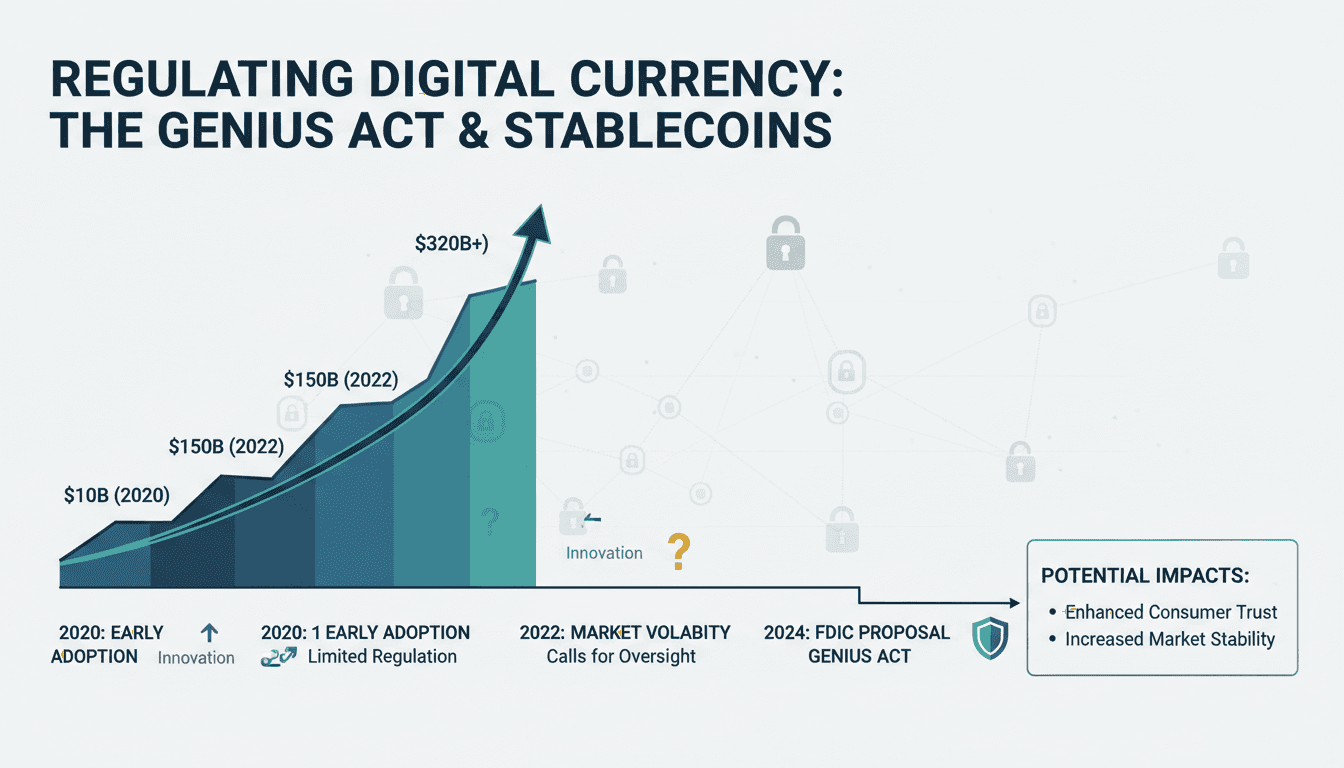
Here's what it means for you.
If you engage with stablecoins, these new regulations could reshape the landscape of digital asset security and reliability.
Why it matters
This regulatory framework aims to stabilize a rapidly growing market, impacting how stablecoins are issued and managed.
What happened (in 30 seconds)
- On April 7, 2026, the FDIC approved a notice of proposed rulemaking to establish standards for stablecoin issuers under the GENIUS Act.
- Key provisions include requirements for reserve assets, redemption timelines, and risk management practices.
- The proposal opens a 60-day public comment period, inviting feedback from stakeholders in the financial and crypto sectors.
The context you actually need
- The GENIUS Act, enacted in July 2025, created a federal framework for payment stablecoins to mitigate risks associated with unregulated growth.
- The stablecoin market exceeded $320 billion as of March 2026, indicating significant demand and usage in transactions.
- Prior to this proposal, the FDIC issued an initial NPRM in December 2025, focusing on the approval processes for stablecoin issuance by insured depository institutions.
What's really happening
The FDIC's recent proposal is a critical step in establishing a robust regulatory environment for stablecoins, a sector that has seen explosive growth and increasing scrutiny. The GENIUS Act, which laid the groundwork for this regulatory framework, was a response to the rapid expansion of the stablecoin market, now valued at over $320 billion. This growth has raised concerns about financial stability, consumer protection, and the potential for systemic risks in the broader financial system.
The proposed regulations require stablecoin issuers to maintain identifiable reserve assets that fully back their stablecoins. This means that for every stablecoin issued, there must be an equivalent amount of liquid assets held in reserve. This requirement is designed to enhance consumer confidence and ensure that stablecoins can be redeemed for their face value promptly—within two business days, as stipulated in the proposal.
Moreover, the regulations clarify that deposits backing stablecoins will not provide pass-through insurance to holders, a significant distinction that affects how consumers perceive the safety of their investments. By treating qualifying tokenized deposits similarly to traditional deposits, the FDIC aims to create a more predictable and secure environment for stablecoin transactions.
The implications of these regulations extend beyond the U.S. market. As the FDIC aligns its efforts with other regulatory bodies like the OCC, the regulatory clarity may encourage international adoption of stablecoins, particularly in regions like Dubai, where the Virtual Assets Regulatory Authority (VARA) operates independently. Enhanced U.S. regulations could improve the reliability of stablecoins used in cross-border transactions, which is crucial for Dubai's growing crypto ecosystem.
As the public comment period unfolds, industry stakeholders are keenly observing how these regulations will shape the future of stablecoin issuance and adoption. The FDIC's proactive approach indicates a shift toward a more structured and secure digital asset landscape, balancing innovation with necessary oversight.
Who feels it first (and how)
- Stablecoin issuers: Must adapt to new compliance requirements, affecting operational costs and strategies.
- Financial institutions: Banks and depository institutions may see increased demand for stablecoin services, impacting their business models.
- Consumers and investors: Individuals using stablecoins will experience changes in security and redemption processes, influencing their investment decisions.
- Regulatory bodies: Other regulators will need to align their frameworks with these new standards, potentially leading to broader regulatory harmonization.
What to watch next
- Public feedback: The 60-day comment period will reveal industry concerns and support, shaping the final regulations.
- Market response: Watch for any shifts in stablecoin market capitalization and issuer behavior following the proposal's announcement.
- International regulatory alignment: How other countries respond to U.S. regulations could impact global stablecoin adoption and usage.
The FDIC's proposal establishes a framework for stablecoin issuers, enhancing consumer protection and market stability.
Increased compliance costs for stablecoin issuers and potential shifts in market dynamics as institutions adapt.
The long-term impact on stablecoin adoption rates and consumer trust in digital assets remains to be seen.
Frequently Asked Questions
- Why it matters?
- This regulatory framework aims to stabilize a rapidly growing market, impacting how stablecoins are issued and managed.
- What happened (in 30 seconds)?
- On April 7, 2026, the FDIC approved a notice of proposed rulemaking to establish standards for stablecoin issuers under the GENIUS Act. Key provisions include requirements for reserve assets, redemption timelines, and risk management practices. The proposal opens a 60-day public comment period, inviting feedback from stakeholders in the financial and crypto sectors.
- What's really happening?
- The FDIC's recent proposal is a critical step in establishing a robust regulatory environment for stablecoins, a sector that has seen explosive growth and increasing scrutiny. The GENIUS Act, which laid the groundwork for this regulatory framework, was a response to the rapid expansion of the stablecoin market, now valued at over $320 billion. This growth has raised concerns about financial stability, consumer protection, and the potential for systemic risks in the broader financial system. The
- Who feels it first (and how)?
- Stablecoin issuers: Must adapt to new compliance requirements, affecting operational costs and strategies. Financial institutions: Banks and depository institutions may see increased demand for stablecoin services, impacting their business models. Consumers and investors: Individuals using stablecoins will experience changes in security and redemption processes, influencing their investment decisions. Regulatory bodies: Other regulators will need to align their frameworks with these new st
- What to watch next?
- Public feedback: The 60-day comment period will reveal industry concerns and support, shaping the final regulations. Market response: Watch for any shifts in stablecoin market capitalization and issuer behavior following the proposal's announcement. International regulatory alignment: How other countries respond to U.S. regulations could impact global stablecoin adoption and usage.
Curated tech headlines including AI stories.
"Influential aggregator surfacing the day’s top tech/AI links."
— A47 Editor
The US FDIC proposes a rule to establish a regulatory framework for stablecoin issuers, including requirements related to reserve assets, under the GENIUS Act (Sarah Wynn/The Block)
The US Federal Deposit Insurance Corporation (FDIC) has proposed a new rule aimed at establishing a regulatory framework for stablecoin issuers, which includes specific requirements regarding reserve assets, as part of the GENIUS Act. This proposal w...
News, analysis, and thought leadership focusing exclusively on Bitcoin.
"Bitcoin Magazine is one of the original publications devoted to Bitcoin, offering in-depth news, analysis, and commentary."
— A47 Editor
FDIC Advances Stablecoin Oversight Framework Under GENIUS Act With New Prudential Rule Proposal
The Federal Deposit Insurance Corporation (FDIC) has advanced a new oversight framework for stablecoins under the GENIUS Act, proposing rules that will guide U.S. banks in issuing and managing these digital assets. This proposal indicates a significa...
Covers Bitcoin plus altcoin news, market updates, and educational resources.
"Bitcoin.com provides news, market data, and guides focused on Bitcoin and the wider crypto industry."
— A47 Editor
FDIC Proposes GENIUS Act Rules for Bank Stablecoin Issuers: 1:1 Reserves and 2-Day Redemptions Required
The Federal Deposit Insurance Corporation (FDIC) has proposed new rules under the GENIUS Act for bank stablecoin issuers, mandating a 1:1 reserve ratio and allowing for redemptions within two days. This proposal is a significant step towards establis...