
Aave V3 Faces $196 Million Bad Debt Following KelpDAO Exploit
Here's what it means for you.
If you're involved in decentralized finance (DeFi), this incident could impact your investment strategies and risk assessments.
Why it matters
This event underscores the vulnerabilities inherent in DeFi protocols, potentially shaking investor confidence and altering market dynamics.
What happened (in 30 seconds)
- On April 18, 2026, attackers exploited a vulnerability in KelpDAO's rsETH bridge, minting unbacked tokens.
- Aave V3 recorded approximately $196 million in bad debt after these tokens were used as collateral to borrow wrapped ETH.
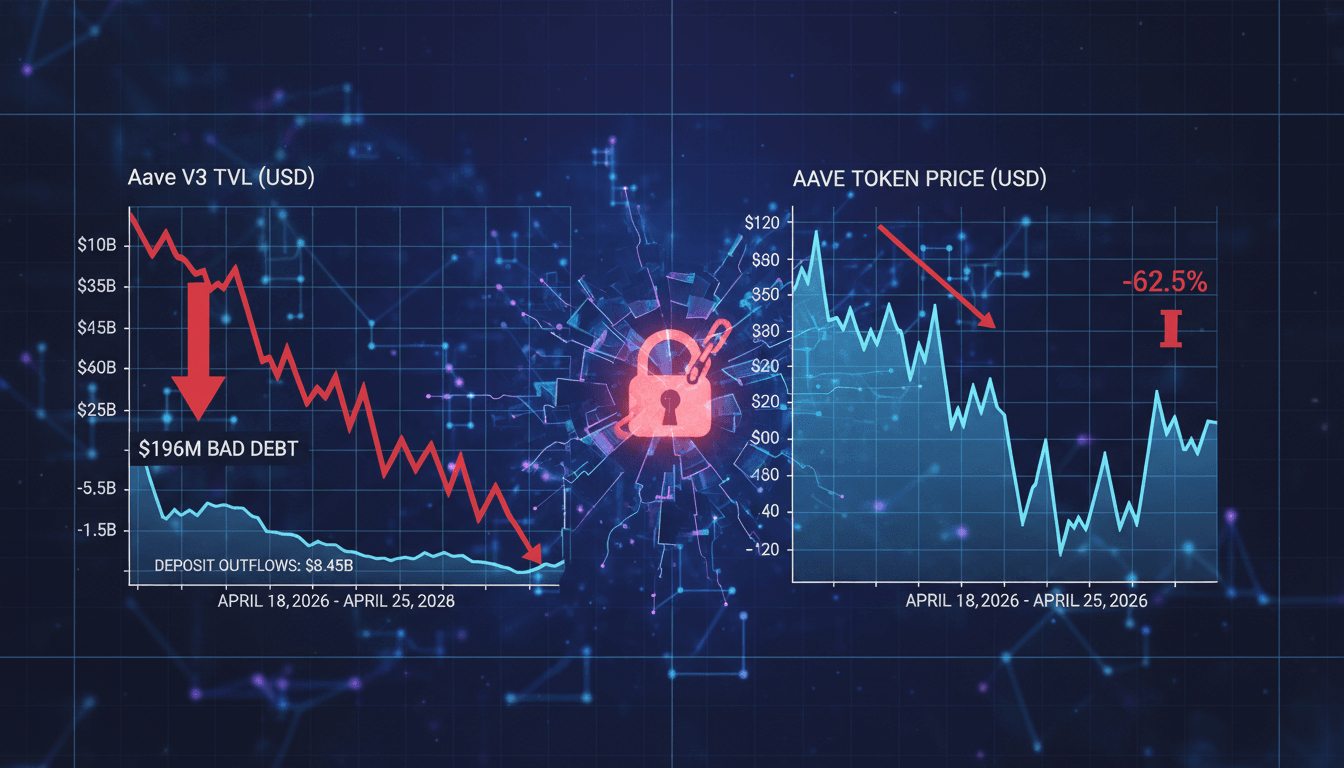
- Market response included a freeze on affected markets, leading to $8.45 billion in deposit outflows and a significant drop in the AAVE token price.
The context you actually need
- KelpDAO's rsETH bridge allowed deposits without prior incident flags, making it susceptible to exploitation.
- The exploit involved minting 116,500 unbacked rsETH tokens, which constituted about 18% of the total supply, before the bridge was paused.
- Aave's Umbrella mutual reserve is now positioned to cover part of the bad debt, reflecting ongoing risks in DeFi post-2022 exploits.
What's really happening
On April 18, 2026, a significant breach occurred within the decentralized finance (DeFi) ecosystem when attackers exploited a vulnerability in KelpDAO's rsETH bridge. This bridge was designed to facilitate liquidity for restaked ETH but lacked adequate risk parameters, allowing the minting of unbacked rsETH tokens. The attackers minted approximately 116,500 tokens—about 18% of the total supply—before KelpDAO paused the bridge after 46 minutes. This unbacked collateral was then deposited into Aave V3, enabling the attackers to borrow around $196 million in wrapped ETH (wETH).
The immediate aftermath saw Aave freezing the rsETH markets across its V3 and V4 deployments to prevent further exposure. This swift action, however, could not prevent a massive outflow of deposits, with Aave's total value locked (TVL) plummeting by over $10 billion to approximately $15.6 billion within 48 hours. The AAVE token, which had been trading at higher levels, fell by 14-18%, reaching a low of $87 before stabilizing between $90 and $100.
The incident highlights the persistent risks associated with DeFi composability, where interconnected protocols can amplify vulnerabilities. Aave's governance forum has since activated discussions to assess the potential bad debt, estimating it could range from $123.7 million to $230.1 million. The Umbrella reserve, which is expected to cover part of this shortfall, is currently estimated to hold between $80 million and $100 million, indicating a potential gap that could affect stkAAVE holders.
Despite the turmoil, on-chain metrics reveal that large investors, often referred to as "whales," are accumulating AAVE tokens amid the heightened fear in the market. This behavior aligns with historical patterns where smart money tends to buy during price dips, suggesting a potential recovery phase could be on the horizon. However, the broader DeFi community is now debating enhanced risk management strategies, including supply caps and collateral whitelisting, to prevent similar incidents in the future.
Who feels it first (and how)
- DeFi Investors: Those holding AAVE or involved in lending protocols may see immediate financial impacts.
- KelpDAO Users: Users of the rsETH bridge may face liquidity issues and loss of funds.
- Whale Investors: Large holders may capitalize on price dips but also face increased scrutiny and risk.
- Regulatory Bodies: Increased attention on DeFi risks could lead to future regulatory actions.
What to watch next
- Aave Governance Decisions: Watch for outcomes from discussions on how to manage the bad debt and potential changes to risk parameters. This will indicate how the protocol plans to mitigate future risks.
- Market Recovery Indicators: Monitor the AAVE token price and whale accumulation patterns. A sustained recovery could signal confidence returning to the market.
- DeFi Risk Management Innovations: Keep an eye on new proposals for risk engines and collateral management strategies that may emerge from this incident, as they could reshape the landscape of DeFi.
Aave V3 incurred approximately $196 million in bad debt due to the exploit.
Aave governance will implement changes to risk management protocols in response to this incident.
The long-term impact on investor confidence in DeFi protocols remains uncertain.
Frequently Asked Questions
- Why it matters?
- This event underscores the vulnerabilities inherent in DeFi protocols, potentially shaking investor confidence and altering market dynamics.
- What happened (in 30 seconds)?
- On April 18, 2026, attackers exploited a vulnerability in KelpDAO's rsETH bridge, minting unbacked tokens. Aave V3 recorded approximately $196 million in bad debt after these tokens were used as collateral to borrow wrapped ETH. Market response included a freeze on affected markets, leading to $8.45 billion in deposit outflows and a significant drop in the AAVE token price.
- What's really happening?
- On April 18, 2026, a significant breach occurred within the decentralized finance (DeFi) ecosystem when attackers exploited a vulnerability in KelpDAO's rsETH bridge. This bridge was designed to facilitate liquidity for restaked ETH but lacked adequate risk parameters, allowing the minting of unbacked rsETH tokens. The attackers minted approximately 116,500 tokens—about 18% of the total supply—before KelpDAO paused the bridge after 46 minutes. This unbacked collateral was then deposited into Aav
- Who feels it first (and how)?
- DeFi Investors: Those holding AAVE or involved in lending protocols may see immediate financial impacts. KelpDAO Users: Users of the rsETH bridge may face liquidity issues and loss of funds. Whale Investors: Large holders may capitalize on price dips but also face increased scrutiny and risk. Regulatory Bodies: Increased attention on DeFi risks could lead to future regulatory actions.
- What to watch next?
- Aave Governance Decisions: Watch for outcomes from discussions on how to manage the bad debt and potential changes to risk parameters. This will indicate how the protocol plans to mitigate future risks. Market Recovery Indicators: Monitor the AAVE token price and whale accumulation patterns. A sustained recovery could signal confidence returning to the market. DeFi Risk Management Innovations: Keep an eye on new proposals for risk engines and collateral management strategies that may emerge
Bitcoin news, technical analysis, and forecasts across crypto markets.
"NewsBTC covers Bitcoin news, technical analysis, and forecasts across crypto markets and major blockchain projects."
— A47 Editor
Aave Is Down 18% And Carrying $196M In Bad Debt, But Smart Money Is Buying Anyway
Aave has faced a significant downturn, with an 18% drop in its token value following a $292 million exploit of KelpDAO's rsETH bridge, which resulted in approximately $196 million in bad debt. This incident has led to a massive withdrawal crisis, wit...
Research, news, and analysis on blockchain startups, DeFi, and regulations.
"Crypto Briefing provides research, news, and analysis on blockchain startups, DeFi, and crypto regulations with investor-focused coverage."
— A47 Editor
$293M DeFi exploit hits Kelp/AAVE, raises systemic risk concerns
A significant exploit of the Kelp restaking platform has resulted in a loss of approximately $293 million, raising systemic risk concerns within the decentralized finance (DeFi) sector. This incident highlights the vulnerabilities present in DeFi pla...
Covers blockchain, cryptocurrency news, project analysis, and market insights.
"Cointelegraph is a leading crypto-focused media outlet known for timely news, analysis, and educational content related to blockchain and digital assets."
— A47 Editor
Aave risk manager models 2 bad debt scenarios from Kelp DAO exploit
Aave's risk management team has modeled two potential bad debt scenarios following the recent exploit of Kelp DAO, which resulted in significant financial losses. The first scenario, while less expensive, poses a risk of a 15% depegging of rsETH, whi...
Covers Bitcoin plus altcoin news, market updates, and educational resources.
"Bitcoin.com provides news, market data, and guides focused on Bitcoin and the wider crypto industry."
— A47 Editor
Incident Report: Llamarisk, Aave Service Providers Detail Kelp rsETH Hack Across Ethereum and Arbitrum Markets
A significant security breach involving KelpDAO has resulted in the loss of approximately $292 million, including a substantial amount of rsETH, impacting Ethereum and Arbitrum markets. This incident has prompted Aave to suspend its rsETH markets and...
Covers blockchain, cryptocurrency news, project analysis, and market insights.
"CoinDesk is a well-established cryptocurrency and blockchain news provider, offering comprehensive insights, market data, and industry research."
— A47 Editor
Aave could face up to $230 million in losses after Kelp DAO bridge exploit triggers DeFi chaos
Aave is facing potential losses of up to $230 million following a significant exploit of the Kelp DAO bridge, which drained approximately $292 million from its reserves. The report outlines two scenarios for the impact on Aave, depending on how the s...
Covers blockchain, cryptocurrency news, project analysis, and market insights.
"Cointelegraph is a leading crypto-focused media outlet known for timely news, analysis, and educational content related to blockchain and digital assets."
— A47 Editor
LayerZero says Kelp setup enabled exploit, as Aave loss questions mount
LayerZero has reported that the recent $290 million exploit of KelpDAO was facilitated by a setup that did not adhere to multi-verifier recommendations, allowing attackers to compromise the system. This incident has raised significant concerns regard...
Real-time updates, analysis, and reports on the blockchain and cryptocurrency sectors.
"Crypto News delivers real-time updates, analysis, and reports on the blockchain and cryptocurrency sectors."
— A47 Editor
Aave price drops to $90 after Kelp DAO exploit, derivatives hint at potential rebound
Aave's price has fallen nearly 20% to approximately $90 following a significant exploit at Kelp DAO, which resulted in around $196 million in bad debt for the protocol. This incident has raised concerns about the security and stability of decentraliz...
Covers blockchain, cryptocurrency news, project analysis, and market insights.
"CoinDesk is a well-established cryptocurrency and blockchain news provider, offering comprehensive insights, market data, and industry research."
— A47 Editor
A $300 million borrowing spike on Aave signals liquidity crunch after KelpDAO exploit
Aave has experienced a significant liquidity crunch, marked by a $300 million spike in borrowing, following the KelpDAO exploit that drained approximately $292 million from its reserves. This incident has caused widespread instability in the stableco...
Covers blockchain, cryptocurrency news, project analysis, and market insights.
"Cointelegraph is a leading crypto-focused media outlet known for timely news, analysis, and educational content related to blockchain and digital assets."
— A47 Editor
Aave's TVL tanks $8B a day after $293M Kelp DAO hack
Aave's total value locked (TVL) has plummeted by $8 billion following a significant hack of Kelp DAO, which drained approximately $293 million from its reserves. The Aave token has also seen a nearly 20% drop in value, falling to $89.5 within 24 hour...
Research, news, and analysis on blockchain startups, DeFi, and regulations.
"Crypto Briefing provides research, news, and analysis on blockchain startups, DeFi, and crypto regulations with investor-focused coverage."
— A47 Editor
AAVE TVL drops to $17B after KelpDAO exploit triggers $8.4B withdrawals
The total value locked (TVL) in AAVE has dropped to $17 billion following a significant exploit of KelpDAO, which triggered approximately $8.4 billion in withdrawals. This incident underscores vulnerabilities in cross-chain security and has led to th...
Research, news, and analysis on blockchain startups, DeFi, and regulations.
"Crypto Briefing provides research, news, and analysis on blockchain startups, DeFi, and crypto regulations with investor-focused coverage."
— A47 Editor
KelpDAO exploit causes $10.5B drop in DeFi TVL, AAVE suspends rsETH markets
The KelpDAO exploit has led to a significant $10.5 billion drop in the total value locked (TVL) in decentralized finance (DeFi), prompting AAVE to suspend its rsETH markets. This incident highlights the vulnerabilities present in DeFi platforms, rais...
Covers Bitcoin plus altcoin news, market updates, and educational resources.
"Bitcoin.com provides news, market data, and guides focused on Bitcoin and the wider crypto industry."
— A47 Editor
DeFi Lender Aave Battles Withdrawal Crisis After KelpDAO rsETH Exploit
Aave, a decentralized finance (DeFi) lender, is currently facing a withdrawal crisis following a significant exploit of KelpDAO's rsETH, which resulted in a loss of approximately $292 million. This breach has led Aave to suspend its rsETH markets and...
Research, news, and analysis on blockchain startups, DeFi, and regulations.
"Crypto Briefing provides research, news, and analysis on blockchain startups, DeFi, and crypto regulations with investor-focused coverage."
— A47 Editor
AAVE TVL plummets $6B after Kelp DAO hack exploits LayerZero bridge flaw
AAVE's total value locked (TVL) has plummeted by $6 billion following a significant hack of Kelp DAO, which exploited a flaw in the LayerZero bridge. The breach has raised alarms about the security vulnerabilities inherent in decentralized finance (D...
Covers blockchain, cryptocurrency news, project analysis, and market insights.
"CoinDesk is a well-established cryptocurrency and blockchain news provider, offering comprehensive insights, market data, and industry research."
— A47 Editor
Aave sees $6 billion deposit drop as Kelp hack exposes structural risk for DeFi lender
Aave has experienced a significant drop in deposits, losing approximately $6 billion, following a hack that exploited drained rsETH as collateral to borrow wrapped ether. This incident has resulted in a 16% decline in the value of the AAVE token as t...