
United States and Philippines Establish 4,000-Acre Economic Security Zone to Counter China Supply Chains
Here's what it means for you.
If you’re in the tech or manufacturing sectors, this initiative could reshape your supply chain strategies and partnerships.
Why it matters
This agreement signals a significant shift in global supply chain dynamics, particularly in response to China's dominance.
What happened (in 30 seconds)
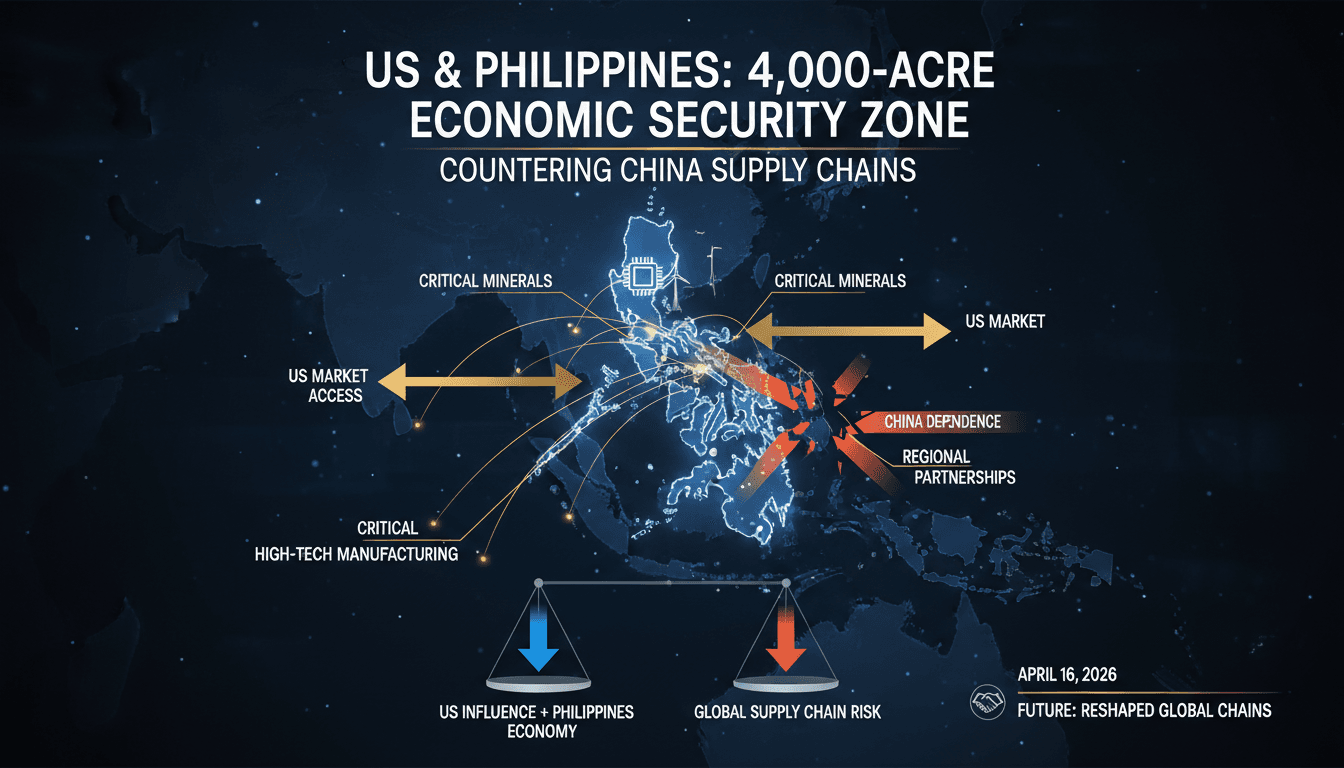
- On April 16, 2026, the U.S. and the Philippines announced a 4,000-acre Economic Security Zone on Luzon Island.
- The zone aims to develop AI-powered automated manufacturing for critical minerals, semiconductors, and electronics.
- This initiative is part of the U.S.-led Pax Silica coalition to secure supply chains amid rising U.S.-China trade tensions.
The context you actually need
- China currently dominates critical supply chains, controlling 90% of rare-earth processing and 70% of lithium-ion battery production.
- The Philippines is rich in mineral resources, being the world's second-largest nickel producer, yet has historically exported raw materials without advanced processing.
- The U.S. is accelerating its derisking efforts in response to trade conflicts, including China's recent restrictions on rare-earth exports.
What's really happening
The establishment of the 4,000-acre Economic Security Zone (ESZ) in the Luzon Economic Corridor represents a strategic pivot for both the U.S. and the Philippines. This initiative is not merely about creating a manufacturing hub; it’s a calculated response to the geopolitical landscape shaped by China's assertiveness in the South China Sea and its overwhelming control over critical supply chains.
The U.S. has been increasingly concerned about its reliance on China for essential materials, particularly in technology sectors. The Pax Silica Initiative, launched in December 2025, aims to build a coalition of nations to secure supply chains for critical minerals and advanced manufacturing. The ESZ is a tangible manifestation of this initiative, designed to foster a manufacturing ecosystem that is less vulnerable to geopolitical disruptions.
The agreement allows the U.S. to administer the zone under common law with diplomatic immunity, a unique arrangement that underscores the strategic importance of this partnership. The two-year lease, renewable for 99 years, grants the U.S. rent-free occupation, which is a significant incentive for American companies looking to invest in the region. This setup not only facilitates the establishment of AI-native automated factories but also prioritizes the processing of critical minerals close to the Subic Bay port, enhancing logistical efficiency.
The Philippines stands to benefit significantly from this arrangement. By leveraging its mineral wealth, the country can transition from being a raw material exporter to a hub for advanced manufacturing. This shift could create jobs, stimulate local economies, and enhance technological capabilities. The Philippine Department of Trade and Industry has already endorsed the project, highlighting its potential to accelerate investment and technology transfer.
However, the initiative also comes with trade-offs. While it promises economic growth, it may also lead to increased dependency on U.S. policies and economic conditions. Local industries may face challenges in adapting to the new technological landscape, and there could be social implications as the workforce transitions to meet the demands of high-tech manufacturing.
Who feels it first (and how)
- Manufacturers: Companies in the tech and electronics sectors will need to adapt their supply chains to incorporate this new hub.
- Local Workforce: Workers in the Philippines may experience job creation but will need training for high-tech roles.
- Investors: Those in the mining and technology sectors may see new opportunities for investment and partnerships.
What to watch next
- Bidding Process: Watch for announcements regarding private-sector bids for sites within the ESZ, as this will indicate the level of interest and investment.
- Regulatory Frameworks: Keep an eye on the development of governance frameworks for the ESZ, as these will shape operational dynamics and investor confidence.
- Market Reactions: Monitor stock movements and market sentiment in response to this initiative, particularly in sectors related to technology and manufacturing.
The U.S. and Philippines have officially announced the establishment of the Economic Security Zone.
Increased foreign investment in the Philippines' tech and manufacturing sectors as companies seek to diversify supply chains.
The long-term impact on local industries and workforce adaptation to high-tech manufacturing demands.
Frequently Asked Questions
- Why it matters?
- This agreement signals a significant shift in global supply chain dynamics, particularly in response to China's dominance.
- What happened (in 30 seconds)?
- On April 16, 2026, the U.S. and the Philippines announced a 4,000-acre Economic Security Zone on Luzon Island. The zone aims to develop AI-powered automated manufacturing for critical minerals, semiconductors, and electronics. This initiative is part of the U.S.-led Pax Silica coalition to secure supply chains amid rising U.S.-China trade tensions.
- What's really happening?
- The establishment of the 4,000-acre Economic Security Zone (ESZ) in the Luzon Economic Corridor represents a strategic pivot for both the U.S. and the Philippines. This initiative is not merely about creating a manufacturing hub; it’s a calculated response to the geopolitical landscape shaped by China's assertiveness in the South China Sea and its overwhelming control over critical supply chains. The U.S. has been increasingly concerned about its reliance on China for essential materials, part
- Who feels it first (and how)?
- Manufacturers: Companies in the tech and electronics sectors will need to adapt their supply chains to incorporate this new hub. Local Workforce: Workers in the Philippines may experience job creation but will need training for high-tech roles. Investors: Those in the mining and technology sectors may see new opportunities for investment and partnerships.
- What to watch next?
- Bidding Process: Watch for announcements regarding private-sector bids for sites within the ESZ, as this will indicate the level of interest and investment. Regulatory Frameworks: Keep an eye on the development of governance frameworks for the ESZ, as these will shape operational dynamics and investor confidence. Market Reactions: Monitor stock movements and market sentiment in response to this initiative, particularly in sectors related to technology and manufacturing.
Curated tech headlines including AI stories.
"Influential aggregator surfacing the day’s top tech/AI links."
— A47 Editor
The US and the Philippines agree to launch a high-tech industrial hub on the island of Luzon to counter China's supply chains; the US will run it as an SEZ (Wall Street Journal)
The United States and the Philippines have reached an agreement to establish a high-tech industrial hub on Luzon Island, designed to create resilient supply chains that can withstand disruptions from China. This hub will be managed as a Special Econo...
Tech business coverage, major deals, product launches, and Silicon Valley trends.
"WSJ’s tech section offers authoritative reporting on the intersection of technology and business, including exclusive industry analysis."
— A47 Editor
U.S. to Create High-Tech Manufacturing Zone in Philippines
The United States has announced plans to establish a high-tech manufacturing zone in the Philippines, aimed at creating automated factories and utilizing local resources to develop supply chains that are resilient to disruptions from China. This init...
Global political, business, and cultural coverage from WSJ international desks.
"The Wall Street Journal offers extensive international reporting with a reputation for financial insight and a center-right editorial stance."
— A47 Editor
U.S. to Create High-Tech Manufacturing Zone in Philippines
The United States is set to establish a high-tech manufacturing zone in the Philippines, aimed at creating supply chains that are resilient against disruptions from China. This initiative will incorporate automated factories and utilize local resourc...