
Ripple Launches Roadmap for Quantum-Resistant XRP Ledger by 2028
Here's what it means for you.
As quantum computing advances, understanding Ripple's proactive measures can safeguard your investments in digital assets.
Why it matters
The transition to a quantum-resistant XRP Ledger positions Ripple as a leader in blockchain security, potentially influencing market confidence and investment strategies.
What happened (in 30 seconds)
- Ripple announced a four-phase roadmap on April 20, 2026, to achieve quantum resistance for the XRP Ledger by 2028.
- The initiative addresses vulnerabilities posed by quantum computing, particularly the 'harvest now, decrypt later' risk to blockchain cryptography.
- XRP's price rose approximately 7% to $1.43 following the announcement, reflecting positive market sentiment.
The context you actually need
- Quantum computing advancements threaten current cryptographic standards, with estimates suggesting that 500,000 physical qubits could decrypt private keys in minutes.
- Ripple's roadmap includes immediate Q-Day contingency measures and collaboration with Project Eleven for NIST algorithm testing, setting a proactive standard in the blockchain space.
- Current vulnerabilities show that only 0.03% of XRP supply is held in accounts with exposed public keys, significantly lower than Bitcoin's vulnerability rate of approximately 35%.
What's really happening
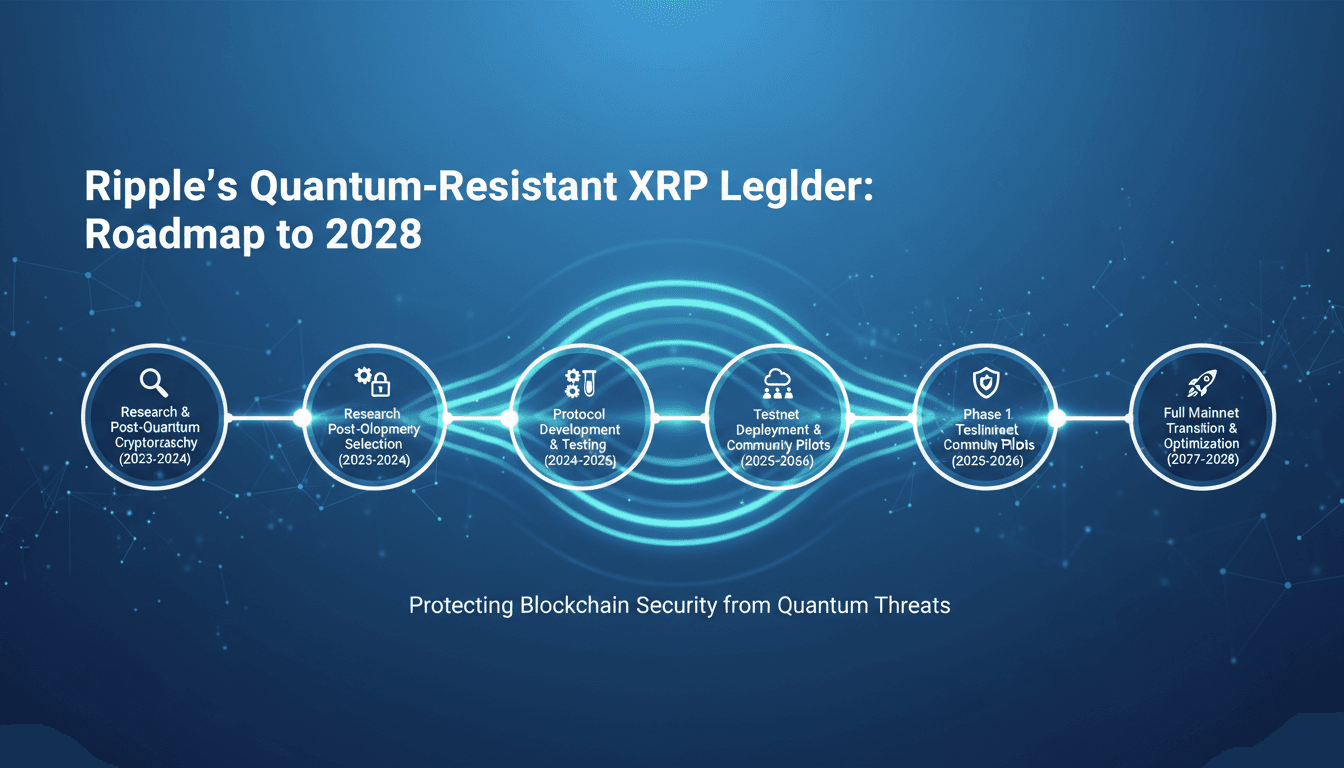
On April 20, 2026, Ripple unveiled a comprehensive four-phase plan aimed at transitioning the XRP Ledger to a quantum-resistant framework by 2028. This initiative is a direct response to the growing threat posed by quantum computing, which has the potential to undermine the cryptographic foundations of blockchain technology. The roadmap is structured into four distinct phases, each designed to address specific vulnerabilities and enhance the overall security of the XRP Ledger.
Phase 1 focuses on establishing Q-Day readiness, utilizing zero-knowledge proofs to facilitate the migration of funds from accounts deemed vulnerable to quantum attacks. This immediate measure is crucial as it provides a safety net for users while the broader transition unfolds. Phase 2, scheduled for the first half of 2026, involves collaboration with Project Eleven to benchmark NIST algorithms, conduct validator tests, and develop custody prototypes. This phase is essential for ensuring that the new cryptographic standards are robust and effective against quantum threats.
In the second half of 2026, Phase 3 will see the deployment of post-quantum signatures on the Devnet, allowing developers to test and integrate these new security measures into their applications. Finally, Phase 4, set for completion by 2028, will activate a native amendment that fully transitions the XRP Ledger to post-quantum cryptography. This phase will support multiple NIST schemes, providing agility and adaptability as quantum computing technology evolves.
Ripple's proactive approach not only positions the XRP Ledger ahead of competitors like Bitcoin and Ethereum but also reflects a broader trend in the blockchain industry towards enhanced security measures. As quantum computing capabilities continue to advance, the need for robust cryptographic solutions becomes increasingly critical. Ripple's roadmap is a strategic move to mitigate risks associated with quantum threats, ensuring the long-term viability and security of the XRP Ledger.
Who feels it first (and how)
- Investors in XRP: Increased confidence in the security of their holdings may lead to higher investment levels.
- Developers: Those building on the XRP Ledger will need to adapt to new cryptographic standards, impacting development timelines and costs.
- Financial institutions: Banks and fintech companies utilizing XRP for transactions will benefit from enhanced security, potentially influencing their operational strategies.
What to watch next
- Implementation of Phase 2: Monitoring the outcomes of NIST algorithm testing and validator tests will provide insights into the effectiveness of Ripple's security measures.
- Market response to quantum threats: Observing how other blockchain projects respond to quantum computing risks will indicate the competitive landscape and potential shifts in investment.
- Regulatory developments: Changes in regulations regarding quantum computing and blockchain technology could impact Ripple's roadmap and the broader market.
Ripple's roadmap includes four phases aimed at achieving quantum resistance by 2028.
Other blockchain projects will follow Ripple's lead in enhancing security against quantum threats.
The exact timeline for the full implementation of the roadmap and its impact on XRP's market position.
Frequently Asked Questions
- Why it matters?
- The transition to a quantum-resistant XRP Ledger positions Ripple as a leader in blockchain security, potentially influencing market confidence and investment strategies.
- What happened (in 30 seconds)?
- Ripple announced a four-phase roadmap on April 20, 2026, to achieve quantum resistance for the XRP Ledger by 2028. The initiative addresses vulnerabilities posed by quantum computing, particularly the 'harvest now, decrypt later' risk to blockchain cryptography. XRP's price rose approximately 7% to $1.43 following the announcement, reflecting positive market sentiment.
- What's really happening?
- On April 20, 2026, Ripple unveiled a comprehensive four-phase plan aimed at transitioning the XRP Ledger to a quantum-resistant framework by 2028. This initiative is a direct response to the growing threat posed by quantum computing, which has the potential to undermine the cryptographic foundations of blockchain technology. The roadmap is structured into four distinct phases, each designed to address specific vulnerabilities and enhance the overall security of the XRP Ledger. Phase 1 focuses o
- Who feels it first (and how)?
- Investors in XRP: Increased confidence in the security of their holdings may lead to higher investment levels. Developers: Those building on the XRP Ledger will need to adapt to new cryptographic standards, impacting development timelines and costs. Financial institutions: Banks and fintech companies utilizing XRP for transactions will benefit from enhanced security, potentially influencing their operational strategies.
- What to watch next?
- Implementation of Phase 2: Monitoring the outcomes of NIST algorithm testing and validator tests will provide insights into the effectiveness of Ripple's security measures. Market response to quantum threats: Observing how other blockchain projects respond to quantum computing risks will indicate the competitive landscape and potential shifts in investment. Regulatory developments: Changes in regulations regarding quantum computing and blockchain technology could impact Ripple's roadmap and the
Real-time updates, analysis, and reports on the blockchain and cryptocurrency sectors.
"Crypto News delivers real-time updates, analysis, and reports on the blockchain and cryptocurrency sectors."
— A47 Editor
Ripple maps quantum-resistant XRP Ledger by 2028
Ripple has set a target to make the XRP Ledger quantum-resistant by 2028, outlining a four-phase roadmap that includes testing and a native amendment to enhance security against potential quantum computing threats. This initiative reflects Ripple's p...
News and analysis on Bitcoin, altcoins, and blockchain innovation.
"Bitcoinist delivers news and analysis on Bitcoin, altcoins, and blockchain innovation with a focus on market trends and industry updates."
— A47 Editor
Ripple Unveils Multi-Phase Plan To Make The XRP Ledger Quantum-Ready By 2028
Ripple has announced a multi-phase roadmap to prepare the XRP Ledger (XRPL) for a post-quantum future, targeting full readiness by 2028. This initiative is a response to growing concerns that advancements in quantum computing could compromise the cry...