
Fire Engulfs Olympic Velodrome in Rio de Janeiro
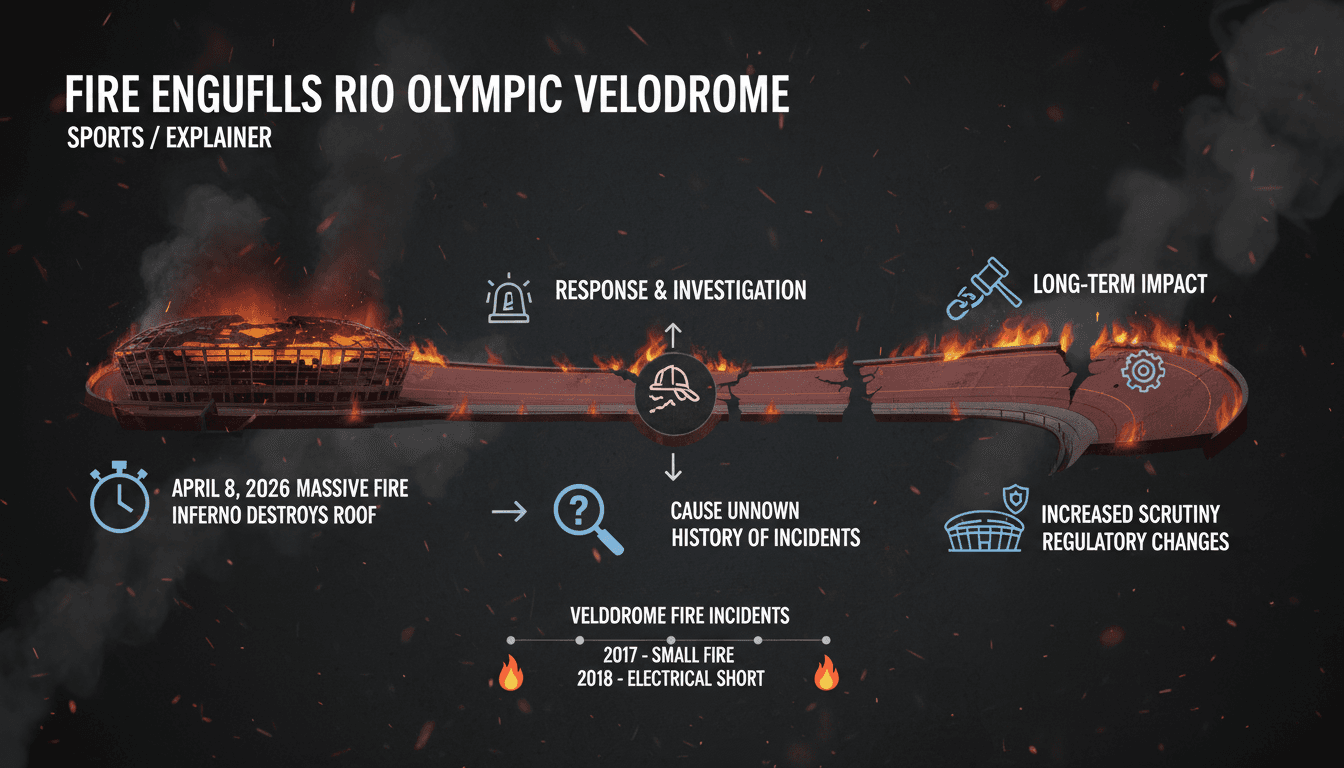
Here's what it means for you.
If you’re involved in sports management or event planning, the fire at the Rio Velodrome could signal increased scrutiny and safety measures for venues worldwide.
Why it matters
The incident raises concerns about the safety protocols in place at sporting venues, especially those with a history of similar incidents.
What happened (in 30 seconds)
- A fire erupted at approximately 4:17 a.m. local time on April 8, 2026, damaging the roof of the Olympic Velodrome in Rio de Janeiro.
- Firefighters contained the blaze using 80 personnel and 20 vehicles, ensuring the cycling track and Olympic Museum remained largely intact.
- An investigation is ongoing to determine the cause of the fire, amidst the venue's history of roof fires linked to cultural practices.
The context you actually need
- The Olympic Velodrome was built for the 2016 Rio Summer Olympics and has since served as a training facility for national teams.
- Previous incidents include two roof fires in 2017 caused by falling sky lanterns, highlighting a recurring safety risk.
- Local authorities have emphasized their rapid response capabilities, with no injuries reported and minimal disruption to the surrounding Olympic Park.
What's really happening
On April 8, 2026, the Olympic Velodrome in Rio de Janeiro experienced a significant fire that damaged its fabric roof but spared the cycling track and Olympic Museum. The incident occurred around 4:17 a.m. local time, prompting a swift response from the Rio state military fire department, which deployed 80 firefighters and 20 vehicles to control the blaze. By mid-morning, the fire was contained, and the structure remained intact, with no injuries reported.
This fire is not an isolated incident. The Velodrome has a history of roof fires, with two previous occurrences in 2017 attributed to falling sky lanterns, a common cultural practice in Brazil. This raises questions about the safety measures in place, particularly for venues that host significant events. The ongoing investigation into the cause of the fire will likely scrutinize existing protocols and may lead to new regulations aimed at preventing similar incidents in the future.
The implications of this fire extend beyond the immediate damage. It serves as a reminder of the vulnerabilities that exist in large public venues, especially those that have previously faced safety issues. As cities around the world prepare for major sporting events, the need for stringent safety measures becomes increasingly critical. Stakeholders in sports management, event planning, and venue operations will need to reassess their safety protocols to mitigate risks and ensure the safety of athletes and spectators alike.
Moreover, the incident could influence public perception and trust in the management of such venues. If investigations reveal lapses in safety protocols, it could lead to a decline in attendance at future events or increased costs associated with implementing new safety measures. This scenario underscores the importance of proactive risk management in the sports industry.
As the investigation unfolds, it will be crucial to monitor how local authorities respond and whether they implement changes to safety regulations. The outcome could set a precedent for other venues globally, especially those with similar histories of safety concerns.
Who feels it first (and how)
- Event organizers: Increased scrutiny may lead to higher costs for safety measures.
- Athletes and teams: Potential disruptions in training facilities if safety protocols are tightened.
- Local businesses: Possible decline in tourism and event attendance if public perception of safety is affected.
- Government officials: Pressure to enhance safety regulations and respond effectively to public concerns.
What to watch next
- Investigation results: The findings will determine if new safety regulations are implemented, affecting future events.
- Public response: Monitor how the public's perception of safety at sporting events evolves, which could impact attendance and participation.
- Regulatory changes: Watch for any new legislation or guidelines introduced for sporting venues in Brazil and beyond.
The fire caused damage to the Velodrome's roof but spared the cycling track and museum.
The investigation will lead to increased safety measures for venues with similar risks.
The long-term economic impact on local businesses and tourism remains to be seen.
Frequently Asked Questions
- Why it matters?
- The incident raises concerns about the safety protocols in place at sporting venues, especially those with a history of similar incidents.
- What happened (in 30 seconds)?
- A fire erupted at approximately 4:17 a.m. local time on April 8, 2026, damaging the roof of the Olympic Velodrome in Rio de Janeiro. Firefighters contained the blaze using 80 personnel and 20 vehicles, ensuring the cycling track and Olympic Museum remained largely intact. An investigation is ongoing to determine the cause of the fire, amidst the venue's history of roof fires linked to cultural practices.
- What's really happening?
- On April 8, 2026, the Olympic Velodrome in Rio de Janeiro experienced a significant fire that damaged its fabric roof but spared the cycling track and Olympic Museum. The incident occurred around 4:17 a.m. local time, prompting a swift response from the Rio state military fire department, which deployed 80 firefighters and 20 vehicles to control the blaze. By mid-morning, the fire was contained, and the structure remained intact, with no injuries reported. This fire is not an isolated incident.
- Who feels it first (and how)?
- Event organizers: Increased scrutiny may lead to higher costs for safety measures. Athletes and teams: Potential disruptions in training facilities if safety protocols are tightened. Local businesses: Possible decline in tourism and event attendance if public perception of safety is affected. Government officials: Pressure to enhance safety regulations and respond effectively to public concerns.
- What to watch next?
- Investigation results: The findings will determine if new safety regulations are implemented, affecting future events. Public response: Monitor how the public's perception of safety at sporting events evolves, which could impact attendance and participation. Regulatory changes: Watch for any new legislation or guidelines introduced for sporting venues in Brazil and beyond.
24/7 international news from a French perspective in multiple languages.
"France 24 is viewed as a globally focused outlet with balanced coverage and a European perspective."
— A47 Editor
Massive #fire tears through roof of #Rio stadium
A massive fire broke out on Wednesday at the Olympic Velodrome in Rio de Janeiro, with around 80 firefighters and 20 fire trucks responding to the scene. The blaze, which engulfed the roof of the venue, was brought under control without any reported ...
Breaking news, politics, business, and entertainment from the U.S. and around the world.
"The New York Post is a tabloid-format newspaper known for its sensationalist headlines and conservative-leaning editorial tone."
— A47 Editor
Massive fire breaks out at Rio de Janeiro’s Olympic Park
A massive fire broke out at the Olympic Park in Rio de Janeiro, with the Rio state military fire department reporting that the blaze was largely confined to the venue’s roof. The incident raises concerns about safety and fire prevention measures at s...
Reporting on North, Central, and South America, plus the Caribbean.
"The Guardian is known for its progressive editorial stance and in-depth analysis."
— A47 Editor
Massive blaze tears through Rio's Olympic velodrome – video
A significant fire broke out on Wednesday at the velodrome located in Rio de Janeiro's Olympic Park, which was constructed for the 2016 Olympics. Officials reported that the fire has been contained, with no injuries and no risk of spreading to other ...