
Trump Imposes 100% Tariffs on Imported Patented Medicines Following Supreme Court Ruling
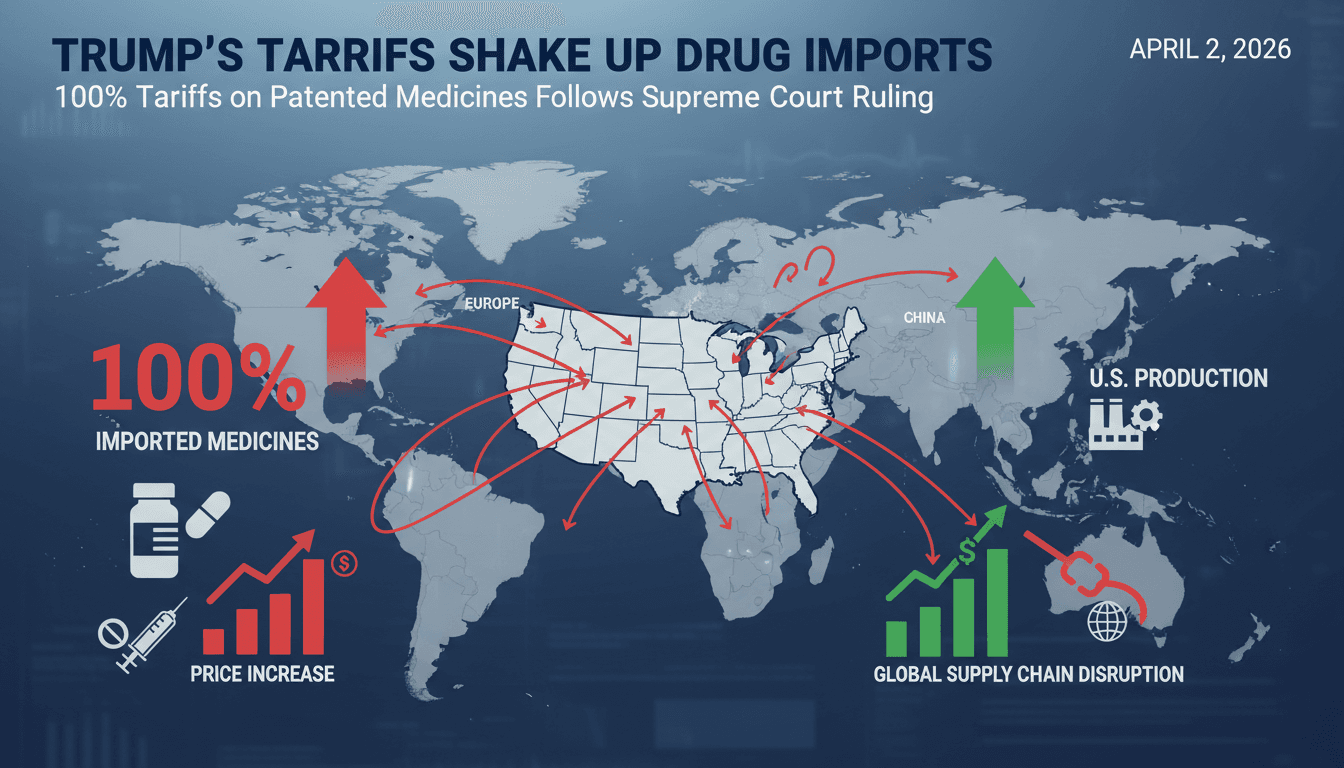
Here's what it means for you.
If you rely on imported medications, expect potential price increases and supply chain shifts as companies adjust to new tariffs.
Why it matters
This policy could reshape the pharmaceutical landscape, impacting drug availability and pricing for consumers globally.
What happened (in 30 seconds)
- On April 2, 2026: President Trump signed an executive order imposing tariffs of up to 100% on certain imported patented medicines.
- Circumventing the Supreme Court: This move follows a February ruling that invalidated previous tariff authorities, indicating a shift in legal strategy.
- Compliance deadlines set: Pharmaceutical companies have 120 to 180 days to comply with the new tariffs or face steep duties.
The context you actually need
- Supreme Court ruling: On February 20, 2026, the U.S. Supreme Court ruled against Trump's prior tariffs, emphasizing Congress's control over tariff powers.
- Protectionist agenda: The new tariffs are part of Trump's broader strategy to bolster U.S. manufacturing and address perceived trade imbalances.
- Global implications: The tariffs target not just U.S. companies but also international pharmaceutical firms, potentially leading to a reshuffling of global supply chains.
What's really happening
The recent executive order by President Trump represents a significant escalation in his administration's protectionist trade agenda, particularly concerning the pharmaceutical sector. By imposing tariffs of up to 100% on imported patented medicines, the administration aims to incentivize pharmaceutical companies to either relocate their production to the United States or negotiate trade agreements that would allow for reduced duties. This move comes in the wake of a Supreme Court ruling that invalidated previous tariff authorities under the International Emergency Economic Powers Act (IEEPA), which had previously allowed for broad tariff imposition based on national security concerns.
The new tariffs are structured to create a clear incentive for companies: they can avoid the full 100% tariff by committing to U.S. manufacturing or securing trade deals that reduce their duties. This approach not only targets foreign pharmaceutical companies but also seeks to address vulnerabilities in the U.S. supply chain, particularly in light of ongoing global trade tensions. The restructuring of tariffs on metal-containing products simultaneously aims to simplify administration and reduce costs for domestic manufacturers.
Despite the aggressive tariff strategy, U.S. officials have stated that no immediate consumer price impact is expected. However, the reality of such a significant tariff could lead to increased costs for consumers in the long run, especially if companies choose to pass on the costs of compliance or production shifts to their customers. The pharmaceutical industry is already reacting, with major firms accelerating their investment pledges in U.S. facilities and negotiating pricing deals to mitigate the impact of the tariffs.
This policy shift also raises questions about the future of international trade relations, particularly with countries like the European Union, Japan, South Korea, Switzerland, and the United Kingdom, which have been granted exemptions or reduced tariffs. The potential for retaliatory measures or further trade negotiations could reshape the landscape of global pharmaceutical trade, affecting not just prices but also the availability of essential medications.
Who feels it first (and how)
- Pharmaceutical companies: Major firms may face increased costs and pressure to relocate production.
- Consumers: Patients relying on imported medications could see price increases or supply disruptions.
- Global suppliers: Countries exporting patented medicines to the U.S. may experience economic impacts due to reduced market access.
- Healthcare providers: Hospitals and clinics may face challenges in sourcing necessary medications, affecting patient care.
What to watch next
- Compliance timelines: Monitor how quickly pharmaceutical companies adapt to the new tariffs and whether they choose to relocate production or negotiate trade agreements.
- Market reactions: Keep an eye on stock prices of pharmaceutical companies and any shifts in investment strategies as they respond to the tariffs.
- International negotiations: Watch for potential trade discussions or retaliatory measures from affected countries, which could further impact global supply chains.
The tariffs are active, with compliance deadlines set for 120 to 180 days.
Pharmaceutical companies will accelerate U.S. investments and negotiate pricing deals to mitigate tariff impacts.
The long-term effects on consumer prices and medication availability remain uncertain as the market adjusts.
Frequently Asked Questions
- Why it matters?
- This policy could reshape the pharmaceutical landscape, impacting drug availability and pricing for consumers globally.
- What happened (in 30 seconds)?
- On April 2, 2026: President Trump signed an executive order imposing tariffs of up to 100% on certain imported patented medicines. Circumventing the Supreme Court: This move follows a February ruling that invalidated previous tariff authorities, indicating a shift in legal strategy. Compliance deadlines set: Pharmaceutical companies have 120 to 180 days to comply with the new tariffs or face steep duties.
- What's really happening?
- The recent executive order by President Trump represents a significant escalation in his administration's protectionist trade agenda, particularly concerning the pharmaceutical sector. By imposing tariffs of up to 100% on imported patented medicines, the administration aims to incentivize pharmaceutical companies to either relocate their production to the United States or negotiate trade agreements that would allow for reduced duties. This move comes in the wake of a Supreme Court ruling that in
- Who feels it first (and how)?
- Pharmaceutical companies: Major firms may face increased costs and pressure to relocate production. Consumers: Patients relying on imported medications could see price increases or supply disruptions. Global suppliers: Countries exporting patented medicines to the U.S. may experience economic impacts due to reduced market access. Healthcare providers: Hospitals and clinics may face challenges in sourcing necessary medications, affecting patient care.
- What to watch next?
- Compliance timelines: Monitor how quickly pharmaceutical companies adapt to the new tariffs and whether they choose to relocate production or negotiate trade agreements. Market reactions: Keep an eye on stock prices of pharmaceutical companies and any shifts in investment strategies as they respond to the tariffs. International negotiations: Watch for potential trade discussions or retaliatory measures from affected countries, which could further impact global supply chains.
Arabic-language political and world news coverage for UAE readers.
"Emarat Al Youm world coverage usually presents international developments through a UAE and Arab audience lens."
— A47 Editor
ترامب يأمر برسوم جديدة على الأدوية رغم قرارات المحكمة العليا ضدها ترامب يأمر برسوم جديدة على الأدوية رغم قرارات المحكمة العليا ضدها
President Donald Trump has ordered new tariffs on certain pharmaceuticals and restructured tariffs on metals, despite recent Supreme Court decisions against such measures. This move is part of his ongoing efforts to reshape trade policies.
Sports reporting with a focus on Saudi and regional competitions.
"Okaz sports coverage is broad and audience-friendly, with strong attention to Saudi teams and leagues."
— A47 Editor
ترمب يفرض رسوماً على الأدوية ويُعيد تشكيل تعريفات المعادن
President Donald Trump has reshaped U.S. trade policy by implementing a new tariff package targeting the pharmaceutical sector and restructuring metal tariffs, reflecting his commitment to economic protectionism despite global repercussions. The new ...
Pan-Arab news coverage spanning politics, business, sports, and regional affairs.
"Asharq Al-Awsat reflects a broad Arab editorial perspective with strong attention to regional geopolitics."
— A47 Editor
ترمب يفرض تعريفات جديدة على الأدوية... ويعدّل رسوم المعادن
U.S. President Donald Trump has issued directives to impose a 100% tariff on certain imports of branded pharmaceuticals and to restructure tariffs on steel products. This move is part of an ongoing effort to adjust trade policies affecting key indust...