
Airlines Implement Fare Hikes and Capacity Cuts Due to Jet Fuel Crisis Amid Iran War
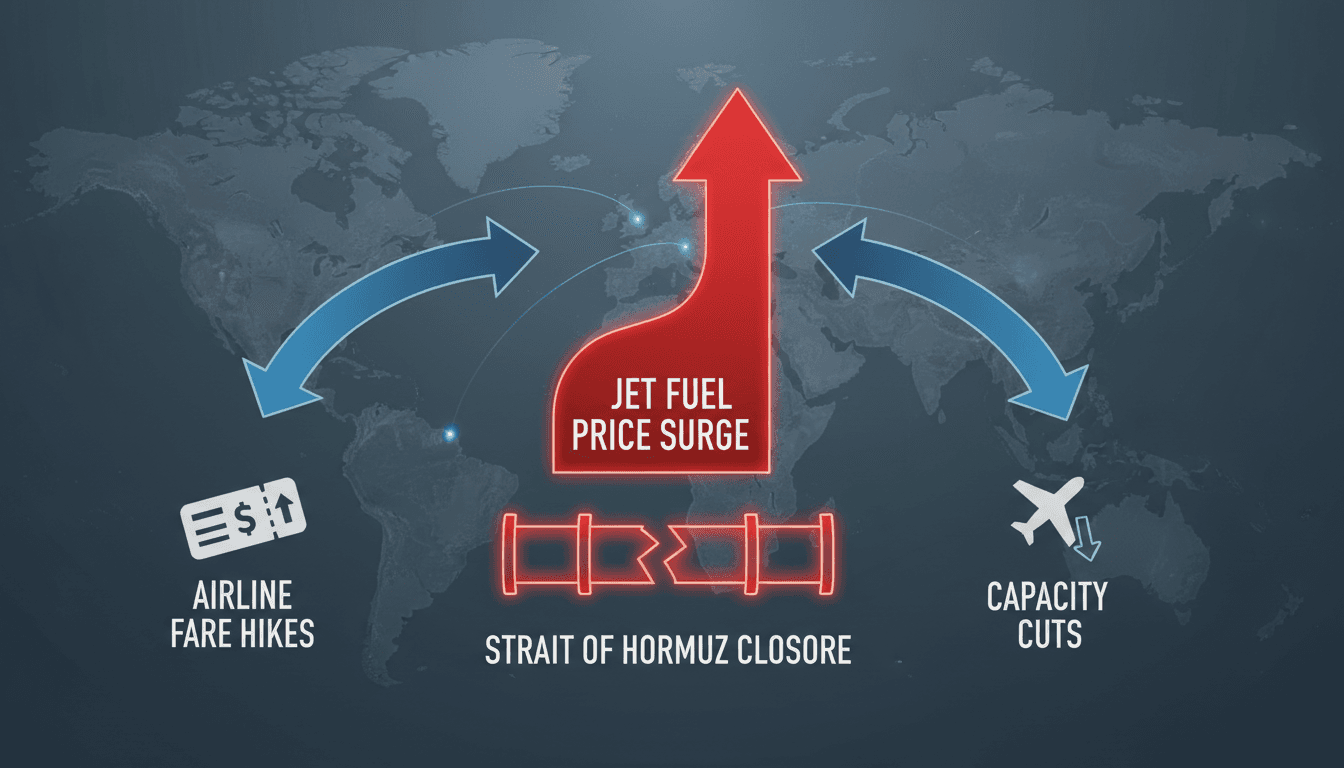
Here's what it means for you.
If you're planning to travel, expect significantly higher fares and fewer flight options.
Why it matters
The ongoing jet fuel crisis is straining global travel, impacting costs and availability for millions of passengers.
What happened (in 30 seconds)
- Late February 2026: The Iran War erupts, closing the Strait of Hormuz and causing jet fuel prices to double.
- April 2026: Airlines globally implement fare hikes and capacity cuts as European stockpiles dwindle to six weeks.
- Current Status: Major airlines report increased fees and reduced flight schedules, stranding passengers and inflating travel costs.
The context you actually need
- Strait of Hormuz Closure: This chokepoint is crucial for oil and jet fuel exports, supplying 20% of global jet fuel and half of Europe's needs.
- Price Surge: Jet fuel prices have skyrocketed from $830/tonne to over $1,800/tonne in the UAE, severely impacting airline operational costs.
- Airline Response: With fuel costs comprising 30-45% of their expenses, airlines are forced to pass these costs onto consumers through higher fares and reduced services.
What's really happening
The 2026 Iran War, ignited by U.S.-Israeli strikes, has led to the closure of the Strait of Hormuz, a vital artery for global oil and jet fuel supplies. This closure has resulted in a dramatic surge in jet fuel prices, which have more than doubled since the onset of the conflict. For airlines, where fuel constitutes a significant portion of operational costs, this price volatility poses an immediate threat to profitability and service continuity.
As of mid-April 2026, the International Energy Agency (IEA) has warned that European jet fuel supplies are projected to last only six weeks. This alarming forecast has prompted airlines to take drastic measures, including fare hikes and capacity reductions. For instance, Delta has increased baggage fees, while Lufthansa has grounded planes, leading to a ripple effect across the industry. The situation is exacerbated by the fact that many airlines lack effective hedging strategies to mitigate fuel price fluctuations, leaving them vulnerable to market shocks.
The crisis has also prompted emergency responses from regulatory bodies. The IEA has coordinated the release of 400 million barrels from strategic reserves to alleviate immediate supply pressures. However, these measures may only provide temporary relief, as the underlying geopolitical tensions continue to disrupt supply chains. The Association of European Airlines (ACI Europe) has called for the reopening of the Strait of Hormuz, emphasizing the urgent need for a resolution to restore stability in the aviation fuel market.
In the UAE, the impact is particularly pronounced. Residents are facing exorbitant fare hikes on key routes, with prices for flights from Dubai to Mumbai skyrocketing from Dh730 to Dh4,230, and fares to London surging from Dh1,209 to Dh4,380. As jet fuel costs now account for 45% of airline expenses in the region, the combination of high demand and limited capacity is likely to keep prices elevated throughout the summer travel season.
Who feels it first (and how)
- Travelers: Passengers are experiencing higher ticket prices and fewer flight options, particularly on popular routes.
- Airlines: Major carriers like Delta, Lufthansa, and Emirates are facing increased operational costs and reduced profitability.
- Tourism Sector: Hotels, restaurants, and local businesses reliant on tourism may see a decline in visitors due to higher travel costs.
- Freight Companies: Cargo services are also impacted, leading to potential increases in shipping costs for goods.
What to watch next
- Fuel Price Trends: Monitor jet fuel prices and their impact on airline operational costs, as sustained high prices could lead to further fare increases.
- Geopolitical Developments: Keep an eye on the Iran War and any potential resolutions that could reopen the Strait of Hormuz, which would stabilize supply chains.
- Airline Financial Reports: Watch for quarterly earnings reports from major airlines, as they will reveal the financial impact of the crisis and potential adjustments in service offerings.
Jet fuel prices have doubled, and European supplies are critically low.
Airlines will continue to raise fares and cut capacity in response to ongoing fuel shortages.
The duration of the Iran War and its long-term effects on global fuel supply chains remain uncertain.
Frequently Asked Questions
- Why it matters?
- The ongoing jet fuel crisis is straining global travel, impacting costs and availability for millions of passengers.
- What happened (in 30 seconds)?
- Late February 2026: The Iran War erupts, closing the Strait of Hormuz and causing jet fuel prices to double. April 2026: Airlines globally implement fare hikes and capacity cuts as European stockpiles dwindle to six weeks. Current Status: Major airlines report increased fees and reduced flight schedules, stranding passengers and inflating travel costs.
- What's really happening?
- The 2026 Iran War, ignited by U.S.-Israeli strikes, has led to the closure of the Strait of Hormuz, a vital artery for global oil and jet fuel supplies. This closure has resulted in a dramatic surge in jet fuel prices, which have more than doubled since the onset of the conflict. For airlines, where fuel constitutes a significant portion of operational costs, this price volatility poses an immediate threat to profitability and service continuity. As of mid-April 2026, the International Energy A
- Who feels it first (and how)?
- Travelers: Passengers are experiencing higher ticket prices and fewer flight options, particularly on popular routes. Airlines: Major carriers like Delta, Lufthansa, and Emirates are facing increased operational costs and reduced profitability. Tourism Sector: Hotels, restaurants, and local businesses reliant on tourism may see a decline in visitors due to higher travel costs. Freight Companies: Cargo services are also impacted, leading to potential increases in shipping costs for goods.
- What to watch next?
- Fuel Price Trends: Monitor jet fuel prices and their impact on airline operational costs, as sustained high prices could lead to further fare increases. Geopolitical Developments: Keep an eye on the Iran War and any potential resolutions that could reopen the Strait of Hormuz, which would stabilize supply chains. Airline Financial Reports: Watch for quarterly earnings reports from major airlines, as they will reveal the financial impact of the crisis and potential adjustments in service offe
U.S. business news, corporate developments, and economy.
"The Wall Street Journal is respected for deep financial and economic reporting with a center-right editorial perspective."
— A47 Editor
How Airline Passengers Are Being Hit by the Jet-Fuel Crunch
The ongoing conflict in Iran has led to a significant increase in jet-fuel prices, causing airline ticket prices, checked bag fees, and other associated costs to rise for passengers in the U.S. This escalation follows the U.S.-Israeli military action...
Stock market news, investing ideas, and trading analysis.
"TheStreet provides market news and retail-investor-focused analysis."
— A47 Editor
One airline is adding a fuel surcharge in reverse
Alaska Airlines has recently implemented a fuel surcharge in response to the soaring costs of oil and jet fuel, which have surged following the U.S.-Israeli strike on Iran. This move aligns with similar actions taken by competitors like JetBlue as ai...
Pan-Arab news coverage spanning politics, business, sports, and regional affairs.
"Asharq Al-Awsat reflects a broad Arab editorial perspective with strong attention to regional geopolitics."
— A47 Editor
صدمة أسعار وقود الطائرات بفعل الحرب تُشعل أزمة خانقة في قطاع الطيران
The global aviation sector is facing a severe crisis as of Tuesday, marked by an unprecedented rise in aircraft fuel costs, largely attributed to the ongoing Iranian conflict. This surge in fuel prices has intensified the challenges faced by airlines...