
ASEAN Foreign Ministers Call for US-Iran Conflict Resolution Amid Ceasefire
Here's what it means for you.
The ongoing tensions between the US and Iran could directly impact your energy costs and food security.
Why it matters
The ASEAN foreign ministers' statement highlights the interconnectedness of geopolitical conflicts and global supply chains, particularly in energy and food sectors.
What happened (in 30 seconds)
- ASEAN foreign ministers convened virtually on April 13, 2026, urging the US and Iran to pursue a permanent resolution to their conflict.
- A two-week ceasefire was announced on April 8, 2026, following intense negotiations, which ASEAN welcomed in their joint statement.
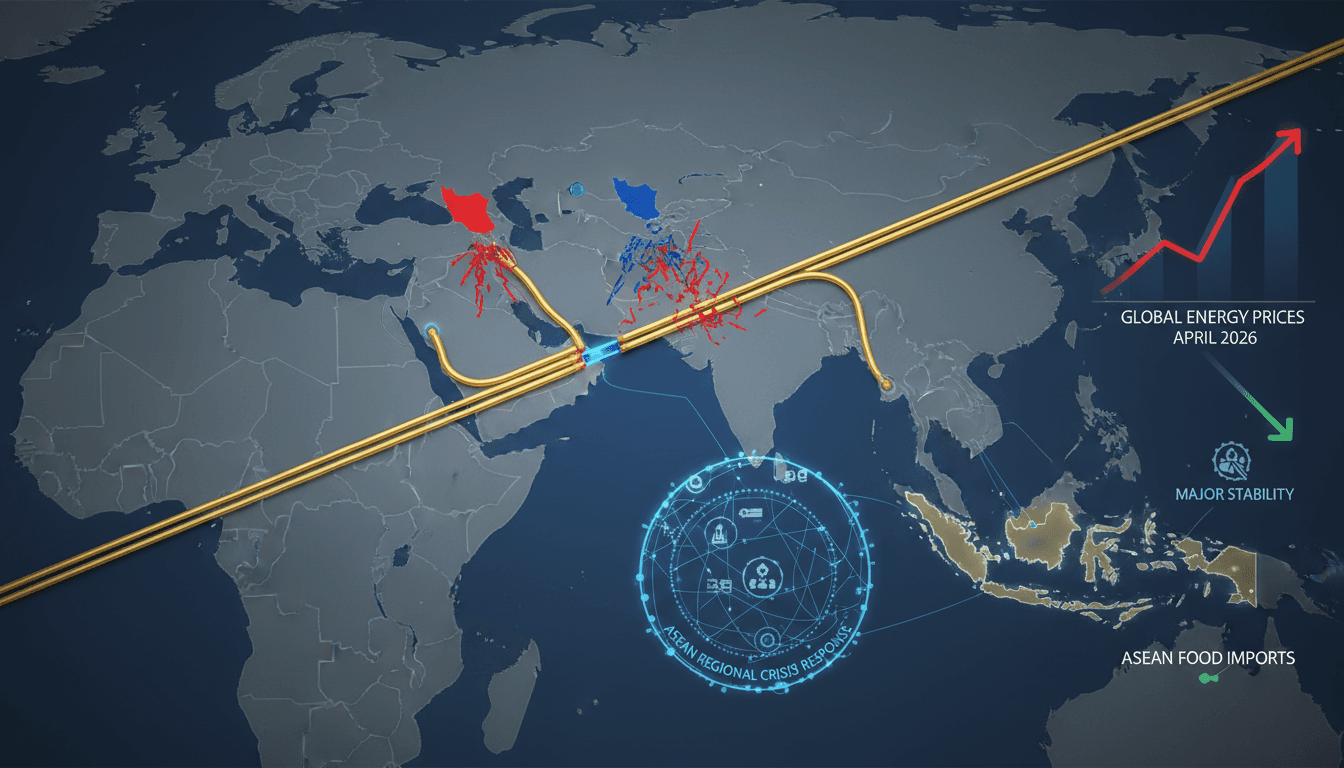
- The conflict has disrupted global energy supplies, with oil prices surging and significant implications for ASEAN member states' economies.
The context you actually need
- The US-Iran war began on February 28, 2026, following coordinated strikes by the US and Israel against Iranian targets, escalating regional tensions.
- The Strait of Hormuz, a critical chokepoint for oil transit, saw partial closure due to retaliatory Iranian attacks, affecting global oil prices and supply chains.
- ASEAN's response includes commitments to enhance regional mechanisms for crisis response, focusing on food and energy security amid rising prices.
What's really happening
The recent virtual meeting of ASEAN foreign ministers underscores a significant shift in regional diplomacy, as Southeast Asian nations grapple with the fallout from the US-Iran conflict. The war, which erupted in late February 2026, has already disrupted the flow of approximately 20 million barrels of oil per day through the Strait of Hormuz, a vital artery for global energy supplies. This disruption has led to a surge in oil prices, with the Dubai crude benchmark nearing $170 per barrel, creating economic strain across ASEAN member states.
The ceasefire announced on April 8, 2026, was a critical step toward stabilizing the situation, but the ASEAN ministers are pushing for a more permanent resolution. Their joint statement reflects a growing recognition of the vulnerabilities faced by ASEAN countries, particularly in terms of energy and food security. The region's reliance on imported energy makes it particularly sensitive to fluctuations in global oil prices, which have been exacerbated by the conflict.
ASEAN's proactive stance is not just about immediate crisis management; it also signals a broader commitment to regional cooperation in the face of external threats. The ministers discussed the establishment of a crisis communications protocol and emphasized the need for enhanced collaboration with major partners like China, Japan, and South Korea. This approach aims to create a more resilient framework for responding to future disruptions, whether they stem from geopolitical conflicts or natural disasters.
The economic implications of the US-Iran conflict extend beyond energy prices. Food security is also at risk, as rising energy costs can lead to increased transportation and production expenses for agricultural goods. The ASEAN ministers are aware that the interconnected nature of these issues requires a comprehensive response, which is why they are prioritizing discussions on fertilizer security and other agricultural inputs.
As the situation evolves, the ASEAN foreign ministers' call for a permanent resolution to the US-Iran conflict reflects a growing understanding that regional stability is intrinsically linked to global peace. The outcome of these negotiations will not only affect the immediate parties involved but will also have far-reaching consequences for economies around the world, particularly those heavily reliant on energy imports.
Who feels it first (and how)
- Energy consumers: Individuals and businesses facing rising fuel prices due to increased oil costs.
- Agricultural sectors: Farmers and food producers experiencing higher costs for transportation and inputs like fertilizers.
- ASEAN member states: Governments needing to manage economic instability and inflation resulting from supply chain disruptions.
What to watch next
- US-Iran negotiations: Continued dialogue between the US and Iran will be crucial in determining the longevity of the ceasefire and potential for a permanent resolution.
- Oil price fluctuations: Monitoring oil prices will provide insight into market reactions and the broader economic impact on ASEAN countries.
- ASEAN's regional initiatives: Watch for developments in ASEAN's crisis response mechanisms and collaborations with major partners, which could shape future resilience strategies.
The US-Iran conflict has disrupted global energy supplies and increased oil prices.
ASEAN will continue to advocate for regional cooperation and crisis management strategies.
The long-term effectiveness of the ceasefire and the potential for a permanent resolution between the US and Iran.
Frequently Asked Questions
- Why it matters?
- The ASEAN foreign ministers' statement highlights the interconnectedness of geopolitical conflicts and global supply chains, particularly in energy and food sectors.
- What happened (in 30 seconds)?
- ASEAN foreign ministers convened virtually on April 13, 2026, urging the US and Iran to pursue a permanent resolution to their conflict. A two-week ceasefire was announced on April 8, 2026, following intense negotiations, which ASEAN welcomed in their joint statement. The conflict has disrupted global energy supplies, with oil prices surging and significant implications for ASEAN member states' economies.
- What's really happening?
- The recent virtual meeting of ASEAN foreign ministers underscores a significant shift in regional diplomacy, as Southeast Asian nations grapple with the fallout from the US-Iran conflict. The war, which erupted in late February 2026, has already disrupted the flow of approximately 20 million barrels of oil per day through the Strait of Hormuz, a vital artery for global energy supplies. This disruption has led to a surge in oil prices, with the Dubai crude benchmark nearing $170 per barrel, creat
- Who feels it first (and how)?
- Energy consumers: Individuals and businesses facing rising fuel prices due to increased oil costs. Agricultural sectors: Farmers and food producers experiencing higher costs for transportation and inputs like fertilizers. ASEAN member states: Governments needing to manage economic instability and inflation resulting from supply chain disruptions.
- What to watch next?
- US-Iran negotiations: Continued dialogue between the US and Iran will be crucial in determining the longevity of the ceasefire and potential for a permanent resolution. Oil price fluctuations: Monitoring oil prices will provide insight into market reactions and the broader economic impact on ASEAN countries. ASEAN's regional initiatives: Watch for developments in ASEAN's crisis response mechanisms and collaborations with major partners, which could shape future resilience strategies.
Regional coverage and analysis focused on politics, diplomacy, and business across the Middle East.
"Al-Monitor is known for analytical reporting on Middle East politics and policy developments."
— A47 Editor
ASEAN foreign ministers urge US and Iran to push for permanent resolution
ASEAN foreign ministers have urged the United States and Iran to continue negotiations aimed at achieving a permanent resolution to their ongoing conflict, emphasizing the need for a full and effective ceasefire. The call came during a virtual meetin...
English-language news from Qatar covering domestic and regional affairs.
"Gulf Times reflects Qatari perspectives on regional developments."
— A47 Editor
ASEAN states call for maritime security, regional stability, renewed US-Iran talks
The member states of the Association of Southeast Asian Nations (ASEAN) have called for a final agreement between the United States and Iran, expressing support for the two-week ceasefire announced on April 8, 2026. This ceasefire aims to alleviate e...
English-language news from Qatar covering domestic and regional affairs.
"Gulf Times reflects Qatari perspectives on regional developments."
— A47 Editor
Japan calls for swift US-Iran agreement, stresses Strait of Hormuz security
Japan has called for a swift agreement between the United States and Iran following unsuccessful peace talks that lasted 21 hours, aimed at de-escalating tensions in the Middle East. The discussions, held in Islamabad, ended without a deal, leaving t...
Pan-Arab news coverage spanning politics, business, sports, and regional affairs.
"Asharq Al-Awsat reflects a broad Arab editorial perspective with strong attention to regional geopolitics."
— A47 Editor
دعوات دولية للتهدئة وضمان المرور الآمن في مضيق هرمز
The Foreign Ministers of the Association of Southeast Asian Nations (ASEAN) have called for the restoration of safe, unrestricted, and continuous passage for vessels in the Strait of Hormuz. This statement reflects growing international concerns rega...