
CFTC Files Lawsuits Against States Over Crypto Prediction Markets Amid Insider Trading Investigations
Here's what it means for you.
If you engage with prediction markets, expect increased regulatory scrutiny that could affect your trading strategies and platform choices.
Why it matters
The evolving regulatory landscape could reshape how you interact with prediction markets, impacting liquidity and market access.
What happened (in 30 seconds)
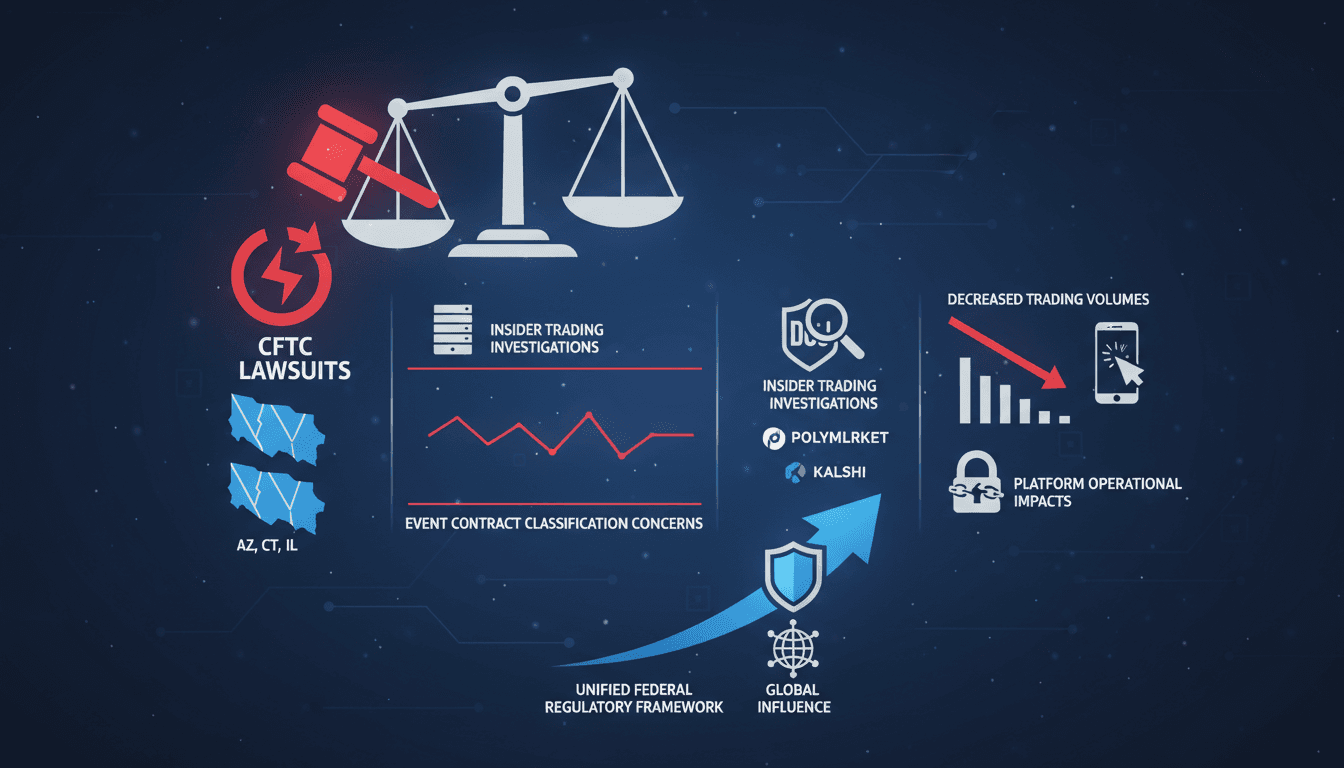
- CFTC lawsuits: On April 2, 2026, the Commodity Futures Trading Commission filed lawsuits against Arizona, Connecticut, and Illinois, asserting federal jurisdiction over prediction markets.
- Insider trading investigations: The Department of Justice is probing potential insider trading on platforms like Polymarket and Kalshi, focusing on high-yield bets linked to sensitive information.
- Market response: In reaction to regulatory pressures, Polymarket and Kalshi have implemented stricter integrity rules, while trading volumes remain elevated.
The context you actually need
- Growth of prediction markets: Following the 2024 U.S. elections, prediction markets surged, reaching billions in trading volume as they gained popularity for betting on real-world events.
- Regulatory confusion: The CFTC classifies event contracts as derivatives, while several states view them as unlicensed gambling, leading to jurisdictional disputes and cease-and-desist orders.
- Insider trading concerns: Anomalous profitable trades on sensitive geopolitical and corporate events have raised alarms, prompting federal scrutiny akin to traditional securities markets.
What's really happening
The recent actions by U.S. regulators signify a critical moment for prediction markets, which have thrived in a largely unregulated environment. The CFTC's lawsuits against states like Arizona, Connecticut, and Illinois mark a pivotal shift, as federal authorities assert their jurisdiction over these markets, which have been classified as derivatives under the Commodity Exchange Act. This legal maneuvering is not merely about jurisdiction; it reflects a broader concern regarding the integrity of prediction markets and the potential for insider trading.
As the DOJ investigates insider trading on platforms such as Polymarket and Kalshi, the focus is on high-return bets that may have been influenced by non-public information. This scrutiny is reminiscent of traditional financial markets, where insider trading is strictly prohibited. The CFTC's Director of Enforcement has publicly stated that insider trading regulations apply to prediction markets, signaling a commitment to uphold market integrity.
The backdrop to this regulatory push is the explosive growth of prediction markets, particularly after the 2024 U.S. elections, where trading volumes soared to billions. This growth has attracted institutional investors, with inflows reaching approximately $1.6 billion, coinciding with the onset of federal regulatory actions. However, this influx has also drawn the attention of state regulators, who have issued cease-and-desist orders, viewing these markets as unlicensed gambling operations.
In response to the regulatory environment, platforms like Polymarket and Kalshi have taken proactive measures to enhance market integrity. They have implemented rules prohibiting insiders and officials from trading on contracts related to events they influence. This move aims to restore confidence among traders and regulators alike, but it also highlights the ongoing tension between state and federal oversight.
As the landscape evolves, the implications for traders are significant. Increased regulatory scrutiny could lead to tighter trading conditions, reduced access to markets, and potential changes in how platforms operate. The situation remains fluid, with ongoing investigations and lawsuits shaping the future of prediction markets in the U.S.
Who feels it first (and how)
- Traders: Individuals using prediction markets may face new restrictions and changes in platform policies.
- Institutional investors: Firms investing in prediction markets could see altered risk profiles and compliance requirements.
- State regulators: States enforcing gambling laws may tighten their grip on local platforms, impacting market access.
- Crypto enthusiasts: Users in the crypto space may experience shifts in platform availability and trading conditions due to regulatory pressures.
What to watch next
- Federal court rulings: Watch for outcomes from the CFTC's lawsuits against states, as they will set precedents for federal jurisdiction over prediction markets.
- DOJ investigation results: The findings from insider trading probes could lead to criminal charges, influencing market confidence and platform operations.
- Market adaptations: Keep an eye on how platforms adjust their rules and user access in response to regulatory changes, which could redefine trading dynamics.
The CFTC is actively pursuing lawsuits to establish federal jurisdiction over prediction markets.
Increased regulatory scrutiny will lead to tighter trading conditions and potential changes in platform operations.
The long-term impact of these regulatory actions on market liquidity and trader behavior remains uncertain.
Frequently Asked Questions
- Why it matters?
- The evolving regulatory landscape could reshape how you interact with prediction markets, impacting liquidity and market access.
- What happened (in 30 seconds)?
- CFTC lawsuits: On April 2, 2026, the Commodity Futures Trading Commission filed lawsuits against Arizona, Connecticut, and Illinois, asserting federal jurisdiction over prediction markets. Insider trading investigations: The Department of Justice is probing potential insider trading on platforms like Polymarket and Kalshi, focusing on high-yield bets linked to sensitive information. Market response: In reaction to regulatory pressures, Polymarket and Kalshi have implemented stricter integrit
- What's really happening?
- The recent actions by U.S. regulators signify a critical moment for prediction markets, which have thrived in a largely unregulated environment. The CFTC's lawsuits against states like Arizona, Connecticut, and Illinois mark a pivotal shift, as federal authorities assert their jurisdiction over these markets, which have been classified as derivatives under the Commodity Exchange Act. This legal maneuvering is not merely about jurisdiction; it reflects a broader concern regarding the integrity of
- Who feels it first (and how)?
- Traders: Individuals using prediction markets may face new restrictions and changes in platform policies. Institutional investors: Firms investing in prediction markets could see altered risk profiles and compliance requirements. State regulators: States enforcing gambling laws may tighten their grip on local platforms, impacting market access. Crypto enthusiasts: Users in the crypto space may experience shifts in platform availability and trading conditions due to regulatory pressures.
- What to watch next?
- Federal court rulings: Watch for outcomes from the CFTC's lawsuits against states, as they will set precedents for federal jurisdiction over prediction markets. DOJ investigation results: The findings from insider trading probes could lead to criminal charges, influencing market confidence and platform operations. Market adaptations: Keep an eye on how platforms adjust their rules and user access in response to regulatory changes, which could redefine trading dynamics.
News and analysis on Bitcoin, altcoins, and blockchain innovation.
"Bitcoinist delivers news and analysis on Bitcoin, altcoins, and blockchain innovation with a focus on market trends and industry updates."
— A47 Editor
Crypto Prediction Markets Continue To Be Under Siege — Are Traders Now Fair Game For Prosecutors?
U.S. regulators, including the Commodity Futures Trading Commission (CFTC) and the Justice Department (DOJ), are urging a federal court to prevent Arizona from enforcing its gambling laws against the crypto prediction-market platform Kalshi. This leg...
Covers blockchain, cryptocurrency news, project analysis, and market insights.
"Cointelegraph is a leading crypto-focused media outlet known for timely news, analysis, and educational content related to blockchain and digital assets."
— A47 Editor
DOJ and CFTC seek halt to Arizona action against Kalshi
The U.S. Department of Justice (DOJ) and the Commodity Futures Trading Commission (CFTC) have requested a federal court to block Arizona's legal actions against Kalshi, asserting that the event contracts offered by the prediction market platform fall...