
Iran Rejects Pakistani-Mediated Ceasefire Proposal Amid Ongoing US-Iran Conflict
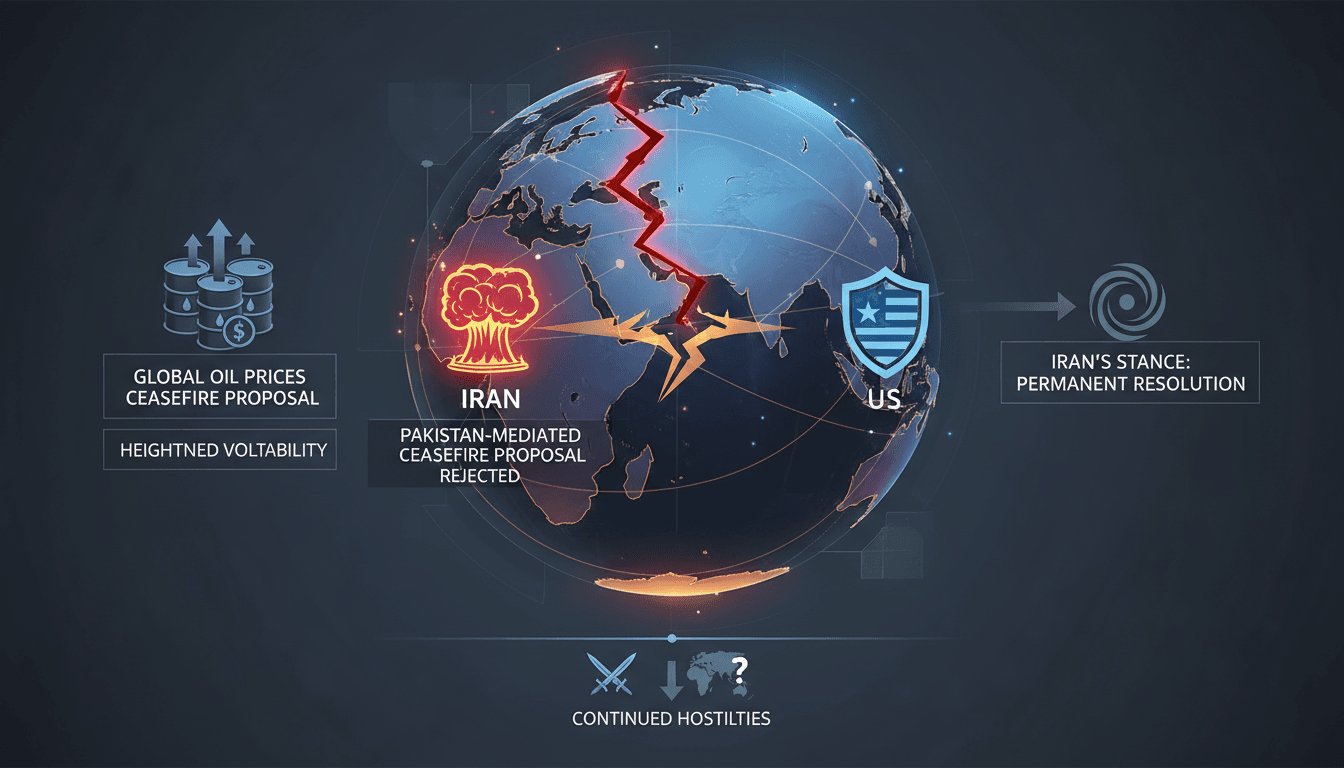
Here's what it means for you.
The ongoing US-Iran conflict could disrupt global oil markets and impact international trade routes.
Why it matters
The rejection of the ceasefire proposal signals escalating tensions that could lead to significant economic repercussions worldwide.
What happened (in 30 seconds)
- Iran rejected a Pakistani-brokered ceasefire proposal on April 6, 2026, amid ongoing US-Iran hostilities.
- Tehran issued a 10-point counter-proposal demanding permanent conflict resolution and sanctions relief.
- The conflict continues with no immediate signs of de-escalation, affecting global oil prices and regional stability.
The context you actually need
- The 2026 Iran war began on February 28 when US-Israeli airstrikes killed Iranian Supreme Leader Ali Khamenei, escalating tensions.
- Pakistan's role as a mediator reflects its neutral stance amid regional proxy wars and ongoing sanctions against Iran.
- The Strait of Hormuz, a crucial shipping lane for 20% of global oil, remains closed, contributing to rising energy prices and market volatility.
What's really happening
The rejection of the ceasefire proposal by Iran highlights a critical moment in the ongoing US-Iran conflict, which has escalated since the assassination of Supreme Leader Ali Khamenei. This event not only intensified military hostilities but also disrupted diplomatic channels, leading to a complex geopolitical landscape.
Pakistan, acting as a mediator, proposed a two-phase framework aimed at de-escalation. The first phase included an immediate ceasefire and reopening of the Strait of Hormuz, while the second phase involved nuclear disarmament and sanctions relief within a 15-20 day timeframe. However, Iran dismissed this proposal, emphasizing the need for a permanent resolution rather than temporary measures. The Iranian government, led by Foreign Minister Abbas Araghchi, articulated a 10-point counter-proposal that sought to ensure long-term security guarantees against future aggression.
This rejection underscores Iran's strategic position of prioritizing comprehensive negotiations over short-term fixes, reflecting its insistence on sovereignty and regional influence. The Iranian leadership perceives interim agreements as potential traps that could lead to renewed conflict, thereby justifying their refusal to engage in what they view as insufficiently robust proposals.
The implications of this rejection extend beyond immediate military concerns. The closure of the Strait of Hormuz has already led to a peak Brent crude oil price of $114 per barrel, affecting global energy markets and causing significant economic ripple effects. The UAE, particularly Dubai, has experienced severe disruptions, with over 23,000 flight cancellations and a staggering $120 billion loss in stock market value. Regional tourism has also suffered, costing an estimated $600 million daily due to missile risks and energy volatility.
As the conflict continues, the potential for further escalation remains high, particularly with US President Trump's reiterated threats against Iranian infrastructure. The geopolitical stakes are elevated, with the possibility of broader military engagement that could draw in other regional players and exacerbate existing tensions.
Who feels it first (and how)
- Oil and gas companies: Increased prices and supply chain disruptions.
- Airlines and travel sectors: Significant operational disruptions and financial losses.
- Investors: Heightened market volatility and potential losses in stock markets.
- Consumers: Rising fuel prices and potential inflationary pressures on goods and services.
What to watch next
- Oil price fluctuations: Watch for changes in Brent crude prices as the conflict evolves, impacting global energy costs.
- Diplomatic efforts: Monitor any new proposals or interventions from neutral parties like Pakistan, which could influence the trajectory of negotiations.
- Military escalations: Keep an eye on US military movements in the region and Iranian responses, as these could signal further conflict or potential de-escalation.
The conflict remains ongoing, with significant geopolitical implications.
Continued volatility in oil prices and potential disruptions in global energy markets.
The long-term effectiveness of diplomatic efforts and the potential for a comprehensive resolution.
Frequently Asked Questions
- Why it matters?
- The rejection of the ceasefire proposal signals escalating tensions that could lead to significant economic repercussions worldwide.
- What happened (in 30 seconds)?
- Iran rejected a Pakistani-brokered ceasefire proposal on April 6, 2026, amid ongoing US-Iran hostilities. Tehran issued a 10-point counter-proposal demanding permanent conflict resolution and sanctions relief. The conflict continues with no immediate signs of de-escalation, affecting global oil prices and regional stability.
- What's really happening?
- The rejection of the ceasefire proposal by Iran highlights a critical moment in the ongoing US-Iran conflict, which has escalated since the assassination of Supreme Leader Ali Khamenei. This event not only intensified military hostilities but also disrupted diplomatic channels, leading to a complex geopolitical landscape. Pakistan, acting as a mediator, proposed a two-phase framework aimed at de-escalation. The first phase included an immediate ceasefire and reopening of the Strait of Hormuz,
- Who feels it first (and how)?
- Oil and gas companies: Increased prices and supply chain disruptions. Airlines and travel sectors: Significant operational disruptions and financial losses. Investors: Heightened market volatility and potential losses in stock markets. Consumers: Rising fuel prices and potential inflationary pressures on goods and services.
- What to watch next?
- Oil price fluctuations: Watch for changes in Brent crude prices as the conflict evolves, impacting global energy costs. Diplomatic efforts: Monitor any new proposals or interventions from neutral parties like Pakistan, which could influence the trajectory of negotiations. Military escalations: Keep an eye on US military movements in the region and Iranian responses, as these could signal further conflict or potential de-escalation.
Arabic-language coverage of Saudi, regional, and international affairs.
"Al Bilad offers mainstream Saudi newspaper coverage across domestic and broader Arab topics."
— A47 Editor
ردت على المقترح الباكستاني.. السلطات الإيرانية ترفض وقف إطلاق النار
Iranian authorities have rejected a ceasefire proposal put forth by Pakistan amid escalating diplomatic efforts to halt hostilities between the United States and Iran. Reports indicate that both American and Iranian sides received a plan aimed at end...
Pan-Arab news coverage spanning politics, business, sports, and regional affairs.
"Asharq Al-Awsat reflects a broad Arab editorial perspective with strong attention to regional geopolitics."
— A47 Editor
إيران ترفض وقف النار المؤقت... وتؤكد ضرورة إنهاء الحرب بشكل دائم
Iran has communicated its response to the United States' proposal for a temporary ceasefire, firmly rejecting the idea and emphasizing the necessity for a permanent end to the ongoing conflict. This stance was conveyed to Pakistan, highlighting Iran'...
Arabic-language UAE newspaper coverage focused on domestic affairs, public institutions, business, society, and regional developments.
"Al Khaleej coverage generally reflects a mainstream UAE editorial lens with strong attention to public affairs, institutions, and regional developments."
— A47 Editor
رداً على المقترح الأمريكي.. إيران ترفض وقف إطلاق النار المؤقت
Iran has officially informed Pakistan of its response to the U.S. proposal, which includes ten points aimed at resolving regional conflicts, ensuring safe passage through the Strait of Hormuz, lifting sanctions, and facilitating reconstruction effort...