
US Special Forces Rescue Airman from Iran Amid Ongoing Conflict
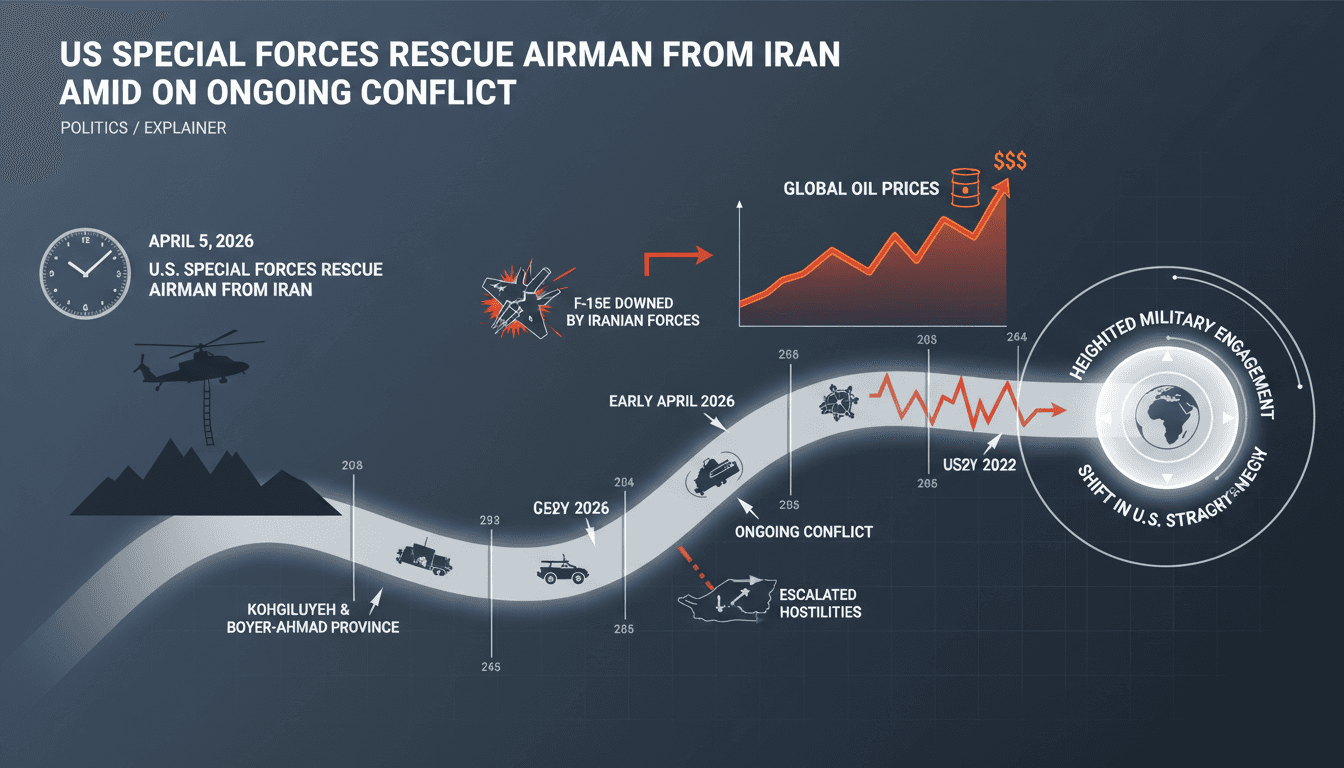
Here's what it means for you.
The recent U.S. military operation in Iran could impact global oil prices and security measures in your region.
Why it matters
This operation underscores escalating U.S.-Iran tensions, which could affect international markets and security protocols.
What happened (in 30 seconds)
- On April 5, 2026, U.S. special forces rescued a wounded airman from Iran after his F-15E was shot down.
- The operation involved 155 aircraft and was executed by Navy SEAL Team 6, with significant CIA intelligence support.
- No U.S. casualties occurred, but Iran reported local deaths and claimed to have foiled the operation.
The context you actually need
- The 2026 Iran war began on February 28, 2026, following Iranian attacks on U.S. allies and military assets, leading to U.S. airstrikes.
- Iranian forces have been increasingly aggressive, downing U.S. aircraft and disrupting maritime operations in the Strait of Hormuz.
- Oil prices surged above $110 per barrel, driven by fears of supply disruptions amid the ongoing conflict.
What's really happening
The rescue operation on April 5, 2026, is a critical event in the context of the ongoing U.S.-Iran war, which escalated dramatically after coordinated U.S.-Israeli airstrikes targeted Iranian military and nuclear sites. This military engagement was a direct response to Iranian provocations, including attacks on U.S. allies and disruptions in the Strait of Hormuz, a vital maritime route for global oil shipments.
The downing of the F-15E on April 3 marked a significant moment in the conflict, highlighting the increased risks faced by U.S. forces operating in hostile territory. The airman, a weapons systems officer, demonstrated remarkable survival skills by applying SERE (Survival, Evasion, Resistance, and Escape) protocols, which allowed him to evade capture for 36 to 48 hours. His successful extraction by Navy SEAL Team 6, supported by an overwhelming air presence, illustrates the U.S. military's commitment to protecting its personnel even in the most challenging circumstances.
The operation's complexity was underscored by the involvement of 155 aircraft, including fighters, bombers, and tankers, which provided air cover during the extraction. The CIA played a crucial role in pinpointing the airman's location using his activated beacon, while also executing deception tactics to mislead Iranian forces. The operation's success, with no U.S. casualties reported, was hailed by President Trump as a testament to U.S. military prowess.
However, the aftermath of the operation has intensified geopolitical tensions. Iran's declaration of having "foiled" the U.S. mission and the display of wreckage from U.S. aircraft serve to bolster domestic narratives against perceived foreign aggression. The conflict's escalation has broader implications, particularly for global oil markets. With oil prices already exceeding $110 per barrel, the ongoing military actions and threats to maritime security are likely to drive prices higher, impacting economies worldwide, including those heavily reliant on oil imports.
As the U.S. continues its military operations in the region, the potential for further confrontations remains high. The situation is fluid, and the international community is closely monitoring developments, particularly concerning maritime security and energy supply stability.
Who feels it first (and how)
- Oil traders: Increased prices and volatility in oil markets could affect trading strategies and profitability.
- U.S. military personnel: Heightened risks and operational demands may lead to increased deployments and stress.
- Consumers: Rising fuel prices will impact transportation costs and overall living expenses.
- Middle Eastern economies: Countries reliant on oil exports may see economic fluctuations based on market reactions to the conflict.
What to watch next
- Oil price fluctuations: Monitoring changes in oil prices will indicate market reactions to ongoing military actions and geopolitical developments.
- U.S. military deployments: Increased troop movements or air operations in the region could signal further escalations or new strategies.
- Iran's military responses: Observing Iran's military actions and rhetoric will provide insights into potential retaliatory measures and their implications for regional stability.
The U.S. successfully rescued an airman with no casualties on their side.
Oil prices will continue to rise due to fears of supply disruptions amid ongoing conflict.
The long-term impact of this operation on U.S.-Iran relations and regional stability remains uncertain.
Frequently Asked Questions
- Why it matters?
- This operation underscores escalating U.S.-Iran tensions, which could affect international markets and security protocols.
- What happened (in 30 seconds)?
- On April 5, 2026, U.S. special forces rescued a wounded airman from Iran after his F-15E was shot down. The operation involved 155 aircraft and was executed by Navy SEAL Team 6, with significant CIA intelligence support. No U.S. casualties occurred, but Iran reported local deaths and claimed to have foiled the operation.
- What's really happening?
- The rescue operation on April 5, 2026, is a critical event in the context of the ongoing U.S.-Iran war, which escalated dramatically after coordinated U.S.-Israeli airstrikes targeted Iranian military and nuclear sites. This military engagement was a direct response to Iranian provocations, including attacks on U.S. allies and disruptions in the Strait of Hormuz, a vital maritime route for global oil shipments. The downing of the F-15E on April 3 marked a significant moment in the conflict, hi
- Who feels it first (and how)?
- Oil traders: Increased prices and volatility in oil markets could affect trading strategies and profitability. U.S. military personnel: Heightened risks and operational demands may lead to increased deployments and stress. Consumers: Rising fuel prices will impact transportation costs and overall living expenses. Middle Eastern economies: Countries reliant on oil exports may see economic fluctuations based on market reactions to the conflict.
- What to watch next?
- Oil price fluctuations: Monitoring changes in oil prices will indicate market reactions to ongoing military actions and geopolitical developments. U.S. military deployments: Increased troop movements or air operations in the region could signal further escalations or new strategies. Iran's military responses: Observing Iran's military actions and rhetoric will provide insights into potential retaliatory measures and their implications for regional stability.
European coverage of Middle East politics and security issues.
"France 24 offers international reporting with a European editorial perspective."
— A47 Editor
War in the Middle East: the US rescues missing airman from Iran
A U.S. F-15E Strike Eagle fighter jet was shot down over Iran, leading to a complex rescue operation that successfully retrieved one airman, while another remains missing. The incident has escalated tensions between the U.S. and Iran, prompting a sig...
24/7 international news from a French perspective in multiple languages.
"France 24 is viewed as a globally focused outlet with balanced coverage and a European perspective."
— A47 Editor
War in the Middle East: the US rescues missing airman from Iran
A U.S. F-15E Strike Eagle fighter jet was shot down over Iran, leading to a complex rescue operation that successfully retrieved one airman, while another remains missing. The incident has escalated tensions between the U.S. and Iran, prompting a sig...
Global political, business, and cultural coverage from WSJ international desks.
"The Wall Street Journal offers extensive international reporting with a reputation for financial insight and a center-right editorial stance."
— A47 Editor
Crashes, Ejections and a Frantic Search for a Missing Airman in Iran
A U.S. F-15E Strike Eagle fighter jet was shot down over Iran, leading to a complex search-and-rescue operation for a missing airman, while another crew member has been rescued and is receiving medical treatment. This incident marks a significant esc...
International coverage of politics, culture, and current affairs.
"BBC News is widely regarded as a reputable international news organization, known for its impartial tone and public service mandate."
— A47 Editor
What we know so far about the search for missing US airman in Iran
A U.S. F-15E Strike Eagle fighter jet was shot down over Iran, prompting an extensive search operation for a missing airman. One crew member has been rescued and is receiving medical treatment, while efforts continue to locate the second airman who r...