
Bitcoin Price Drops to $68,000 Amid U.S. Ultimatum to Iran
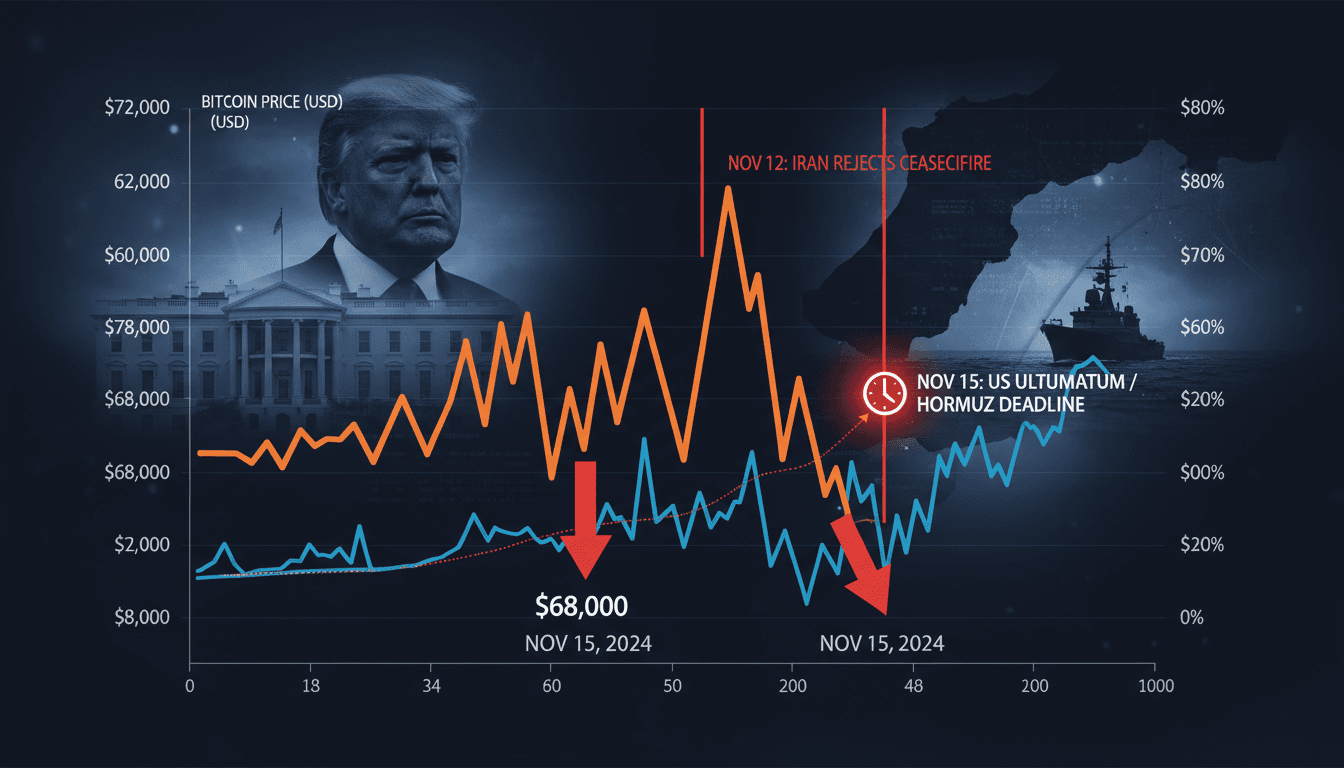
Here's what it means for you.
Your investment strategies in cryptocurrencies may need to adapt as geopolitical events increasingly influence market volatility.
Why it matters
The interplay between geopolitical crises and cryptocurrency prices signifies a shift in how global events impact financial markets.
What happened (in 30 seconds)
- Bitcoin's price fell to approximately $68,000 as President Trump's ultimatum to Iran approached.
- Iran rejected a U.S.-backed ceasefire proposal, heightening tensions and market uncertainty.
- Institutional demand remained strong, with $471 million inflows into Bitcoin ETFs despite the price decline.
The context you actually need
- The Strait of Hormuz is critical for global oil flows, handling about 20% of the world's oil supply, making any disruption significant for energy markets.
- Bitcoin's price movements have increasingly correlated with geopolitical risk, as seen in the recent volatility surrounding U.S.-Iran relations.
- Institutional investors are actively participating in the crypto market, indicating a shift towards viewing Bitcoin as a hedge against geopolitical instability.
What's really happening
As tensions escalate between the U.S. and Iran, particularly surrounding the Strait of Hormuz, Bitcoin's price has become a barometer for broader market sentiment. The recent drop to around $68,000 reflects a complex interplay of geopolitical risk and investor behavior. Initially, Bitcoin had surged above $70,000 amid hopes for a ceasefire, but the rejection of a 45-day proposal by Iran shifted the narrative.
The situation is exacerbated by rising oil prices, which have surpassed $111 per barrel, fueling inflationary concerns and delaying potential Federal Reserve rate cuts. This environment creates a risk-off sentiment among investors, leading to defensive positioning in the markets. As traders anticipate potential military action, Bitcoin's price is likely to remain volatile, reflecting the binary outcomes of either military strikes or diplomatic resolutions.
Despite the downturn, institutional interest in Bitcoin remains robust. The $471 million inflow into Bitcoin ETFs on April 6 indicates that institutional investors are viewing the current price dip as a buying opportunity. This suggests a growing belief in Bitcoin's long-term value, even amid short-term volatility. The presence of institutional capital can provide a stabilizing force, but it also means that Bitcoin's price will be increasingly sensitive to external shocks, particularly those related to geopolitical events.
In the context of Dubai, a key regional player and crypto hub, the implications are significant. The UAE's economy is closely tied to oil revenues, which could be impacted by disruptions in the Strait of Hormuz. Local traders may experience heightened volatility in Bitcoin prices, mirroring global risk-off moves. As oil prices rise, inflationary pressures could also affect crypto portfolios, complicating investment strategies for local traders.
Who feels it first (and how)
- Institutional investors: They are actively monitoring geopolitical developments and adjusting their strategies based on market volatility.
- Retail traders: Individual investors may react more emotionally to price swings, leading to panic selling or buying.
- Energy sector professionals: Those in oil and gas may face direct impacts from rising prices and potential supply disruptions.
- Geopolitical analysts: Experts tracking U.S.-Iran relations will see increased demand for insights into market implications.
What to watch next
- Iran's response: Monitoring Iran's actions following the ultimatum will provide insights into potential military or diplomatic outcomes.
- Oil price movements: Continued fluctuations in oil prices will signal broader market sentiment and could impact Bitcoin's price trajectory.
- Institutional inflows: Tracking Bitcoin ETF inflows will help gauge institutional confidence and potential market stabilization.
Bitcoin's price is sensitive to geopolitical events, particularly those involving oil supply.
Continued volatility in Bitcoin as traders react to unfolding geopolitical developments.
The long-term impact of institutional investment on Bitcoin's price stability amid geopolitical tensions.
Frequently Asked Questions
- Why it matters?
- The interplay between geopolitical crises and cryptocurrency prices signifies a shift in how global events impact financial markets.
- What happened (in 30 seconds)?
- Bitcoin's price fell to approximately $68,000 as President Trump's ultimatum to Iran approached. Iran rejected a U.S.-backed ceasefire proposal, heightening tensions and market uncertainty. Institutional demand remained strong, with $471 million inflows into Bitcoin ETFs despite the price decline.
- What's really happening?
- As tensions escalate between the U.S. and Iran, particularly surrounding the Strait of Hormuz, Bitcoin's price has become a barometer for broader market sentiment. The recent drop to around $68,000 reflects a complex interplay of geopolitical risk and investor behavior. Initially, Bitcoin had surged above $70,000 amid hopes for a ceasefire, but the rejection of a 45-day proposal by Iran shifted the narrative. The situation is exacerbated by rising oil prices, which have surpassed $111 per barre
- Who feels it first (and how)?
- Institutional investors: They are actively monitoring geopolitical developments and adjusting their strategies based on market volatility. Retail traders: Individual investors may react more emotionally to price swings, leading to panic selling or buying. Energy sector professionals: Those in oil and gas may face direct impacts from rising prices and potential supply disruptions. Geopolitical analysts: Experts tracking U.S.-Iran relations will see increased demand for insights into market implic
- What to watch next?
- Iran's response: Monitoring Iran's actions following the ultimatum will provide insights into potential military or diplomatic outcomes. Oil price movements: Continued fluctuations in oil prices will signal broader market sentiment and could impact Bitcoin's price trajectory. Institutional inflows: Tracking Bitcoin ETF inflows will help gauge institutional confidence and potential market stabilization.
Real-time updates, analysis, and reports on the blockchain and cryptocurrency sectors.
"Crypto News delivers real-time updates, analysis, and reports on the blockchain and cryptocurrency sectors."
— A47 Editor
Bitcoin Price Prediction: BTC Drops to $68K as Trump’s 8PM Iran Deadline Arrives — What Traders Are Watching
Bitcoin's price has dropped to approximately $68,000 following a brief surge to $70,000 amid geopolitical tensions related to former President Donald Trump's ultimatum to Iran. The decline occurred after Iran rejected a proposed deal, coinciding with...
Covers blockchain, cryptocurrency news, project analysis, and market insights.
"CoinDesk is a well-established cryptocurrency and blockchain news provider, offering comprehensive insights, market data, and industry research."
— A47 Editor
Bitcoin rises past $69,000 as risk markets reverse big early losses on hope for Iran deal
Bitcoin's price has surged past $69,000, driven by positive sentiment surrounding potential ceasefire discussions between Iran and Pakistan, as reported by Axios. This development has sparked a rally in risk markets, reversing earlier losses.