
WHO Warns of Imminent Medical Supply Depletion in Lebanon Amid Israeli Strikes
Here's what it means for you.
The depletion of trauma medical supplies in Lebanon could impact global healthcare logistics and raise concerns for expatriates with family in the region.
Why it matters
This crisis highlights the fragility of healthcare systems in conflict zones and the ripple effects on international aid and supply chains.
What happened (in 30 seconds)
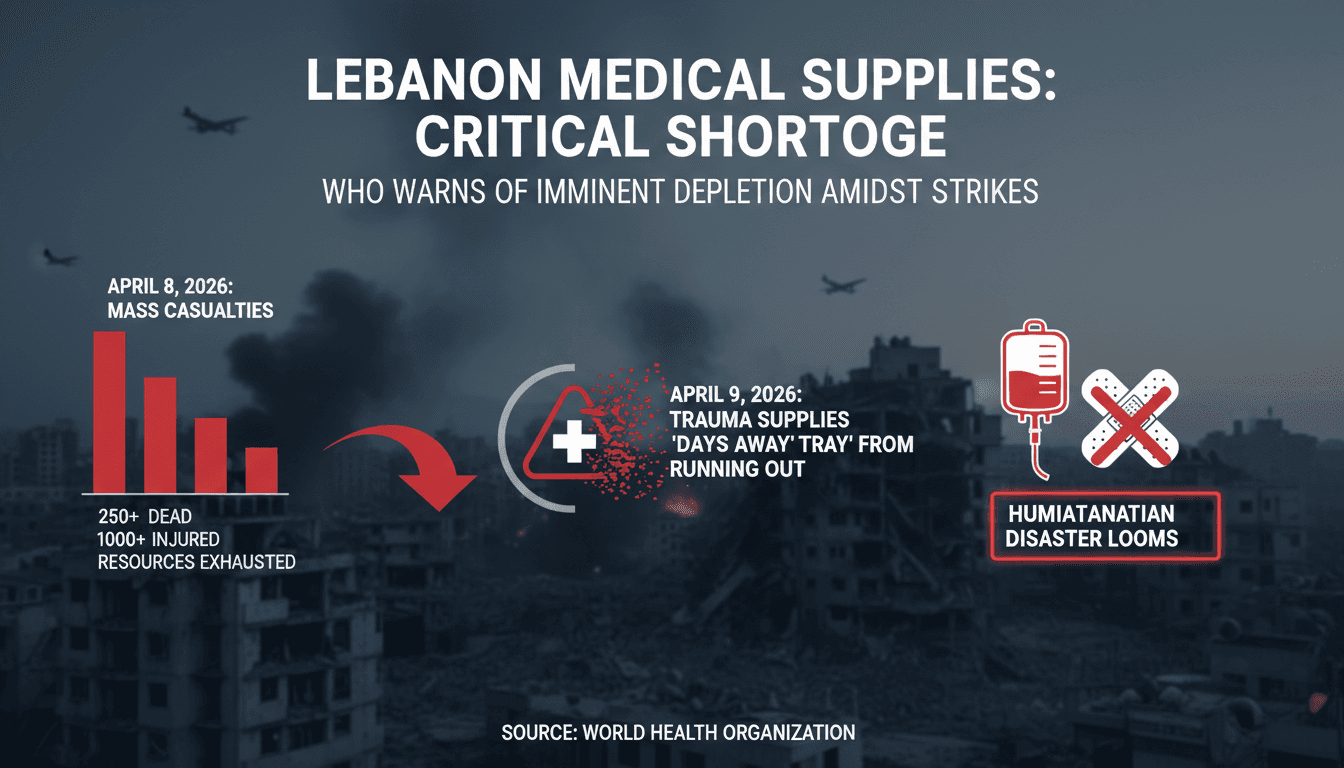
- WHO issued a warning on April 9, 2026, stating that trauma medical supplies in Lebanese hospitals would run out within days.
- Israeli airstrikes on April 8 resulted in over 250 deaths and more than 1,000 injuries, exhausting three weeks' worth of supplies in just one day.
- Lebanon's healthcare system is already strained due to economic collapse and prior conflicts, exacerbating the current crisis.
The context you actually need
- Lebanon's healthcare system has been weakened since 2019, struggling with economic collapse and previous hostilities, which makes it ill-equipped to handle sudden influxes of casualties.
- Mass displacement of over one million people since early March 2026 has overwhelmed medical facilities, particularly in Beirut and southern Lebanon.
- Regional conflicts have disrupted supply chains, tripling medical import costs and stranding essential supplies at logistics hubs, including in Dubai.
What's really happening
The recent Israeli airstrikes on April 8, 2026, marked a significant escalation in the ongoing conflict, resulting in the largest single-day casualty count in recent history. The World Health Organization (WHO) reported that the strikes led to the depletion of three weeks' worth of trauma medical supplies in just one day. This alarming statistic underscores the immediate and dire consequences of the airstrikes, which primarily impacted civilians.
Dr. Abdinasir Abubakar, the WHO Representative in Lebanon, has warned that the ongoing conflict and the resulting medical supply shortages could lead to catastrophic outcomes for those injured in the strikes. The critical supplies in question—bandages, antibiotics, anesthetics, and chronic disease medications—are essential for treating war-related injuries and managing ongoing health conditions. The situation is compounded by the fact that Lebanon's healthcare infrastructure has been under immense strain since the economic collapse began in 2019, and the healthcare system was already fragile before the escalation of conflict in March 2026.
The broader context reveals that the conflict's origins lie in U.S.-Israeli strikes on Iran, which triggered a series of retaliatory actions and escalated tensions in the region. The closure of the Strait of Hormuz has further complicated the situation, leading to severe disruptions in medical supply chains. These disruptions have tripled the costs of medical imports, making it increasingly difficult for hospitals in Lebanon to obtain necessary supplies. The WHO and the Lebanese Ministry of Public Health are now working together to redistribute existing supplies between hospitals to mitigate the immediate crisis, but this is only a temporary solution.
As the conflict continues and Israeli strikes persist, the risk of further casualties remains high, which could lead to a complete depletion of medical supplies. The humanitarian implications are profound, not only for those directly affected in Lebanon but also for the international community, which may face increased pressure to respond to the crisis. The situation is particularly concerning for the Lebanese expatriate community, especially in cities like Dubai, where concerns for family welfare and remittance strains are growing.
Who feels it first (and how)
- Healthcare workers in Lebanon, facing overwhelming patient loads and dwindling supplies.
- Families of the injured, particularly those with relatives in Lebanon, who are anxious about their loved ones' access to medical care.
- International aid organizations, which may struggle to deliver timely assistance due to disrupted supply chains and increased costs.
What to watch next
- Supply chain developments: Monitor how the WHO and Lebanese authorities manage inter-hospital supply transfers and whether they can avert total depletion.
- International aid responses: Watch for any new initiatives or funding from global organizations aimed at addressing the humanitarian crisis in Lebanon.
- Regional stability: Keep an eye on the geopolitical landscape in the Middle East, particularly any shifts that could affect the ongoing conflict and its humanitarian implications.
The WHO has confirmed that trauma medical supplies in Lebanon are critically low.
Continued Israeli airstrikes will exacerbate the medical supply crisis and increase civilian casualties.
The long-term impact on Lebanon's healthcare system and potential international responses remain uncertain.
Frequently Asked Questions
- Why it matters?
- This crisis highlights the fragility of healthcare systems in conflict zones and the ripple effects on international aid and supply chains.
- What happened (in 30 seconds)?
- WHO issued a warning on April 9, 2026, stating that trauma medical supplies in Lebanese hospitals would run out within days. Israeli airstrikes on April 8 resulted in over 250 deaths and more than 1,000 injuries, exhausting three weeks' worth of supplies in just one day. Lebanon's healthcare system is already strained due to economic collapse and prior conflicts, exacerbating the current crisis.
- What's really happening?
- The recent Israeli airstrikes on April 8, 2026, marked a significant escalation in the ongoing conflict, resulting in the largest single-day casualty count in recent history. The World Health Organization (WHO) reported that the strikes led to the depletion of three weeks' worth of trauma medical supplies in just one day. This alarming statistic underscores the immediate and dire consequences of the airstrikes, which primarily impacted civilians. Dr. Abdinasir Abubakar, the WHO Representative i
- Who feels it first (and how)?
- Healthcare workers in Lebanon, facing overwhelming patient loads and dwindling supplies. Families of the injured, particularly those with relatives in Lebanon, who are anxious about their loved ones' access to medical care. International aid organizations, which may struggle to deliver timely assistance due to disrupted supply chains and increased costs.
- What to watch next?
- Supply chain developments: Monitor how the WHO and Lebanese authorities manage inter-hospital supply transfers and whether they can avert total depletion. International aid responses: Watch for any new initiatives or funding from global organizations aimed at addressing the humanitarian crisis in Lebanon. Regional stability: Keep an eye on the geopolitical landscape in the Middle East, particularly any shifts that could affect the ongoing conflict and its humanitarian implications.
Pan-Arab news coverage spanning politics, business, sports, and regional affairs.
"Asharq Al-Awsat reflects a broad Arab editorial perspective with strong attention to regional geopolitics."
— A47 Editor
«منظمة الصحة»: المستلزمات الطبية ستنفد في بعض مستشفيات لبنان خلال أيام
The World Health Organization announced that some hospitals in Lebanon may run out of life-saving medical supplies within days, highlighting a critical situation in the healthcare sector. This warning underscores the urgent need for support and resou...
Arabic-language UAE newspaper coverage focused on domestic affairs, public institutions, business, society, and regional developments.
"Al Khaleej coverage generally reflects a mainstream UAE editorial lens with strong attention to public affairs, institutions, and regional developments."
— A47 Editor
«الصحة العالمية» تحذر: نفاد مستلزمات طبية بمستشفيات في لبنان خلال أيام
The World Health Organization (WHO) has warned that some hospitals in Lebanon may run out of life-saving medical supplies within days due to supply shortages following significant casualties from extensive Israeli airstrikes. WHO representative Abdel...
Regional coverage and analysis focused on politics, diplomacy, and business across the Middle East.
"Al-Monitor is known for analytical reporting on Middle East politics and policy developments."
— A47 Editor
Lebanon's hospitals may run out of vital medical supplies within days, says WHO
The World Health Organization (WHO) has warned that some hospitals in Lebanon may run out of essential trauma medical supplies within days due to the depletion of resources following extensive Israeli airstrikes. These supplies, which include critica...
International coverage of politics, security, and social issues.
"Global News is a mainstream Canadian outlet with a centrist editorial stance, focusing on factual reporting."
— A47 Editor
Lebanon hospitals may run out of vital supplies within days, WHO says
The World Health Organization (WHO) has warned that hospitals in Lebanon may exhaust their vital supplies, including essential trauma kits, within days due to the ongoing humanitarian crisis exacerbated by recent conflicts. These kits are crucial for...