
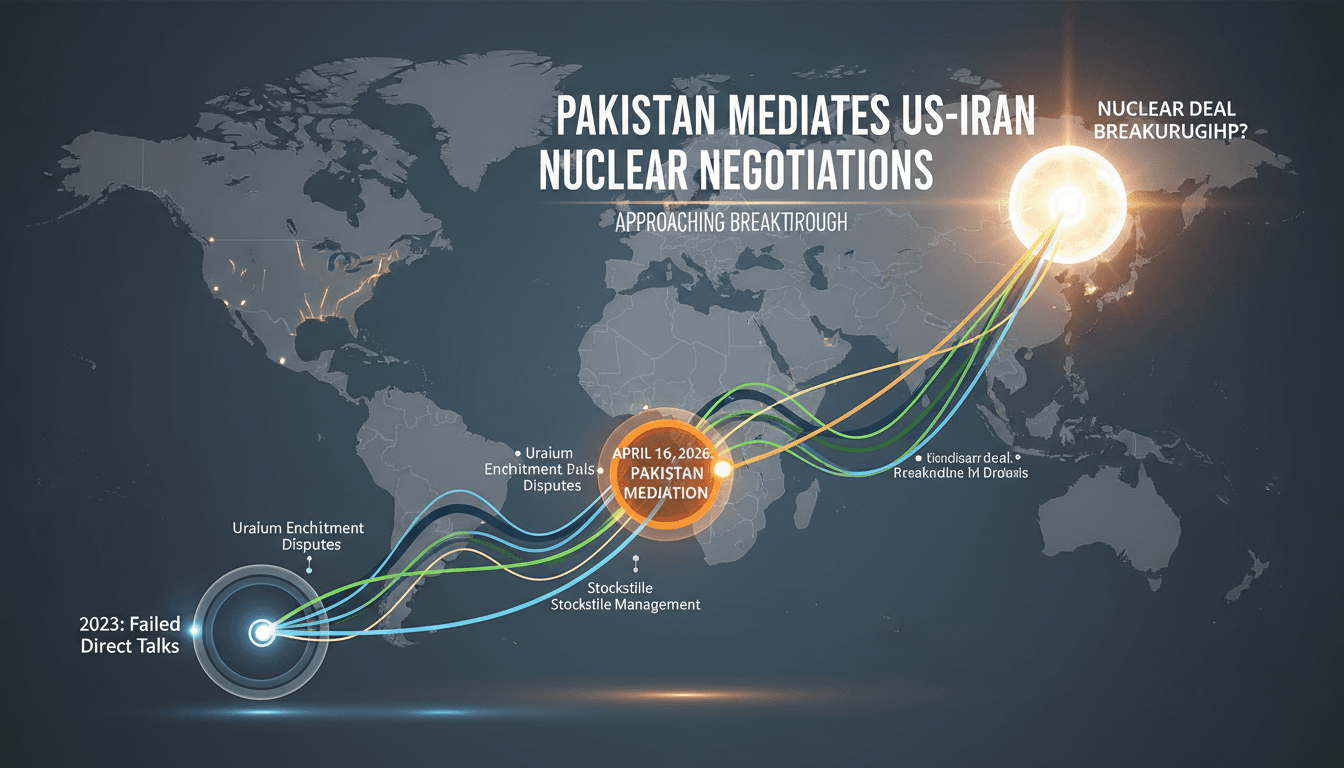
Pakistan Mediates US-Iran Nuclear Negotiations Approaching Breakthrough
Here's what it means for you.
If you’re in the Gulf region, the outcome of these negotiations could significantly impact economic stability and energy prices.
Why it matters
The negotiations are pivotal in shaping geopolitical dynamics and energy markets, particularly in the Gulf region.
What happened (in 30 seconds)
- Pakistan facilitated indirect talks between the US and Iran, aiming for a breakthrough on Iran's nuclear program.
- Direct negotiations ended without agreement on April 12, prompting shuttle diplomacy to address key disputes.
- A potential breakthrough was reported on April 16, with discussions focusing on uranium stockpile management and enrichment freezes.
The context you actually need
- Escalating tensions in early March 2026 led to a US-announced ceasefire amid threats of naval blockades in the Strait of Hormuz.
- Key sticking points include Iran's 440 kg stockpile of highly enriched uranium and the duration of the proposed enrichment moratorium.
- Pakistan's role as a mediator stems from its strategic relationships with both the US and Iran, aiming to stabilize the region.
What's really happening
The recent negotiations between the United States and Iran, mediated by Pakistan, reflect a complex interplay of regional power dynamics and international diplomacy. The backdrop of these talks is a conflict that escalated in early March 2026, leading to a fragile ceasefire announced by the US on April 7. This ceasefire was critical, as it aimed to prevent further military escalation in the strategically vital Strait of Hormuz, a key artery for global oil shipments.
The direct talks that took place in Islamabad from April 11 to 12 involved high-level officials from both nations, including US Vice President JD Vance and Iranian Parliament Speaker Mohammad Bagher Ghalibaf. However, these discussions ended without a concrete agreement, highlighting the deep-rooted mistrust and conflicting interests at play. Following this setback, Pakistan's Army Chief Asim Munir and Prime Minister Shehbaz Sharif engaged in shuttle diplomacy, relaying messages between Washington and Tehran to address the unresolved issues.
Central to the negotiations is Iran's stockpile of 440 kg of highly enriched uranium, which has become a focal point of contention. The US has proposed a 20-year moratorium on uranium enrichment, a proposal that Iran has deemed insufficient. The discussions also involve potential mechanisms for stockpile reduction or transfer, which could serve as a compromise to alleviate tensions. However, Iran's Foreign Ministry has emphasized the need for the US to withdraw its "excessive demands" before any agreement can be reached.
The stakes are high, not just for the negotiating parties but for the broader region. The outcome of these talks could influence oil prices and economic stability in the Gulf, particularly as markets react to the uncertainty surrounding the ceasefire and potential trade disruptions. The ongoing diplomatic efforts by Pakistan reflect its strategic positioning as a mediator, leveraging its relationships with both the US and Iran to foster dialogue and prevent further conflict.
Who feels it first (and how)
- Energy sector professionals: Fluctuations in oil prices could directly impact jobs and investments.
- Investors in Gulf markets: Stock market volatility may affect portfolios and investment strategies.
- Regional governments: Economic stability and security policies may shift based on the negotiation outcomes.
What to watch next
- Further diplomatic engagements: Watch for announcements regarding the next round of direct talks, as they will indicate the seriousness of the negotiations.
- Market reactions: Monitor Gulf stock markets and oil prices for signs of stability or volatility in response to negotiation developments.
- Iran's uranium stockpile management: Any agreements on stockpile reduction or enrichment moratoriums will be critical in assessing the future of nuclear negotiations.
The US and Iran are engaged in indirect negotiations mediated by Pakistan.
A potential breakthrough on nuclear deal elements may emerge, contingent on US concessions.
The timeline for the next round of direct negotiations remains uncertain.
Frequently Asked Questions
- Why it matters?
- The negotiations are pivotal in shaping geopolitical dynamics and energy markets, particularly in the Gulf region.
- What happened (in 30 seconds)?
- Pakistan facilitated indirect talks between the US and Iran, aiming for a breakthrough on Iran's nuclear program. Direct negotiations ended without agreement on April 12, prompting shuttle diplomacy to address key disputes. A potential breakthrough was reported on April 16, with discussions focusing on uranium stockpile management and enrichment freezes.
- What's really happening?
- The recent negotiations between the United States and Iran, mediated by Pakistan, reflect a complex interplay of regional power dynamics and international diplomacy. The backdrop of these talks is a conflict that escalated in early March 2026, leading to a fragile ceasefire announced by the US on April 7. This ceasefire was critical, as it aimed to prevent further military escalation in the strategically vital Strait of Hormuz, a key artery for global oil shipments. The direct talks that took p
- Who feels it first (and how)?
- Energy sector professionals: Fluctuations in oil prices could directly impact jobs and investments. Investors in Gulf markets: Stock market volatility may affect portfolios and investment strategies. Regional governments: Economic stability and security policies may shift based on the negotiation outcomes.
- What to watch next?
- Further diplomatic engagements: Watch for announcements regarding the next round of direct talks, as they will indicate the seriousness of the negotiations. Market reactions: Monitor Gulf stock markets and oil prices for signs of stability or volatility in response to negotiation developments. Iran's uranium stockpile management: Any agreements on stockpile reduction or enrichment moratoriums will be critical in assessing the future of nuclear negotiations.
RT is a Russian state-funded network covering global events from a Russian perspective.
"RT is widely criticized for promoting pro-Kremlin narratives and is considered by many to be a state propaganda outlet."
— A47 Editor
Pakistan-mediated US-Iran talks nearing breakthrough – media
Recent reports indicate that talks mediated by Pakistan between the United States and Iran are approaching a significant breakthrough regarding Iran's nuclear program, with optimism growing for a new round of negotiations in Islamabad.
Global markets, investing, and macroeconomics from a premier financial newsroom.
"Bloomberg is respected for in-depth financial reporting and data-driven analysis."
— A47 Editor
Trump Says Deal With Iran ‘Looking Very Good’ Amid Ceasefire
President Donald Trump expressed optimism regarding the potential for a permanent ceasefire between the US and Iran as discussions for an extended truce are underway, coinciding with the current ceasefire's expiration next week.
Comprehensive coverage of Middle Eastern and global issues.
"Al Jazeera is a prominent voice from the Global South, especially the Middle East, with an emphasis on underreported stories."
— A47 Editor
Iran war: What is happening on day 48 of the US-Iran conflict?
On day 48 of the US-Iran conflict, talks between the United States and Iran are reportedly gaining momentum, with Pakistan acting as a mediator. Optimism surrounds the potential for a new round of negotiations in Islamabad, reflecting a shift in dipl...
Capitol Hill news, legislation, and policy insight.
"The Hill specializes in U.S. politics and policy, with a focus on Capitol Hill developments and a reputation for insider reporting."
— A47 Editor
Where US-Iran talks stand as ceasefire deadline looms
As the ceasefire between the U.S., Israel, and Iran approaches its expiration on April 22, diplomatic efforts intensify to resume peace talks in Islamabad. President Trump indicated that negotiations could restart within days, following a fragile cea...
Right-of-center views on political news.
"The Washington Times is a conservative-leaning newspaper known for its political coverage and advocacy of right-of-center viewpoints."
— A47 Editor
White House says prospects of deal with Iran are 'good' but Trump has not extended ceasefire
The White House announced that while President Trump has not formally extended the ceasefire with Iran, there are positive prospects for a deal, with the U.S. engaging Pakistani mediators for a second round of talks in Islamabad.
Arabic-language UAE newspaper coverage focused on domestic affairs, public institutions, business, society, and regional developments.
"Al Khaleej coverage generally reflects a mainstream UAE editorial lens with strong attention to public affairs, institutions, and regional developments."
— A47 Editor
الوسطاء يكثفون جهودهم لتمديد الهدنة بين واشنطن وطهران
The United States and Iran are considering additional negotiations to extend a ceasefire for two weeks, as mediators intensify efforts to convene a new round of talks over the weekend amid an ongoing maritime blockade imposed by former President Dona...
Breaking news, politics, business, and entertainment from the U.S. and around the world.
"The New York Post is a tabloid-format newspaper known for its sensationalist headlines and conservative-leaning editorial tone."
— A47 Editor
US, Iran may resume war talks this week despite port blockade
Negotiating teams from the US and Iran are expected to return to Islamabad this week to resume discussions aimed at ending the ongoing war, following a recent blockade imposed by Washington on Iranian ports after failed negotiations.
Macro commentary, policy analysis, growth/inflation themes, and global outlooks.
"Contextual macro coverage that complements day-to-day market headlines."
— A47 Editor
U.S. Hormuz blockade enters second day amid reports of peace talk progress
The U.S. blockade of the Strait of Hormuz has entered its second day amid ongoing peace talks between the U.S. and Iran, which are crucial for reducing military tensions in the region. This blockade follows a fragile ceasefire that was recently estab...