
Global Resilience Flotilla Launches to Challenge Israel's Gaza Blockade
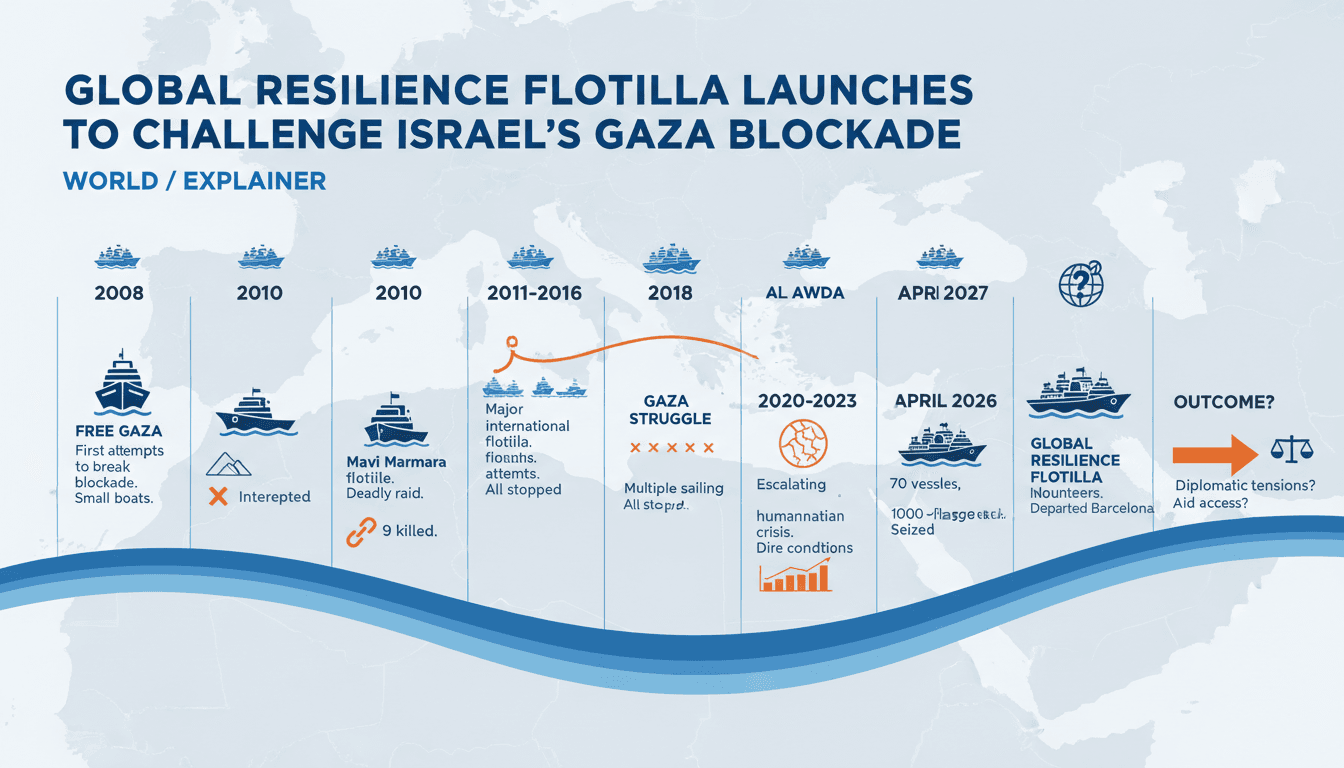
Here's what it means for you.
The ongoing flotilla campaigns challenge geopolitical norms, potentially affecting global humanitarian aid dynamics.
Why it matters
These campaigns highlight the persistent humanitarian crises in Gaza, prompting international discourse on aid and intervention.
What happened (in 30 seconds)
- Global Resilience Flotilla launched on April 12, 2026, from Barcelona, aiming to deliver aid to Gaza.
- Previous flotillas faced systematic interceptions by Israeli naval forces, resulting in casualties and international scrutiny.
- Ongoing humanitarian crises in Gaza, exacerbated by conflicts, have drawn attention to the blockade's impact on 2.3 million residents.
The context you actually need
- Israel's blockade of Gaza, initiated in 2007, restricts the movement of goods and people, leading to chronic humanitarian issues.
- Flotilla campaigns began in 2008, with varying degrees of success and increasing international involvement, including diverse organizations.
- Recent escalations, such as drone strikes on flotillas, illustrate the heightened risks and tensions surrounding these humanitarian efforts.
What's really happening
The flotilla campaigns against Israel's naval blockade of Gaza represent a complex interplay of humanitarian efforts, geopolitical tensions, and international law. Initiated by the Free Gaza Movement in 2008, these campaigns have evolved into a significant form of civil resistance aimed at highlighting the dire humanitarian situation in Gaza, where over 2.3 million people face severe restrictions on basic necessities due to the blockade. The blockade itself was imposed by Israel in 2007, following Hamas's takeover, and has since been justified by Israel as a means to prevent arms smuggling. However, this has resulted in widespread humanitarian crises, including food insecurity and infrastructure collapse.
The Global Resilience Flotilla, which set sail in April 2026, is the latest in a series of attempts to breach this blockade. It involves 70 vessels and 1,000 volunteers from 70 countries, underscoring a growing international solidarity movement. However, these efforts have consistently faced significant pushback from Israeli naval forces, who have intercepted all post-2010 flotillas in international waters. The 2010 Gaza Freedom Flotilla, which resulted in the deaths of 10 activists during a raid by Israeli commandos, marked a pivotal moment that drew global condemnation and strained diplomatic relations, particularly between Israel and Turkey.
The underlying incentive for these flotilla campaigns is the urgent need for humanitarian aid in Gaza, where conditions have worsened significantly due to ongoing conflicts and blockades. The flotillas aim not only to deliver aid but also to raise awareness and provoke international discourse on the legality and morality of the blockade. The persistent interceptions and the violent responses from Israeli forces have led to a complex legal and diplomatic landscape, where flotilla organizers face significant risks, including detention and deportation.
Moreover, the involvement of various organizations, from the Free Gaza Movement to Greenpeace, highlights a multifaceted approach to humanitarian aid that transcends national borders and political affiliations. The recent drone strikes on flotillas in 2025 illustrate the escalating tensions and risks associated with these missions, indicating that the situation is not just a local issue but a global humanitarian concern that resonates with international audiences.
Who feels it first (and how)
- Activists and volunteers involved in the flotillas face direct risks of interception, detention, and potential violence.
- Residents of Gaza experience the immediate impacts of the blockade, including limited access to essential goods and services.
- International NGOs and humanitarian organizations may see shifts in funding and support based on public sentiment and media coverage of the flotillas.
What to watch next
- International responses: Monitor how governments and NGOs react to the 2026 flotilla and its implications for humanitarian aid policies.
- Public sentiment: Watch for shifts in public opinion regarding the blockade and flotilla campaigns, which could influence future activism and policy.
- Geopolitical tensions: Keep an eye on diplomatic relations, particularly between Israel and countries involved in the flotilla, as these could lead to broader international ramifications.
The blockade of Gaza has led to significant humanitarian crises affecting millions.
Continued flotilla campaigns will face resistance from Israeli forces, resulting in further international scrutiny.
The long-term impact of these campaigns on Israeli-Palestinian relations and international humanitarian law remains uncertain.
Frequently Asked Questions
- Why it matters?
- These campaigns highlight the persistent humanitarian crises in Gaza, prompting international discourse on aid and intervention.
- What happened (in 30 seconds)?
- Global Resilience Flotilla launched on April 12, 2026, from Barcelona, aiming to deliver aid to Gaza. Previous flotillas faced systematic interceptions by Israeli naval forces, resulting in casualties and international scrutiny. Ongoing humanitarian crises in Gaza, exacerbated by conflicts, have drawn attention to the blockade's impact on 2.3 million residents.
- What's really happening?
- The flotilla campaigns against Israel's naval blockade of Gaza represent a complex interplay of humanitarian efforts, geopolitical tensions, and international law. Initiated by the Free Gaza Movement in 2008, these campaigns have evolved into a significant form of civil resistance aimed at highlighting the dire humanitarian situation in Gaza, where over 2.3 million people face severe restrictions on basic necessities due to the blockade. The blockade itself was imposed by Israel in 2007, followi
- Who feels it first (and how)?
- Activists and volunteers involved in the flotillas face direct risks of interception, detention, and potential violence. Residents of Gaza experience the immediate impacts of the blockade, including limited access to essential goods and services. International NGOs and humanitarian organizations may see shifts in funding and support based on public sentiment and media coverage of the flotillas.
- What to watch next?
- International responses: Monitor how governments and NGOs react to the 2026 flotilla and its implications for humanitarian aid policies. Public sentiment: Watch for shifts in public opinion regarding the blockade and flotilla campaigns, which could influence future activism and policy. Geopolitical tensions: Keep an eye on diplomatic relations, particularly between Israel and countries involved in the flotilla, as these could lead to broader international ramifications.
Comprehensive coverage of Middle Eastern and global issues.
"Al Jazeera is a prominent voice from the Global South, especially the Middle East, with an emphasis on underreported stories."
— A47 Editor
History of flotilla campaigns to end Israel’s siege of Gaza
A 70-boat flotilla has set sail from Spain, specifically Barcelona, with the aim of breaking Israel's naval blockade on Gaza. This initiative, known as the Global Sumud Flotilla, is marked by significant public attendance and aims to deliver humanita...
Pan-Arab news coverage spanning politics, business, sports, and regional affairs.
"Asharq Al-Awsat reflects a broad Arab editorial perspective with strong attention to regional geopolitics."
— A47 Editor
أسطول مساعدات جديد يسعى لكسر الحصار الإسرائيلي على غزة
A second aid flotilla is set to depart today (Sunday) from the Port of Barcelona, Spain, carrying humanitarian assistance to Palestinians in the Gaza Strip. This initiative aims to alleviate the ongoing humanitarian crisis resulting from the Israeli ...
Regional coverage and analysis focused on politics, diplomacy, and business across the Middle East.
"Al-Monitor is known for analytical reporting on Middle East politics and policy developments."
— A47 Editor
Gaza aid flotilla aims to break Israeli blockade
A second flotilla carrying humanitarian aid to Palestinians in Gaza is set to depart from Barcelona on Sunday, aiming to challenge the Israeli blockade. Approximately 30 boats are expected to leave the Mediterranean port city, loaded with medical sup...