
US-Iran announces fragile two-week ceasefire amid escalating regional tensions
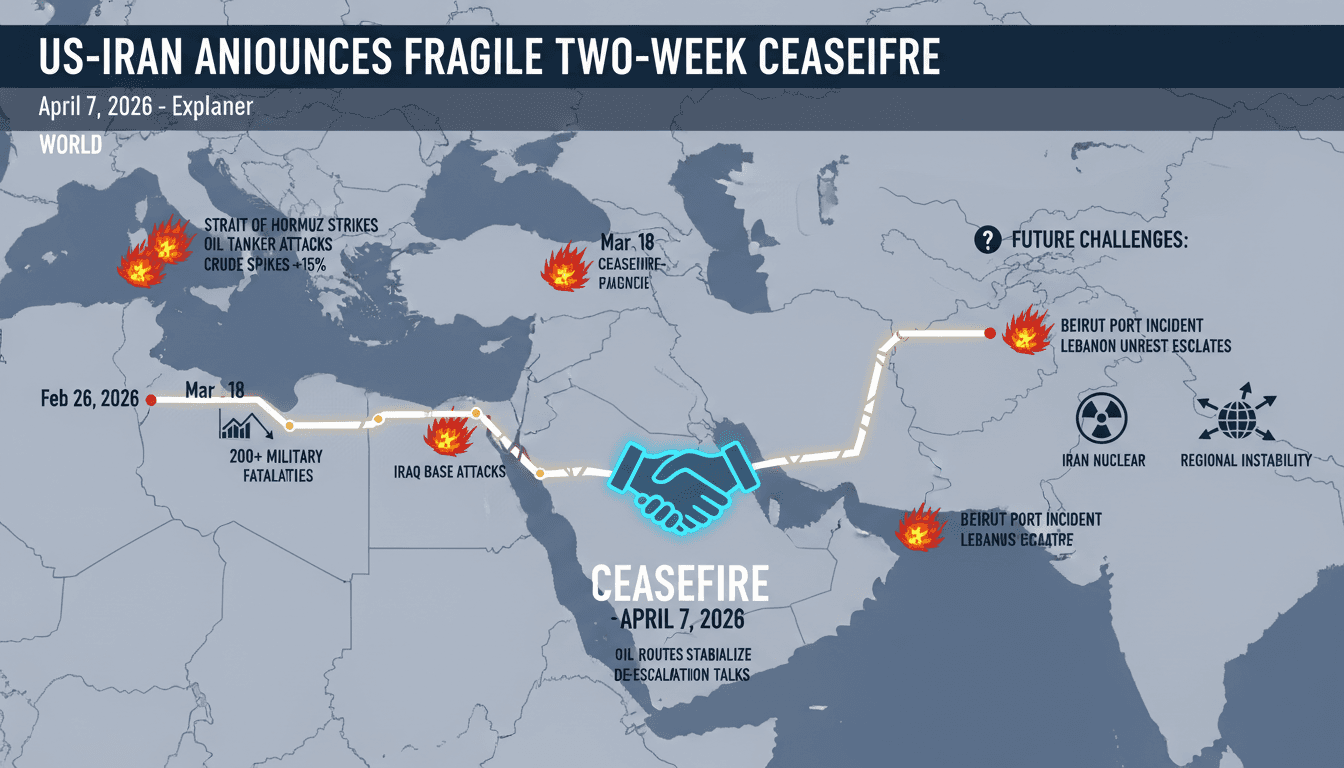
Here's what it means for you.
The recent ceasefire between the US and Iran could stabilize oil prices, impacting global markets and your investments.
Why it matters
The ceasefire addresses critical disruptions to global oil supplies, affecting economies reliant on stable energy prices.
What happened (in 30 seconds)
- A ceasefire was announced on April 7, 2026, following 40 days of conflict, establishing a two-week pause in hostilities.
- Israel launched significant strikes on Lebanon shortly after, complicating the ceasefire's stability and raising tensions in the region.
- Global oil prices dropped below $100 per barrel, reflecting market reactions to the ceasefire and ongoing conflicts.
The context you actually need
- The conflict escalated after US and Israeli strikes targeted Iranian nuclear facilities, leading to retaliatory actions from Iran and proxy forces.
- The Strait of Hormuz, a vital shipping route for 20% of global oil, was closed during the conflict, causing significant market volatility.
- Regional mediators, including Pakistan, Egypt, and Oman, played a crucial role in brokering the ceasefire amid geopolitical pressures.
What's really happening
The US-Iran ceasefire is a temporary halt in a conflict that has escalated since February 2026, when US and Israeli airstrikes targeted Iranian military and nuclear sites. This conflict has resulted in thousands of casualties and billions in economic damage. The ceasefire, announced by President Trump, aims to address immediate concerns over oil supply disruptions and regional stability. However, it is fraught with complications.
The ceasefire's terms diverge significantly between the US and Iran. The US demands Iran hand over uranium and comply with sanctions, while Iran seeks relief from these sanctions and insists on its right to nuclear enrichment. This fundamental disagreement creates a fragile foundation for the ceasefire, as neither side appears willing to make significant concessions.
Moreover, the situation is further complicated by the ongoing conflict in Lebanon, where Israel has conducted its largest airstrikes since the beginning of the Hezbollah conflict, resulting in 254 fatalities. Israel maintains that its operations in Lebanon are separate from the ceasefire agreement, undermining the truce's stability. Iran's response to these strikes has included halting tanker passage through the Strait of Hormuz, citing violations of the ceasefire terms, which has led to threats of renewed military action from the US.
The ceasefire is also influenced by broader geopolitical dynamics, including oil market volatility and the impending deadline set by Trump for Iran to comply with the ceasefire terms. The involvement of regional mediators like Pakistan, Egypt, and Oman highlights the complexity of the situation, as various nations have vested interests in the outcome. The ceasefire may provide temporary relief, but without addressing the core issues—such as Iran's nuclear ambitions and the Israel-Hezbollah conflict—its long-term viability remains in question.
Who feels it first (and how)
- Investors in oil markets: Fluctuations in oil prices directly impact investment strategies and portfolio performance.
- Middle Eastern economies: Countries reliant on oil exports will experience immediate economic effects based on stability in the region.
- Travel and logistics sectors: Companies operating in or through the Middle East may face disruptions or increased costs due to ongoing tensions.
What to watch next
- Compliance with ceasefire terms: Monitoring how both the US and Iran adhere to the ceasefire will indicate the potential for lasting peace or renewed conflict.
- Israeli military actions in Lebanon: Any escalation in Israeli strikes could destabilize the ceasefire and lead to broader regional conflict.
- Oil price fluctuations: Continued monitoring of oil prices will reveal market reactions to geopolitical developments, impacting global economic stability.
The ceasefire is temporary and hinges on compliance from both the US and Iran.
Continued tensions in Lebanon may threaten the ceasefire's stability.
The long-term implications for Iran's nuclear program and regional power dynamics remain uncertain.
Frequently Asked Questions
- Why it matters?
- The ceasefire addresses critical disruptions to global oil supplies, affecting economies reliant on stable energy prices.
- What happened (in 30 seconds)?
- A ceasefire was announced on April 7, 2026, following 40 days of conflict, establishing a two-week pause in hostilities. Israel launched significant strikes on Lebanon shortly after, complicating the ceasefire's stability and raising tensions in the region. Global oil prices dropped below $100 per barrel, reflecting market reactions to the ceasefire and ongoing conflicts.
- What's really happening?
- The US-Iran ceasefire is a temporary halt in a conflict that has escalated since February 2026, when US and Israeli airstrikes targeted Iranian military and nuclear sites. This conflict has resulted in thousands of casualties and billions in economic damage. The ceasefire, announced by President Trump, aims to address immediate concerns over oil supply disruptions and regional stability. However, it is fraught with complications. The ceasefire's terms diverge significantly between the US and Ir
- Who feels it first (and how)?
- Investors in oil markets: Fluctuations in oil prices directly impact investment strategies and portfolio performance. Middle Eastern economies: Countries reliant on oil exports will experience immediate economic effects based on stability in the region. Travel and logistics sectors: Companies operating in or through the Middle East may face disruptions or increased costs due to ongoing tensions.
- What to watch next?
- Compliance with ceasefire terms: Monitoring how both the US and Iran adhere to the ceasefire will indicate the potential for lasting peace or renewed conflict. Israeli military actions in Lebanon: Any escalation in Israeli strikes could destabilize the ceasefire and lead to broader regional conflict. Oil price fluctuations: Continued monitoring of oil prices will reveal market reactions to geopolitical developments, impacting global economic stability.
International coverage from The Guardian's global desks.
"The Guardian is known for its progressive editorial stance and in-depth analysis."
— A47 Editor
Thursday briefing: What difference will the ceasefire in the Middle East make, and will it hold?
A two-week ceasefire has been agreed upon between the United States and Iran, facilitated by Pakistan, just before President Donald Trump's deadline for military action against Iran. This truce comes after escalating tensions and military actions, pa...
Regional coverage and analysis focused on politics, diplomacy, and business across the Middle East.
"Al-Monitor is known for analytical reporting on Middle East politics and policy developments."
— A47 Editor
Trump says US military to stay deployed near Iran until 'real agreement' reached
US President Donald Trump announced that American military forces will remain deployed near Iran until a 'real agreement' is reached, amidst a fragile two-week ceasefire with Tehran. The ceasefire, facilitated by Pakistan, aims to de-escalate tension...
Oil, metals, and agriculture: supply/demand headlines, OPEC chatter, inventories, and price action.
"Solid tape for energy and metals traders tracking macro and micro catalysts."
— A47 Editor
Analysis-Trump’s abrupt Iran reversal exposes limits of his leverage
Former President Donald Trump's recent announcement of a two-week ceasefire with Iran, contingent upon the reopening of the strategically vital Strait of Hormuz, highlights the limitations of his leverage in the region. This ceasefire aims to de-esca...