
Iranian Oil Tankers Transit Strait of Hormuz Amid US Naval Blockade
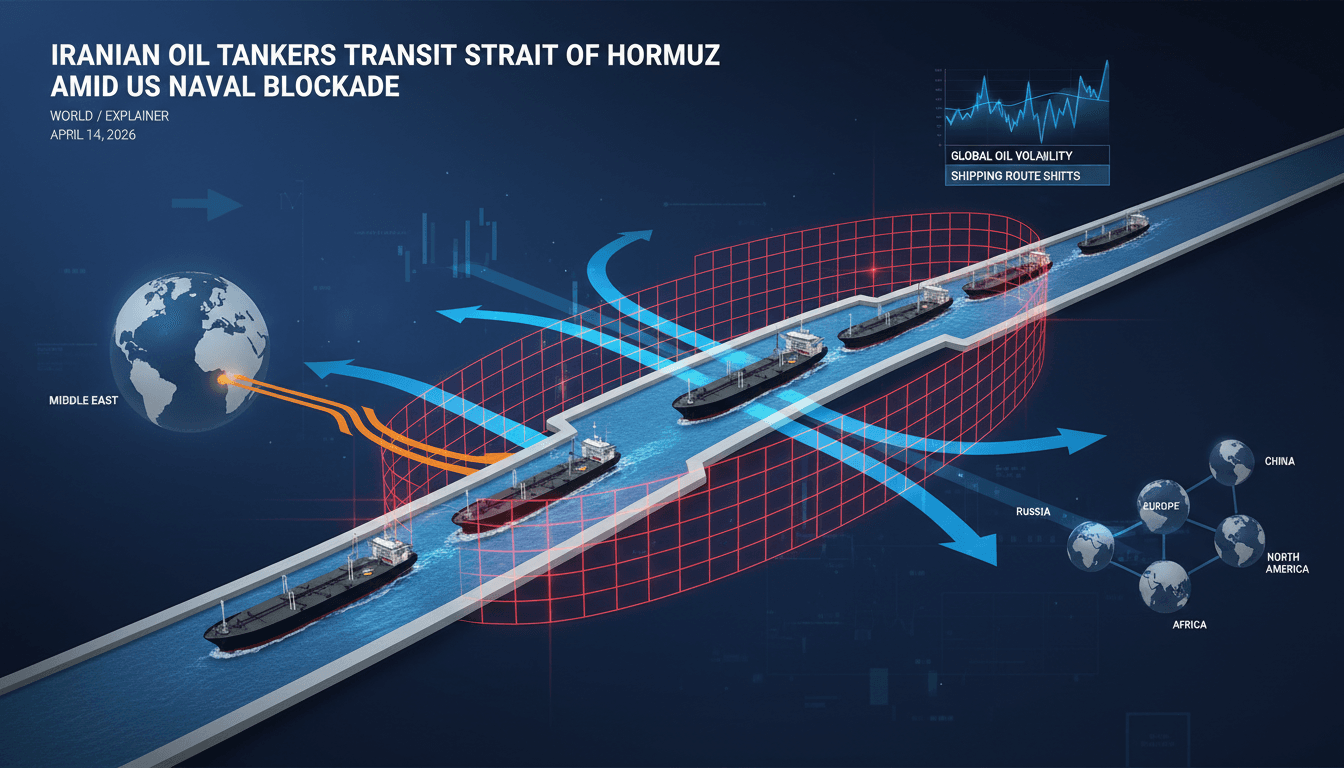
Here's what it means for you.
The ongoing naval blockade could impact global oil prices and shipping logistics, affecting businesses and consumers worldwide.
Why it matters
The Strait of Hormuz is a critical chokepoint for 20% of global oil transit, making its stability essential for international energy markets.
What happened (in 30 seconds)
- On April 14, 2026, the US imposed a naval blockade of the Strait of Hormuz amid escalating tensions with Iran.
- Iranian oil tankers continued to transit the strait unimpeded, raising questions about the blockade's effectiveness.
- US military presence includes three aircraft carrier strike groups and ten destroyers to enforce the blockade.
The context you actually need
- Escalating tensions between the US and Iran have led to military posturing, including Iranian naval drills and US carrier deployments.
- Failed nuclear negotiations and Iranian deployment of naval mines prompted the blockade, highlighting the geopolitical stakes involving Russia and China.
- Shipping companies are adjusting to increased risks, leading to higher insurance premiums and potential delays in regional trade.
What's really happening
The US naval blockade of the Strait of Hormuz represents a strategic maneuver aimed at economically isolating Iran while leveraging its oil exports as a bargaining chip in nuclear negotiations. The blockade follows a series of failed diplomatic efforts, including negotiations in Islamabad over Iran's enriched uranium, which saw Russia offering to accept it, countering US demands for control. This geopolitical chess game has significant implications for global oil markets and regional stability.
Despite the blockade's announcement, Iranian oil tankers have continued their routes to China, suggesting either a lack of enforcement capability by the US Navy or Iran's strategic maneuvering to circumvent the blockade. The presence of three US aircraft carrier strike groups and ten destroyers indicates a robust military posture, yet the effectiveness of this force in deterring Iranian actions remains in question.
Iran's response has included threats to sink US warships, signaling a readiness for prolonged conflict. This escalation could lead to increased volatility in oil markets, as shipping firms warn of risks associated with transiting the strait. The situation is further complicated by Saudi Arabia's activation of alternative logistics corridors, which may reshape regional trade dynamics.
The blockade's implications extend beyond military posturing; they affect global oil prices, shipping logistics, and regional economic stability. As shipping companies remain cautious, the potential for higher insurance premiums and delays at key ports like Dubai's Jebel Ali could impact fuel costs for residents and businesses in the UAE. The interconnectedness of global supply chains means that disruptions in the Strait of Hormuz could reverberate through various sectors, from energy to consumer goods.
Who feels it first (and how)
- Shipping companies: Facing increased insurance costs and potential delays.
- Oil traders: Experiencing volatility in oil prices due to uncertainty.
- Consumers in the UAE: Likely to see higher fuel costs and potential supply chain disruptions.
- Businesses reliant on oil: Facing increased operational costs and logistical challenges.
What to watch next
- Military developments: Monitor US and Iranian military actions in the region, as escalations could further impact oil markets.
- Oil price fluctuations: Watch for changes in global oil prices as the blockade continues and shipping risks increase.
- Diplomatic negotiations: Keep an eye on ongoing negotiations in Pakistan and any shifts in the US-Iran relationship that could alter the blockade's status.
The US has imposed a naval blockade of the Strait of Hormuz.
Oil prices will experience volatility as a result of the blockade and ongoing tensions.
The long-term effectiveness of the blockade in deterring Iranian oil exports remains uncertain.
Frequently Asked Questions
- Why it matters?
- The Strait of Hormuz is a critical chokepoint for 20% of global oil transit, making its stability essential for international energy markets.
- What happened (in 30 seconds)?
- On April 14, 2026, the US imposed a naval blockade of the Strait of Hormuz amid escalating tensions with Iran. Iranian oil tankers continued to transit the strait unimpeded, raising questions about the blockade's effectiveness. US military presence includes three aircraft carrier strike groups and ten destroyers to enforce the blockade.
- What's really happening?
- The US naval blockade of the Strait of Hormuz represents a strategic maneuver aimed at economically isolating Iran while leveraging its oil exports as a bargaining chip in nuclear negotiations. The blockade follows a series of failed diplomatic efforts, including negotiations in Islamabad over Iran's enriched uranium, which saw Russia offering to accept it, countering US demands for control. This geopolitical chess game has significant implications for global oil markets and regional stability.
- Who feels it first (and how)?
- Shipping companies: Facing increased insurance costs and potential delays. Oil traders: Experiencing volatility in oil prices due to uncertainty. Consumers in the UAE: Likely to see higher fuel costs and potential supply chain disruptions. Businesses reliant on oil: Facing increased operational costs and logistical challenges.
- What to watch next?
- Military developments: Monitor US and Iranian military actions in the region, as escalations could further impact oil markets. Oil price fluctuations: Watch for changes in global oil prices as the blockade continues and shipping risks increase. Diplomatic negotiations: Keep an eye on ongoing negotiations in Pakistan and any shifts in the US-Iran relationship that could alter the blockade's status.
Arabic-language coverage of international news and geopolitics.
"RT Arabic is a Russian state-funded outlet often criticized for promoting Kremlin-aligned narratives."
— A47 Editor
هرمز يختبر إيران
The U.S. President has announced a maritime blockade on the Strait of Hormuz; however, Iranian oil-laden ships continue to pass through the strait en route to China without obstruction.
Conservative-leaning coverage of current events.
"Fox News is a highly influential conservative news outlet known for right-leaning political commentary and coverage."
— A47 Editor
China slams US military blockade of Strait of Hormuz as a 'dangerous and irresponsible move'
China has condemned the U.S. military blockade of the Strait of Hormuz, labeling it a 'dangerous and irresponsible move' and urging all involved parties to adhere to a ceasefire agreement. This blockade, announced by President Trump, aims to restrict...
Capitol Hill news, legislation, and policy insight.
"The Hill specializes in U.S. politics and policy, with a focus on Capitol Hill developments and a reputation for insider reporting."
— A47 Editor
Chinese tanker crosses Strait of Hormuz, testing Trump's blockade
A U.S.-sanctioned Chinese tanker crossed the Strait of Hormuz on Monday, challenging President Trump's newly announced blockade aimed at restricting Iranian maritime activities. The blockade, which began on the same day, is part of the U.S. military'...