
UK Foreign Secretary Calls for Unrestricted Reopening of Strait of Hormuz Amid US-Iran Ceasefire
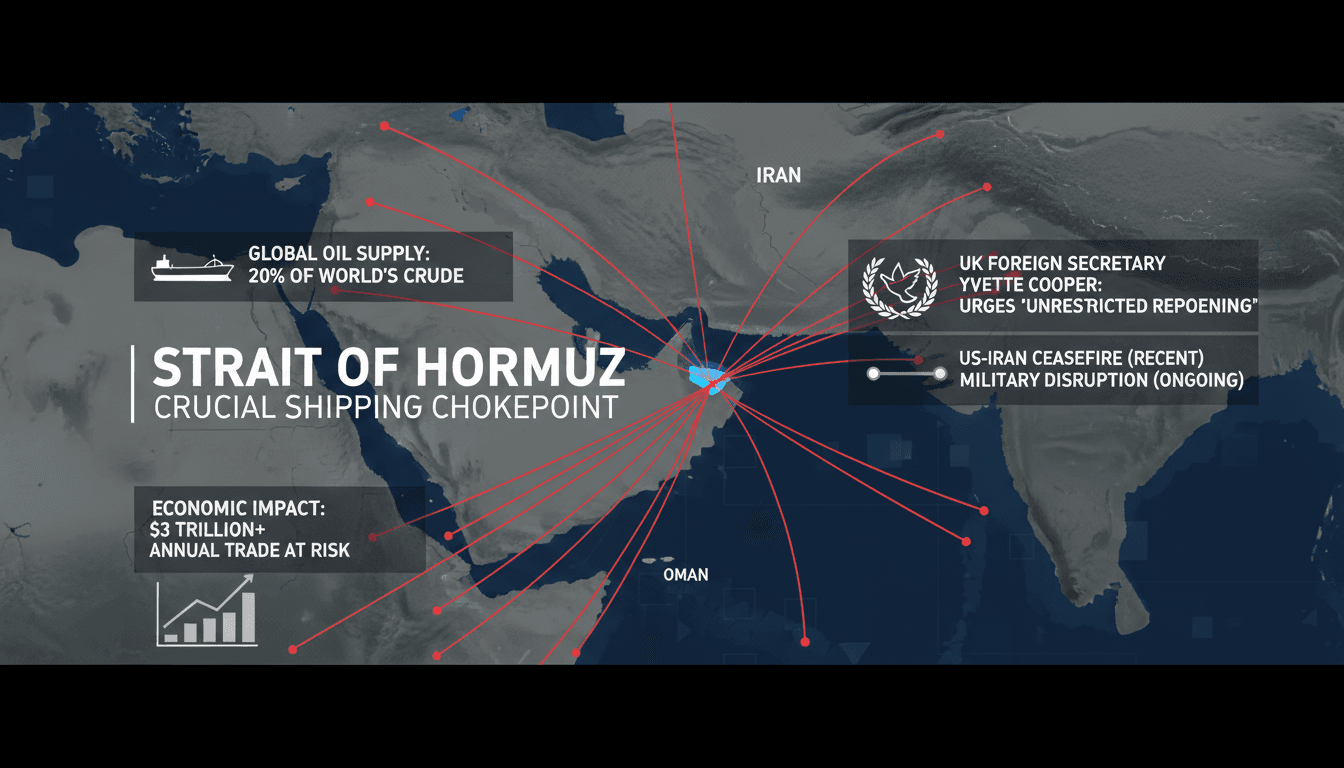
Here's what it means for you.
If the Strait of Hormuz reopens fully, you could see a decrease in fuel and food prices, benefiting consumers and businesses alike.
Why it matters
The Strait of Hormuz is a critical chokepoint for global oil supply, impacting energy prices and economic stability worldwide.
What happened (in 30 seconds)
- On April 9, 2026, UK Foreign Secretary Yvette Cooper called for the full and toll-free reopening of the Strait of Hormuz amid ongoing tensions.
- Iran has restricted access to the strait, launching attacks on vessels and demanding tolls, following a US-Israel military campaign against it that began on February 28, 2026.
- A fragile ceasefire between the US and Iran was announced on April 8, allowing limited vessel transits with permission, but restrictions remain in place.
The context you actually need
- The Strait of Hormuz is vital for global oil transport, handling about 20 million barrels per day, which constitutes roughly 20% of the world's oil supply.
- The recent crisis has led to increased fuel and food prices globally, with the UK and other nations pushing for a diplomatic resolution to restore normal shipping conditions.
- Over 40 countries participated in talks on April 2, 2026, to address the crisis, highlighting the international community's concern over Iran's actions and their economic repercussions.
What's really happening
The Strait of Hormuz crisis is a direct consequence of escalating military tensions between Iran and a coalition led by the US and Israel. Following the outbreak of conflict on February 28, 2026, Iran has taken aggressive measures to assert control over this critical maritime route, which is essential for global oil transport. The Iranian government has launched attacks on commercial vessels, resulting in the deaths of 11 crew members and the disruption of shipping traffic. This has forced Iran to impose tolls for passage, further complicating the situation.
In response, the UK convened a summit with over 40 nations to apply diplomatic and economic pressure on Iran, aiming to restore free passage through the strait. The urgency of the situation was underscored by the announcement of a conditional ceasefire between the US and Iran on April 8, which allows for limited vessel transits but does not fully resolve the underlying tensions. Cooper's speech on April 9 emphasized the importance of adhering to international maritime law and the need for a toll-free reopening of the strait.
The implications of this crisis extend far beyond regional politics. The Strait of Hormuz is a vital artery for global oil supply, and any disruption can lead to significant increases in fuel prices, which in turn affects food prices and overall economic stability. As oil prices surged to over $100 per barrel amid the crisis, consumers and businesses worldwide began to feel the pinch. The UK government, along with other nations, is keenly aware that prolonged instability could have dire economic consequences, prompting them to seek a swift resolution.
The situation remains delicate, with the ceasefire being described as fragile. Iran's continued restrictions on shipping could lead to further escalations if not addressed promptly. The international community's response will be crucial in determining whether the Strait of Hormuz can be reopened fully and toll-free, allowing for a return to normalcy in global oil markets.
Who feels it first (and how)
- Consumers: Higher fuel and food prices impact household budgets, especially in regions reliant on imports.
- Businesses: Companies dependent on oil and food supply chains face increased costs, potentially leading to higher prices for goods.
- Shipping companies: Restrictions on vessel transits create operational challenges and increased insurance costs.
- Governments: National economies, particularly in oil-importing countries, may experience inflationary pressures and economic instability.
What to watch next
- Iran's response to international pressure: Monitoring Iran's actions will be crucial in assessing whether the ceasefire holds and if they will ease restrictions.
- Oil price fluctuations: Keep an eye on global oil prices as they react to developments in the Strait of Hormuz; sustained high prices could signal ongoing instability.
- International diplomatic efforts: Watch for further summits or negotiations involving major powers, as these will indicate the likelihood of a lasting resolution.
The Strait of Hormuz is a critical route for global oil supply, with 20 million barrels transiting daily before the crisis.
Continued diplomatic efforts will be made to stabilize the situation, but the effectiveness of these efforts remains uncertain.
The long-term impact on global oil prices and economic stability if the ceasefire fails or if Iran maintains restrictions.
Frequently Asked Questions
- Why it matters?
- The Strait of Hormuz is a critical chokepoint for global oil supply, impacting energy prices and economic stability worldwide.
- What happened (in 30 seconds)?
- On April 9, 2026, UK Foreign Secretary Yvette Cooper called for the full and toll-free reopening of the Strait of Hormuz amid ongoing tensions. Iran has restricted access to the strait, launching attacks on vessels and demanding tolls, following a US-Israel military campaign against it that began on February 28, 2026. A fragile ceasefire between the US and Iran was announced on April 8, allowing limited vessel transits with permission, but restrictions remain in place.
- What's really happening?
- The Strait of Hormuz crisis is a direct consequence of escalating military tensions between Iran and a coalition led by the US and Israel. Following the outbreak of conflict on February 28, 2026, Iran has taken aggressive measures to assert control over this critical maritime route, which is essential for global oil transport. The Iranian government has launched attacks on commercial vessels, resulting in the deaths of 11 crew members and the disruption of shipping traffic. This has forced Iran
- Who feels it first (and how)?
- Consumers: Higher fuel and food prices impact household budgets, especially in regions reliant on imports. Businesses: Companies dependent on oil and food supply chains face increased costs, potentially leading to higher prices for goods. Shipping companies: Restrictions on vessel transits create operational challenges and increased insurance costs. Governments: National economies, particularly in oil-importing countries, may experience inflationary pressures and economic instability.
- What to watch next?
- Iran's response to international pressure: Monitoring Iran's actions will be crucial in assessing whether the ceasefire holds and if they will ease restrictions. Oil price fluctuations: Keep an eye on global oil prices as they react to developments in the Strait of Hormuz; sustained high prices could signal ongoing instability. International diplomatic efforts: Watch for further summits or negotiations involving major powers, as these will indicate the likelihood of a lasting resolution.
Political developments, policy debates, elections, and government affairs in the UK.
"BBC News is widely regarded as a reputable international news organization, known for its impartial tone and public service mandate."
— A47 Editor
Israeli strikes on Lebanon are wrong and should stop, PM says
Israeli airstrikes on Lebanon have resulted in over 300 fatalities, prompting condemnation from Lebanon's Prime Minister, who has called for an immediate cessation of these attacks. The strikes are part of a broader escalation of violence in the regi...
Regional coverage and analysis focused on politics, diplomacy, and business across the Middle East.
"Al-Monitor is known for analytical reporting on Middle East politics and policy developments."
— A47 Editor
UK to call for toll-free Strait of Hormuz, wants Lebanon in ceasefire deal
British Foreign Secretary Yvette Cooper announced that the UK will advocate for a toll-free Strait of Hormuz, a critical maritime route for global oil and gas, countering Iran's proposal to impose fees on vessels passing through. This statement comes...