
World Liberty Financial Implements Token Lockup Proposal Affecting Early Investors Until 2030
Here's what it means for you.
If you're an investor in World Liberty Financial, your access to liquidity is about to be significantly delayed, impacting your financial strategy.
Why it matters
This proposal reflects broader tensions in the cryptocurrency market regarding governance, transparency, and investor rights.
What happened (in 30 seconds)
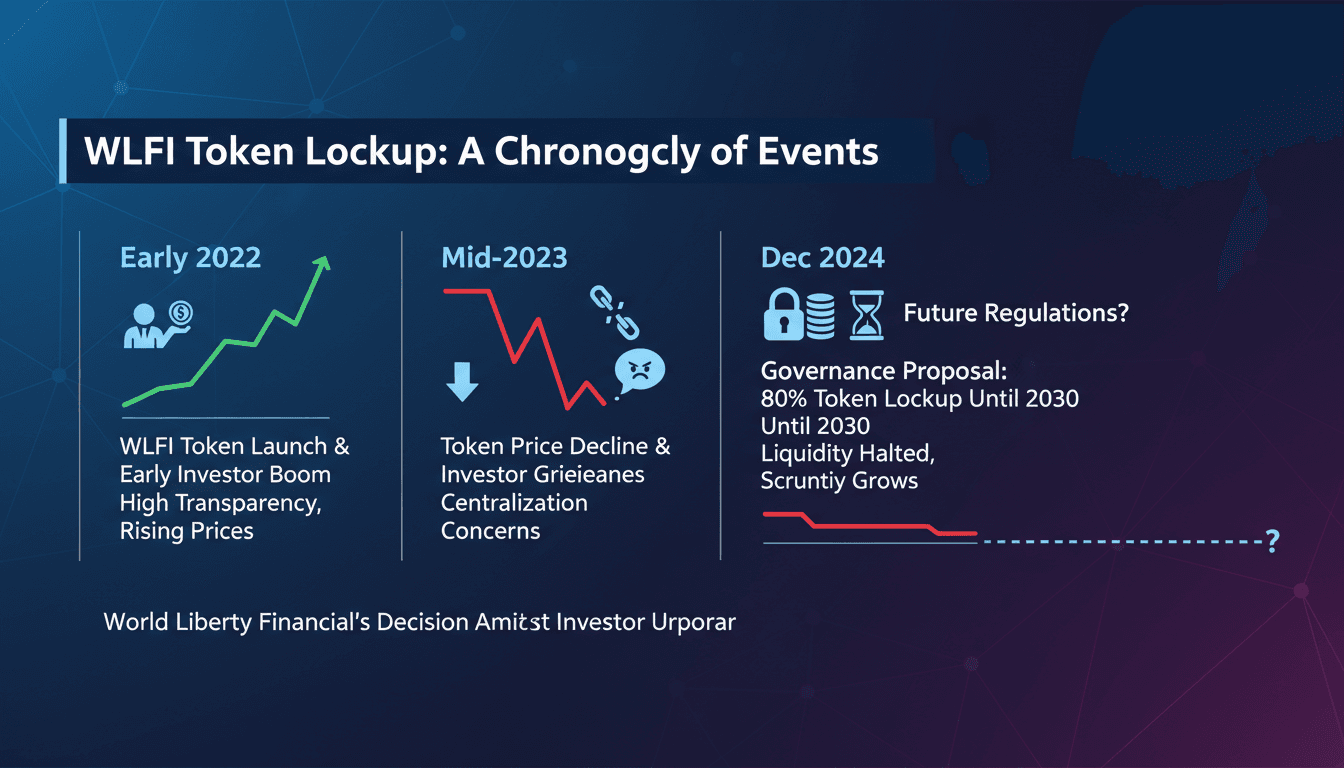
- On April 15, 2026, World Liberty Financial proposed a governance measure to lock 80% of early investors' tokens for four years, delaying full liquidity until 2030.
- The proposal aims to address rising investor grievances over transparency and centralized control, particularly among early backers including Donald Trump and his family.
- Secondary market participants will face a six-month staking requirement for governance voting but are not affected by the primary lockup.
The context you actually need
- World Liberty Financial (WLFI) was founded in 2024 with the goal of democratizing cryptocurrency access, raising over $550 million through early token sales.
- Investor tensions have escalated since the platform's launch, particularly after the token price fell to an all-time low of $0.078 amid governance concerns and loan disclosures.
- The governance proposal includes additional restrictions for founders, such as a one-year vesting period and a 10% token burn, indicating a shift towards long-term stability over immediate liquidity.
What's really happening
World Liberty Financial's recent governance proposal is a strategic response to mounting investor dissatisfaction and market volatility. By locking 80% of early investors' 17 billion tokens for two years, followed by a two-year vesting period, WLFI aims to stabilize its ecosystem and ensure long-term participation from its stakeholders. This decision comes on the heels of significant price declines and investor grievances regarding transparency and centralized control.
The proposal is particularly notable as it extends beyond the current presidential term of Donald Trump, who is a key figure in the platform's founding. The governance structure is designed to align the interests of early investors with the long-term health of the platform, but it also raises questions about liquidity and investor rights. The additional restrictions placed on founders, including a one-year vesting period and a 10% burn of their tokens, suggest that WLFI is attempting to mitigate risks associated with concentrated ownership and potential market manipulation.
The backdrop to this proposal includes a series of events that have contributed to investor unease. WLFI's token price has plummeted, and the platform has faced scrutiny over its governance practices. The repayment of a $25 million loan, collateralized by WLFI tokens, further highlights the financial pressures the platform is under. Investors are concerned about the implications of a secret user-freeze tool, as alleged by prominent figures in the crypto space, which could exacerbate feelings of mistrust.
Moreover, the involvement of UAE-linked entities, such as the MGX firm, which acquired a $500 million stake in WLFI, adds another layer of complexity. This relationship has drawn attention from U.S. congressional inquiries into foreign entanglements, potentially impacting cross-border investment flows. The proposed lockup could delay liquidity for Dubai residents and UAE investors holding WLFI tokens, compounding the challenges posed by the declining token price and regulatory scrutiny.
In essence, WLFI's governance proposal is a calculated move to foster long-term stability and investor confidence, but it also risks alienating early backers who may feel trapped by the extended lockup period. The balance between ensuring a robust ecosystem and maintaining investor trust is delicate, and the outcome of the community vote will be pivotal in shaping the future of WLFI.
Who feels it first (and how)
- Early investors: They face delayed liquidity, impacting their financial strategies and investment returns.
- Founders and key stakeholders: Additional restrictions may affect their control and financial outcomes.
- Secondary market participants: They must navigate new staking requirements for governance voting, altering their engagement with the platform.
- UAE investors: Delayed liquidity could strain cross-border investment flows and affect market confidence.
What to watch next
- Community vote outcomes: The results of the governance proposal vote will determine the immediate future of WLFI and investor sentiment.
- Token price movements: Continued fluctuations in WLFI's token price will signal market confidence and investor reactions to the lockup.
- Regulatory developments: Ongoing U.S. congressional inquiries into foreign ties may influence WLFI's operations and investor perceptions.
WLFI has proposed a four-year lockup for early investors' tokens.
Investor backlash may continue, impacting WLFI's reputation and market performance.
The long-term effects of the governance proposal on investor trust and platform stability remain uncertain.
Frequently Asked Questions
- Why it matters?
- This proposal reflects broader tensions in the cryptocurrency market regarding governance, transparency, and investor rights.
- What happened (in 30 seconds)?
- On April 15, 2026, World Liberty Financial proposed a governance measure to lock 80% of early investors' tokens for four years, delaying full liquidity until 2030. The proposal aims to address rising investor grievances over transparency and centralized control, particularly among early backers including Donald Trump and his family. Secondary market participants will face a six-month staking requirement for governance voting but are not affected by the primary lockup.
- What's really happening?
- World Liberty Financial's recent governance proposal is a strategic response to mounting investor dissatisfaction and market volatility. By locking 80% of early investors' 17 billion tokens for two years, followed by a two-year vesting period, WLFI aims to stabilize its ecosystem and ensure long-term participation from its stakeholders. This decision comes on the heels of significant price declines and investor grievances regarding transparency and centralized control. The proposal is particula
- Who feels it first (and how)?
- Early investors: They face delayed liquidity, impacting their financial strategies and investment returns. Founders and key stakeholders: Additional restrictions may affect their control and financial outcomes. Secondary market participants: They must navigate new staking requirements for governance voting, altering their engagement with the platform. UAE investors: Delayed liquidity could strain cross-border investment flows and affect market confidence.
- What to watch next?
- Community vote outcomes: The results of the governance proposal vote will determine the immediate future of WLFI and investor sentiment. Token price movements: Continued fluctuations in WLFI's token price will signal market confidence and investor reactions to the lockup. Regulatory developments: Ongoing U.S. congressional inquiries into foreign ties may influence WLFI's operations and investor perceptions.
Macro commentary, policy analysis, growth/inflation themes, and global outlooks.
"Contextual macro coverage that complements day-to-day market headlines."
— A47 Editor
Trump-backed World Liberty Financial’s early investors won’t be able to fully cash out until after Trump’s term
Early investors in Trump-backed World Liberty Financial will not be able to fully cash out their investments until after Trump's term ends, raising concerns about liquidity and investor confidence.
Global markets, investing, and macroeconomics from a premier financial newsroom.
"Bloomberg is respected for in-depth financial reporting and data-driven analysis."
— A47 Editor
Trump Crypto Firm Draws Scrutiny With Plan to Delay Investor Trading
World Liberty Financial Inc., a cryptocurrency project co-founded by Donald Trump, is under scrutiny after proposing that tokens held by certain early investors remain non-tradable indefinitely or until Trump exits office. This move has sparked criti...