
Delta Air Lines CEO Projects Higher Fares and Industry Consolidation Amid Iran Conflict Fallout
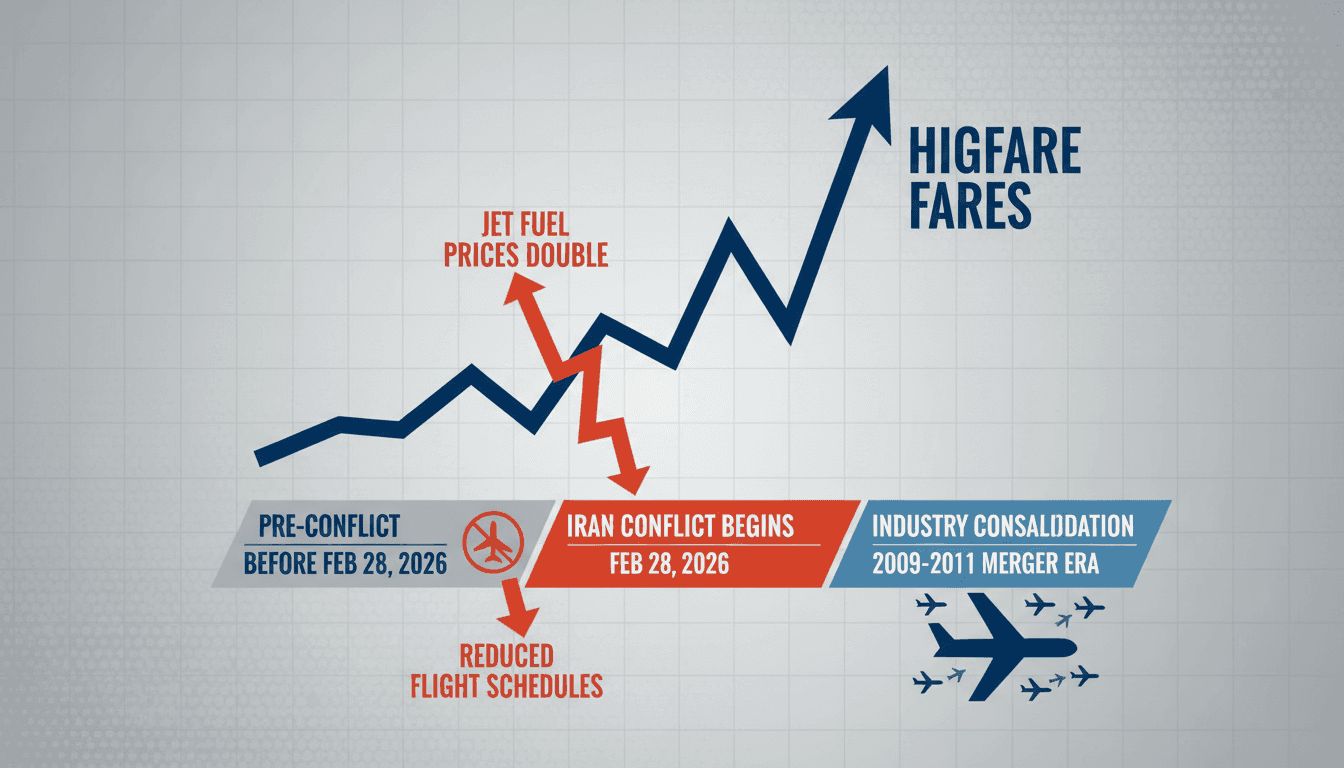
Here's what it means for you.
If you travel frequently, expect to pay more for flights and face reduced options in the coming months.
Why it matters
The airline industry is adjusting to unprecedented fuel costs and capacity reductions, which will directly affect travelers and the broader economy.
What happened (in 30 seconds)
- Delta Air Lines CEO Ed Bastian announced during the Q1 2026 earnings call that airfares will rise and flight schedules will be reduced due to soaring fuel costs.
- Jet fuel prices doubled following the onset of the Iran conflict, forcing Delta to cut off-peak capacity while still reporting record revenues.
- Industry-wide consolidation is anticipated, reminiscent of the 2009-2011 period, as airlines grapple with increased operational costs.
The context you actually need
- The 2026 Iran war, which began on February 28, has severely impacted air travel, leading to airspace closures and significant fuel price hikes.
- Delta reported a record $14.2 billion in operating revenue for Q1 2026, but also a $289 million net loss due to increased fuel costs and investments.
- A two-week ceasefire was announced on April 8, 2026, but skepticism remains about the long-term stability of the region and its impact on global airlines.
What's really happening
The recent escalation of the Iran conflict has triggered a cascade of challenges for the airline industry, primarily through skyrocketing fuel prices and operational disruptions. As of early April 2026, jet fuel prices have more than doubled, reaching levels that strain airline profitability and operational viability. Delta's CEO, Ed Bastian, highlighted that the airline's fuel costs surged to $2.591 billion in Q1 2026, an 8% increase year-over-year, with projections suggesting an additional $2 billion impact in Q2 alone due to ongoing supply chain issues.
This situation has forced Delta to make significant operational adjustments, including cutting off-peak flight capacity. The airline's decision to reduce flight schedules is a direct response to the decreased demand sensitivity among premium travelers, who are now more cautious about travel due to economic uncertainties. The combination of higher operational costs and reduced capacity is expected to lead to sustained fare increases across the industry, as airlines seek to maintain profitability amidst these challenges.
Moreover, the potential for industry consolidation looms large. Bastian's comments suggest that we may see a wave of mergers and acquisitions similar to what occurred in the aftermath of the 2008 financial crisis. The U.S. Transportation Secretary has expressed openness to such consolidations, indicating a shift in regulatory attitudes towards airline mergers as a means to stabilize the industry.
The broader implications of these developments extend beyond just higher ticket prices. Travelers can expect a more limited selection of flights, particularly on routes that are less profitable for airlines. Additionally, the increased operational costs may lead to higher fees for services like checked baggage, as Delta has already implemented a $10 increase in checked bag fees for the first time in two years. This shift in the airline landscape will likely affect business travel, leisure travel, and the overall economy, as higher airfares could deter consumer spending in other sectors.
Who feels it first (and how)
- Frequent travelers: They will face higher airfares and fewer flight options, impacting travel plans and budgets.
- Business sectors reliant on travel: Industries such as consulting, finance, and technology may see increased costs, affecting profitability and operational strategies.
- Airline employees: Job security may be threatened as airlines look to cut costs through layoffs or reduced hours amid consolidation efforts.
- Tourism-dependent economies: Regions that rely heavily on air travel for tourism may experience economic downturns due to reduced flight availability and higher costs.
What to watch next
- Fuel price trends: Monitoring global oil prices will be crucial, as further increases could exacerbate the situation for airlines and travelers alike.
- Regulatory changes: Keep an eye on potential mergers and acquisitions in the airline industry, as these could reshape the competitive landscape.
- Consumer behavior: Watch how travelers adjust their spending and travel habits in response to rising airfares and reduced flight options.
Airfares will increase, and flight schedules will be reduced as airlines adjust to higher fuel costs.
Industry consolidation will occur, with potential mergers on the horizon as airlines seek stability.
The long-term impact of the Iran conflict on global air travel and fuel prices remains uncertain.
Frequently Asked Questions
- Why it matters?
- The airline industry is adjusting to unprecedented fuel costs and capacity reductions, which will directly affect travelers and the broader economy.
- What happened (in 30 seconds)?
- Delta Air Lines CEO Ed Bastian announced during the Q1 2026 earnings call that airfares will rise and flight schedules will be reduced due to soaring fuel costs. Jet fuel prices doubled following the onset of the Iran conflict, forcing Delta to cut off-peak capacity while still reporting record revenues. Industry-wide consolidation is anticipated, reminiscent of the 2009-2011 period, as airlines grapple with increased operational costs.
- What's really happening?
- The recent escalation of the Iran conflict has triggered a cascade of challenges for the airline industry, primarily through skyrocketing fuel prices and operational disruptions. As of early April 2026, jet fuel prices have more than doubled, reaching levels that strain airline profitability and operational viability. Delta's CEO, Ed Bastian, highlighted that the airline's fuel costs surged to $2.591 billion in Q1 2026, an 8% increase year-over-year, with projections suggesting an additional $2
- Who feels it first (and how)?
- Frequent travelers: They will face higher airfares and fewer flight options, impacting travel plans and budgets. Business sectors reliant on travel: Industries such as consulting, finance, and technology may see increased costs, affecting profitability and operational strategies. Airline employees: Job security may be threatened as airlines look to cut costs through layoffs or reduced hours amid consolidation efforts. Tourism-dependent economies: Regions that rely heavily on air travel for touri
- What to watch next?
- Fuel price trends: Monitoring global oil prices will be crucial, as further increases could exacerbate the situation for airlines and travelers alike. Regulatory changes: Keep an eye on potential mergers and acquisitions in the airline industry, as these could reshape the competitive landscape. Consumer behavior: Watch how travelers adjust their spending and travel habits in response to rising airfares and reduced flight options.
Stock market news, investing ideas, and trading analysis.
"TheStreet provides market news and retail-investor-focused analysis."
— A47 Editor
Delta CEO warns about higher fares, lighter schedules, airline consolidation in first earnings since Iran conflict started
Delta Airlines CEO Ed Bastian has issued a warning regarding potential fare increases, reduced flight schedules, and possible airline consolidation, marking a shift in tone from the previous quarter's optimistic outlook. This change comes in light of...
Corporate leadership, finance, technology, and market trends.
"Fortune covers financial trends, leadership, and innovation with a pragmatic editorial approach."
— A47 Editor
Delta’s CEO spent 15 years turning the airline into a premium brand. Now it commands 20% more per seat than rivals
Delta Airlines, under the leadership of CEO Ed Bastian, has successfully transformed into a premium brand over the past 15 years, now commanding 20% higher prices per seat compared to its competitors. This shift reflects a strategic focus on quality ...
U.S. business news, corporate developments, and economy.
"The Wall Street Journal is respected for deep financial and economic reporting with a center-right editorial perspective."
— A47 Editor
Facing Soaring Fuel Costs, Delta Tells Customers to Plan for Pricier Flights
Delta Airlines has announced that customers should prepare for higher flight prices due to soaring fuel costs, as stated by CEO Ed Bastian. Despite these challenges, demand for both business and leisure travel remains robust across various regions.