
Iran imposes tolls on ships in Strait of Hormuz amid ongoing conflict
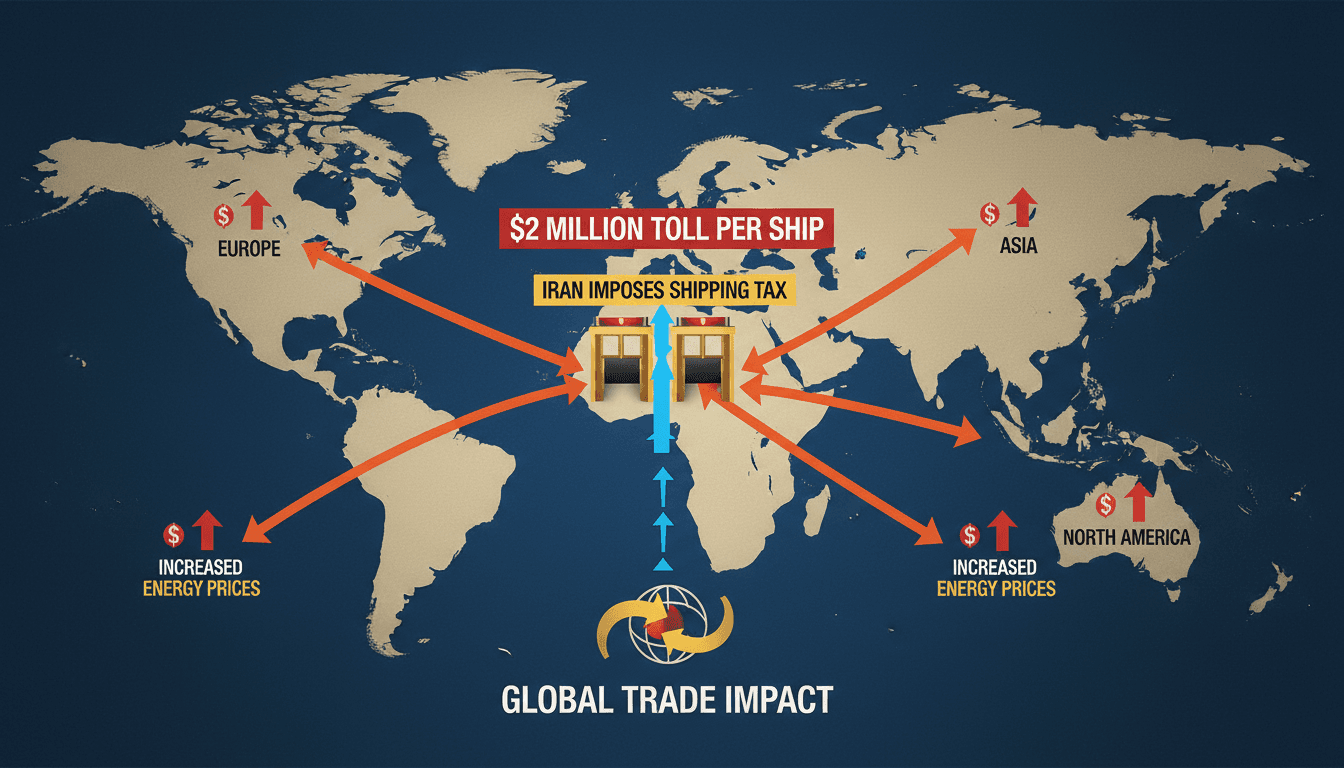
Here's what it means for you.
If you rely on global energy markets, the tolls imposed by Iran could significantly impact prices and supply chains.
Why it matters
The Strait of Hormuz is a critical chokepoint for global oil and gas, and tolls here could disrupt international energy markets.
What happened (in 30 seconds)
- Iran imposed tolls on ships transiting the Strait of Hormuz in early April 2026, charging up to $2 million per vessel.
- International condemnation followed, with advisories against payment citing violations of maritime law.
- Shipping companies faced increased costs and operational disruptions, leading to higher energy prices globally.
The context you actually need
- The Strait of Hormuz is a vital artery for global energy exports, with over 20% of the world's oil and liquefied natural gas passing through it.
- Historical precedents exist where states taxed maritime routes, such as the Ottoman sultans on the Bosporus and Danish kings on the Øresund, which led to international coalitions against such practices.
- The ongoing Middle East war has created a geopolitical climate conducive to Iran's toll imposition, escalating tensions with US-backed forces.
What's really happening
In early April 2026, amid escalating conflict in the Middle East, Iran announced the imposition of tolls on vessels transiting the Strait of Hormuz. This strategic move, reportedly charging up to $2 million per ship, is a revival of historical maritime taxation practices that date back centuries. The Iranian government aims to generate revenue and assert control over a critical chokepoint that handles a significant portion of global energy trade.
The tolls have sparked immediate international backlash, with the United States and other nations condemning the move and issuing advisories against payment. The U.S. government, under President Trump, demanded an end to the tolls, highlighting the violation of the United Nations Convention on the Law of the Sea (UNCLOS), which prohibits such charges in territorial waters unless services are provided. This legal framework was established to ensure free passage through international waterways, which are vital for global trade.
As the situation unfolds, shipping companies are grappling with the financial implications of these tolls. Insurers have raised premiums for vessels operating in the Gulf region, and some firms have even canceled policies altogether, reflecting the heightened risk associated with transiting the strait. The increased operational costs are likely to be passed on to consumers, contributing to rising energy prices globally.
Moreover, the tolls have prompted shipping companies to consider rerouting their vessels, which could lead to longer transit times and further increases in shipping costs. This ripple effect is already being felt, with reports indicating that global oil prices have exceeded $100 per barrel as a direct consequence of the tolls and the ongoing conflict.
The historical parallels drawn between Iran's current strategy and ancient practices of revenue extraction from chokepoints underscore the potential long-term implications of this move. Just as past maritime taxation practices led to coalitions and conflicts, the current situation could provoke a similar response from affected nations, potentially escalating tensions in an already volatile region.
Who feels it first (and how)
- Shipping companies: Facing increased costs and operational disruptions due to tolls and insurance hikes.
- Energy consumers: Likely to see higher prices at the pump and for utilities as shipping costs rise.
- Investors in UAE markets: Experiencing significant losses, with $120 billion in market value wiped out since the onset of the war.
- Expats in Dubai: One in eight British expats has departed due to economic pressures and instability.
What to watch next
- International diplomatic responses: Watch for potential coalitions forming against Iran's tolls, which could lead to military or economic actions.
- Shipping routes and costs: Monitor changes in shipping patterns and the impact on global energy prices as companies adjust to the new tolls.
- Energy price fluctuations: Keep an eye on oil and gas prices, which could spike further if tensions escalate or if shipping disruptions continue.
Iran is charging tolls of up to $2 million per ship in the Strait of Hormuz.
Increased shipping costs and energy prices will affect global markets.
The long-term geopolitical ramifications and potential responses from other nations remain uncertain.
Frequently Asked Questions
- Why it matters?
- The Strait of Hormuz is a critical chokepoint for global oil and gas, and tolls here could disrupt international energy markets.
- What happened (in 30 seconds)?
- Iran imposed tolls on ships transiting the Strait of Hormuz in early April 2026, charging up to $2 million per vessel. International condemnation followed, with advisories against payment citing violations of maritime law. Shipping companies faced increased costs and operational disruptions, leading to higher energy prices globally.
- What's really happening?
- In early April 2026, amid escalating conflict in the Middle East, Iran announced the imposition of tolls on vessels transiting the Strait of Hormuz. This strategic move, reportedly charging up to $2 million per ship, is a revival of historical maritime taxation practices that date back centuries. The Iranian government aims to generate revenue and assert control over a critical chokepoint that handles a significant portion of global energy trade. The tolls have sparked immediate international b
- Who feels it first (and how)?
- Shipping companies: Facing increased costs and operational disruptions due to tolls and insurance hikes. Energy consumers: Likely to see higher prices at the pump and for utilities as shipping costs rise. Investors in UAE markets: Experiencing significant losses, with $120 billion in market value wiped out since the onset of the war. Expats in Dubai: One in eight British expats has departed due to economic pressures and instability.
- What to watch next?
- International diplomatic responses: Watch for potential coalitions forming against Iran's tolls, which could lead to military or economic actions. Shipping routes and costs: Monitor changes in shipping patterns and the impact on global energy prices as companies adjust to the new tolls. Energy price fluctuations: Keep an eye on oil and gas prices, which could spike further if tensions escalate or if shipping disruptions continue.
Editor-curated FT homepage stories spanning markets, business, world, and opinion.
"The Financial Times is a globally respected business publication with a centrist/center-left tone and strong markets focus."
— A47 Editor
Fees for seas: a history of taxing waterways
Iran has implemented a new toll system requiring oil tankers passing through the strategically significant Strait of Hormuz to pay in cryptocurrency, reviving historical maritime taxation practices reminiscent of the Ottoman Sultans and Danish kings....
U.S. business news, corporate developments, and economy.
"The Wall Street Journal is respected for deep financial and economic reporting with a center-right editorial perspective."
— A47 Editor
The Ships Sailing Through Iran’s Controlled ‘Tollbooth’
Over the past month, more than a hundred crossings have been recorded through the Strait of Hormuz, a vital maritime route controlled by Iran. This increase in ship traffic comes amid a fragile ceasefire agreement between the United States and Iran, ...
Real-time updates, analysis, and reports on the blockchain and cryptocurrency sectors.
"Crypto News delivers real-time updates, analysis, and reports on the blockchain and cryptocurrency sectors."
— A47 Editor
Iran Bitcoin toll report raises questions over oil ship payments
Iran has introduced a new toll system requiring oil tankers to pay fees in Bitcoin for passage through the strategically significant Strait of Hormuz. This decision aligns with a ceasefire agreement with the United States, marking a notable shift in ...
Covers blockchain, cryptocurrency news, project analysis, and market insights.
"Cointelegraph is a leading crypto-focused media outlet known for timely news, analysis, and educational content related to blockchain and digital assets."
— A47 Editor
Bitcoin community weighs in on reports of Iran's crypto toll for oil ships
The Bitcoin community is closely monitoring reports that Iran has implemented a toll system requiring oil tankers to pay fees in Bitcoin for passage through the strategically significant Strait of Hormuz. This decision aligns with a ceasefire agreeme...
Covers blockchain, cryptocurrency news, project analysis, and market insights.
"Cointelegraph is a leading crypto-focused media outlet known for timely news, analysis, and educational content related to blockchain and digital assets."
— A47 Editor
Crypto Biz: Will Bitcoin secure safe passage through the Hormuz Strait?
Iran has announced a new toll system for oil tankers transiting the strategically vital Strait of Hormuz, requiring payments in Bitcoin. This decision coincides with a ceasefire agreement with the United States, indicating a potential shift in Iran's...