
Austria Calls for Immediate Cessation of Israeli Attacks on Civilian Areas in Lebanon
Here's what it means for you.
In a world increasingly sensitive to humanitarian crises, Austria's demand signals potential shifts in international diplomatic relations that could impact global markets.
Why it matters
This demand highlights the fragility of regional stability in the Middle East and its implications for global trade and security.
What happened (in 30 seconds)
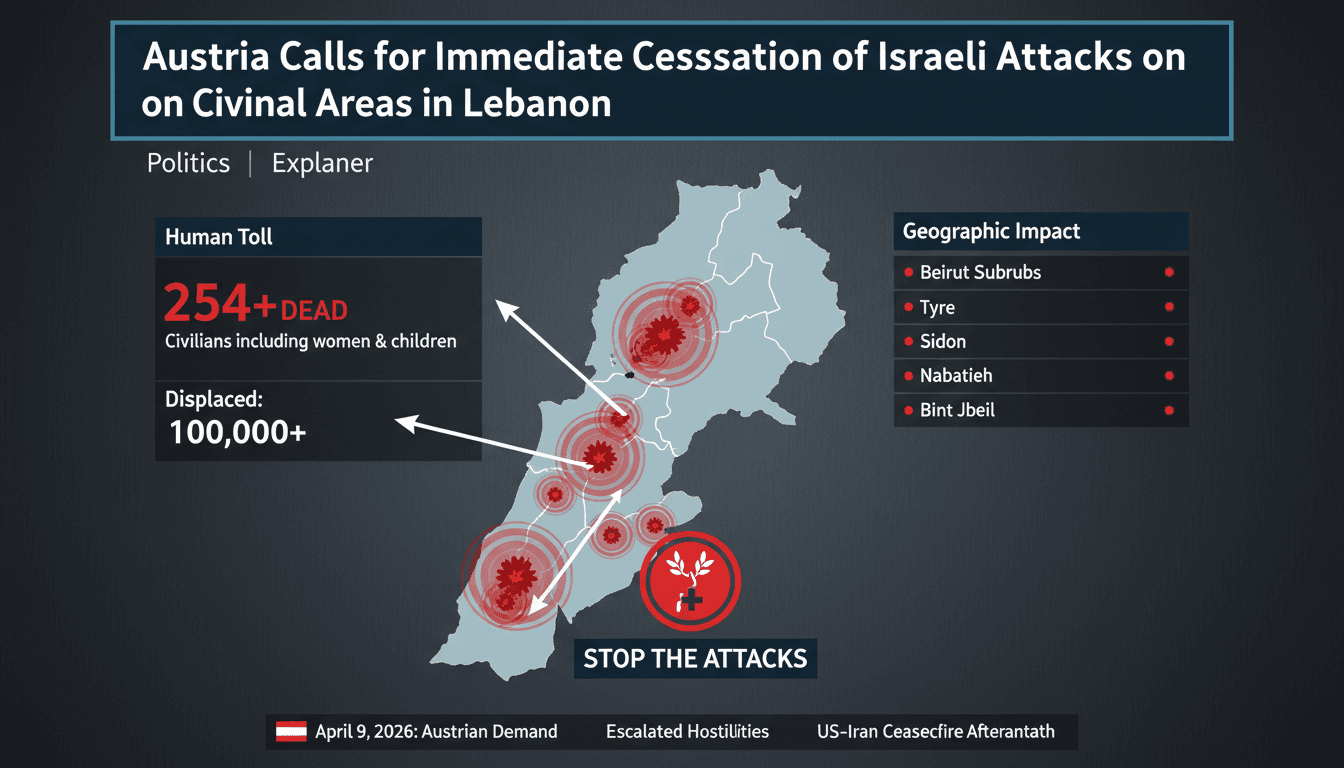
- Austria's Foreign Ministry issued a statement on April 9, 2026, demanding Israel halt military operations against civilian targets in Lebanon.
- Israeli airstrikes on April 8 resulted in at least 254 deaths and over 1,100 injuries across multiple Lebanese cities amid heightened conflict with Hezbollah.
- International reactions included condemnation from various nations and calls for a ceasefire, reflecting growing concerns over humanitarian law violations.
The context you actually need
- Escalating conflict: The demand comes after a US-Iran ceasefire on April 7, which failed to stabilize the region, leading to renewed hostilities.
- Civilian impact: Israeli operations have increasingly targeted areas with civilian populations, raising alarms about potential violations of international humanitarian law.
- Historical tensions: The Israel-Hezbollah conflict has deep roots, with ongoing violence affecting regional dynamics and international relations.
What's really happening
On April 8, 2026, Israel launched "Operation Eternal Darkness," executing extensive airstrikes targeting over 100 Hezbollah installations across Lebanon. The strikes resulted in significant civilian casualties, with 254 individuals reported dead and 1,165 injured, according to various sources. Lebanese officials condemned the attacks, stating they primarily affected civilian areas, which raises serious concerns about compliance with international humanitarian law.
Austria's Foreign Ministry responded swiftly, demanding an immediate cessation of these military operations. This diplomatic condemnation reflects a broader trend among European nations to advocate for humanitarian protections in conflict zones. The situation is exacerbated by the recent US-Iran ceasefire, which was intended to de-escalate tensions but instead appears to have led to a resurgence of violence.
The Israeli government has justified its actions as necessary for national security, aiming to dismantle Hezbollah's military capabilities, which they claim are embedded within civilian infrastructure. However, the high civilian toll has drawn international ire, with calls for accountability and adherence to humanitarian standards. The UN and various European leaders have echoed Austria's concerns, emphasizing the need for a ceasefire and protection of civilians.
This ongoing conflict not only affects Lebanon and Israel but also has broader implications for regional stability. Countries like the UAE, which have significant economic ties to Lebanon, are closely monitoring the situation. The potential for increased instability could disrupt trade routes and impact expatriate communities, particularly in places like Dubai, which hosts a large Lebanese population.
As the conflict escalates, the risk of further military actions and retaliatory strikes increases, creating a volatile environment that could have far-reaching consequences for international relations and economic stability.
Who feels it first (and how)
- Lebanese civilians: Directly impacted by airstrikes and the humanitarian crisis that follows.
- International businesses: Companies with interests in the region may face disruptions in trade and operations.
- Expatriate communities: Particularly in the UAE, where tensions could affect daily life and economic activities.
What to watch next
- International diplomatic responses: Watch for further statements from European nations and international organizations regarding humanitarian law and conflict resolution.
- Market reactions: Monitor fluctuations in Lebanese markets and regional trade, particularly in sectors reliant on stability.
- Military developments: Keep an eye on any escalations in military actions from either side, which could further destabilize the region.
The number of casualties from the airstrikes and the international condemnation of Israel's actions.
Continued diplomatic pressure on Israel from European nations and potential economic repercussions for Lebanon.
The long-term impact on regional stability and how it will affect international relations moving forward.
Frequently Asked Questions
- Why it matters?
- This demand highlights the fragility of regional stability in the Middle East and its implications for global trade and security.
- What happened (in 30 seconds)?
- Austria's Foreign Ministry issued a statement on April 9, 2026, demanding Israel halt military operations against civilian targets in Lebanon. Israeli airstrikes on April 8 resulted in at least 254 deaths and over 1,100 injuries across multiple Lebanese cities amid heightened conflict with Hezbollah. International reactions included condemnation from various nations and calls for a ceasefire, reflecting growing concerns over humanitarian law violations.
- What's really happening?
- On April 8, 2026, Israel launched "Operation Eternal Darkness," executing extensive airstrikes targeting over 100 Hezbollah installations across Lebanon. The strikes resulted in significant civilian casualties, with 254 individuals reported dead and 1,165 injured, according to various sources. Lebanese officials condemned the attacks, stating they primarily affected civilian areas, which raises serious concerns about compliance with international humanitarian law. Austria's Foreign Ministry res
- Who feels it first (and how)?
- Lebanese civilians: Directly impacted by airstrikes and the humanitarian crisis that follows. International businesses: Companies with interests in the region may face disruptions in trade and operations. Expatriate communities: Particularly in the UAE, where tensions could affect daily life and economic activities.
- What to watch next?
- International diplomatic responses: Watch for further statements from European nations and international organizations regarding humanitarian law and conflict resolution. Market reactions: Monitor fluctuations in Lebanese markets and regional trade, particularly in sectors reliant on stability. Military developments: Keep an eye on any escalations in military actions from either side, which could further destabilize the region.
Arabic-language UAE newspaper coverage focused on domestic affairs, public institutions, business, society, and regional developments.
"Al Khaleej coverage generally reflects a mainstream UAE editorial lens with strong attention to public affairs, institutions, and regional developments."
— A47 Editor
النمسا تطالب إسرائيل بوقف هجماتها على الأهداف المدنية في لبنان
The Austrian Foreign Ministry has called on Israel to cease its attacks on civilian targets in Lebanon, highlighting growing concerns over the impact of military actions on non-combatants. This statement reflects Austria's stance on the ongoing confl...
Regional coverage and analysis focused on politics, diplomacy, and business across the Middle East.
"Al-Monitor is known for analytical reporting on Middle East politics and policy developments."
— A47 Editor
Austria demands Israel stop attacking civilian targets in Lebanon
Austria's foreign ministry has called on Israel to cease its military operations targeting civilian infrastructure in Lebanon, emphasizing the need for the protection of Austrian members of a U.N. peacekeeping force in the region. This statement come...