
Swiss Banks Launch Collaborative Sandbox for CHF-Pegged Stablecoin Testing
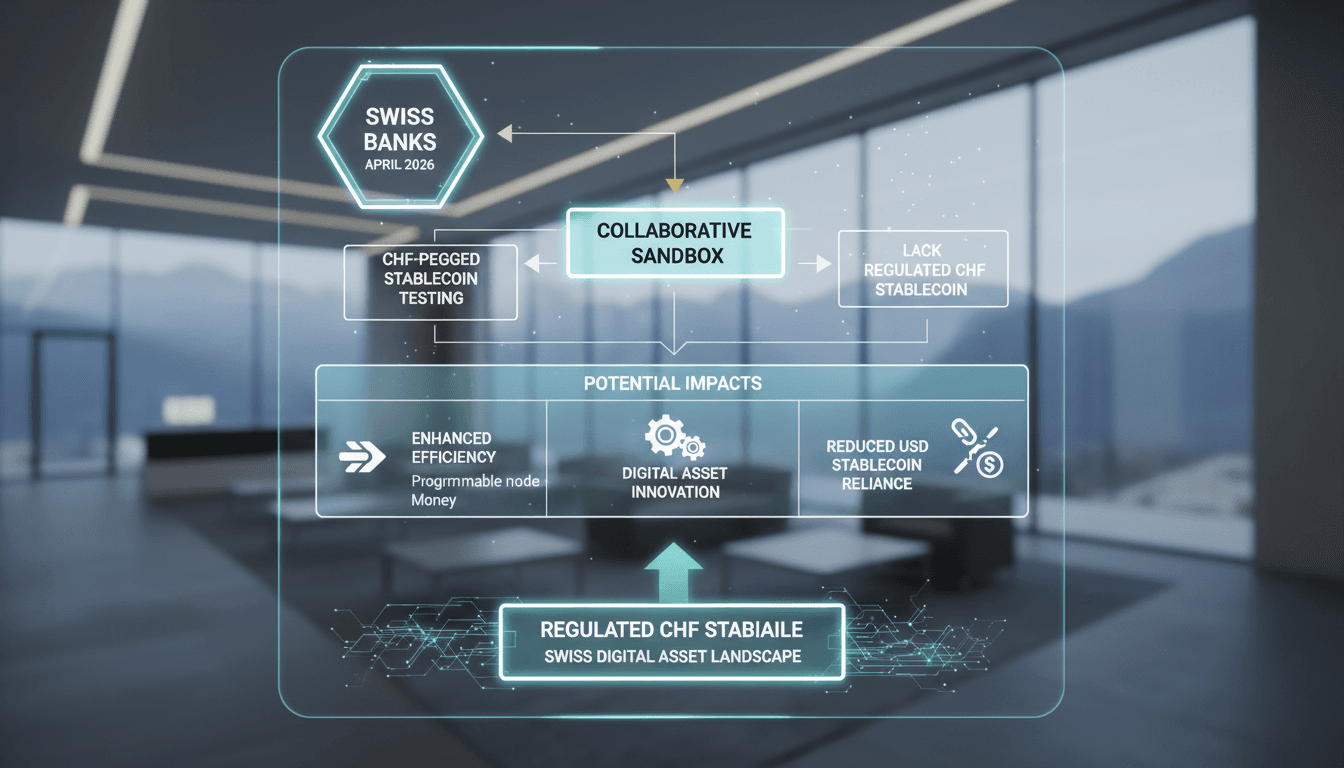
Here's what it means for you.
If you’re involved in finance or crypto, this could reshape payment systems and investment strategies.
Why it matters
The collaboration among major Swiss banks signals a significant move towards integrating stablecoins into mainstream finance, potentially influencing global banking practices.
What happened (in 30 seconds)
- On April 8, 2026, six leading Swiss banks announced a partnership to launch a controlled sandbox for testing a Swiss franc-pegged stablecoin.
- The initiative aims to explore real-world payment flows and accelerate settlements while addressing the lack of a regulated CHF stablecoin.
- Testing is set to continue through 2026, with the sandbox allowing for live transactions under controlled conditions to mitigate risks.
The context you actually need
- Switzerland has a progressive regulatory environment for digital assets, exemplified by initiatives like Crypto Valley in Zug.
- Existing CHF-pegged tokens have limited utility, with no broadly accepted regulated stablecoin in the market, despite the dominance of USD stablecoins.
- The Swiss Banking Association has been advocating for CHF stablecoins since late 2025, aligning with similar efforts in the EU.
What's really happening
On April 8, 2026, UBS, alongside five other prominent Swiss banks—PostFinance, Sygnum, Raiffeisen, Zürcher Kantonalbank, and BCV—announced the formation of a consortium aimed at launching a controlled sandbox for a Swiss franc-pegged stablecoin. This initiative is a response to the increasing demand for digital assets and the need for a regulated stablecoin that can facilitate transactions in the Swiss franc (CHF).
The sandbox will create a secure environment for testing real transactions, with volume and participant limits designed to mitigate risks associated with new financial technologies. The focus will be on integrating blockchain technology with traditional fiat payment systems, which could streamline settlements and enhance the efficiency of financial transactions.
This collaborative effort is particularly significant as it addresses the current gap in the market for a regulated CHF stablecoin. While there are existing niche tokens like Sygnum's DCHF, they lack the broad utility and regulatory backing that a consortium of major banks can provide. The dominance of USD stablecoins in the global market has highlighted the need for alternative options, particularly in regions like Europe, where local currencies are often sidelined in favor of the dollar.
The sandbox will remain open to additional institutions throughout 2026, which could further inform the potential for a full-scale deployment of the stablecoin. This collaborative approach not only enhances the credibility of the project but also allows for a wider range of insights and innovations to emerge from the testing phase.
As the financial landscape evolves, the implications of this initiative could extend beyond Switzerland, influencing how other countries and regions approach the development of their own stablecoins and digital currencies. The convergence of traditional finance (TradFi) and blockchain technology is gaining momentum, and this sandbox could serve as a model for similar initiatives globally.
Who feels it first (and how)
- Financial institutions: Banks involved will gain firsthand experience in blockchain integration and stablecoin applications.
- Investors: Those looking to diversify portfolios may find new opportunities in CHF stablecoins.
- Consumers: Individuals using digital payment systems could benefit from faster and more efficient transaction processes.
- Regulators: Swiss financial authorities will observe the outcomes, shaping future regulations around stablecoins.
What to watch next
- Expansion of participants: The inclusion of more financial institutions in the sandbox could indicate broader acceptance and interest in stablecoins.
- Regulatory feedback: Insights from the testing phase may lead to new guidelines or frameworks for stablecoins in Switzerland and beyond.
- Market response: Watch for shifts in the stablecoin market, particularly regarding the adoption of CHF-pegged tokens compared to USD alternatives.
Six major Swiss banks are collaborating on a stablecoin sandbox.
The initiative will influence the development of stablecoins in other regions.
The long-term impact on the dominance of USD stablecoins remains to be seen.
Frequently Asked Questions
- Why it matters?
- The collaboration among major Swiss banks signals a significant move towards integrating stablecoins into mainstream finance, potentially influencing global banking practices.
- What happened (in 30 seconds)?
- On April 8, 2026, six leading Swiss banks announced a partnership to launch a controlled sandbox for testing a Swiss franc-pegged stablecoin. The initiative aims to explore real-world payment flows and accelerate settlements while addressing the lack of a regulated CHF stablecoin. Testing is set to continue through 2026, with the sandbox allowing for live transactions under controlled conditions to mitigate risks.
- What's really happening?
- On April 8, 2026, UBS, alongside five other prominent Swiss banks—PostFinance, Sygnum, Raiffeisen, Zürcher Kantonalbank, and BCV—announced the formation of a consortium aimed at launching a controlled sandbox for a Swiss franc-pegged stablecoin. This initiative is a response to the increasing demand for digital assets and the need for a regulated stablecoin that can facilitate transactions in the Swiss franc (CHF). The sandbox will create a secure environment for testing real transactions, wit
- Who feels it first (and how)?
- Financial institutions: Banks involved will gain firsthand experience in blockchain integration and stablecoin applications. Investors: Those looking to diversify portfolios may find new opportunities in CHF stablecoins. Consumers: Individuals using digital payment systems could benefit from faster and more efficient transaction processes. Regulators: Swiss financial authorities will observe the outcomes, shaping future regulations around stablecoins.
- What to watch next?
- Expansion of participants: The inclusion of more financial institutions in the sandbox could indicate broader acceptance and interest in stablecoins. Regulatory feedback: Insights from the testing phase may lead to new guidelines or frameworks for stablecoins in Switzerland and beyond. Market response: Watch for shifts in the stablecoin market, particularly regarding the adoption of CHF-pegged tokens compared to USD alternatives.
Covers blockchain, cryptocurrency news, project analysis, and market insights.
"CoinDesk is a well-established cryptocurrency and blockchain news provider, offering comprehensive insights, market data, and industry research."
— A47 Editor
Six Swiss banks join forces to build a unified digital franc
Six Swiss banks have announced a collaborative initiative to develop a unified digital franc, aiming to trial a Swiss franc stablecoin in a controlled environment with real transactions. This effort marks a significant step in the evolution of digita...
Real-time updates, analysis, and reports on the blockchain and cryptocurrency sectors.
"Crypto News delivers real-time updates, analysis, and reports on the blockchain and cryptocurrency sectors."
— A47 Editor
UBS and major Swiss lenders begin stablecoin sandbox trials in Switzerland
UBS, in collaboration with major Swiss financial institutions including PostFinance, Sygnum, Raiffeisen, Zürcher Kantonalbank, Banque Cantonale Vaudoise, and Swiss Stablecoin AG, has initiated a sandbox project to explore various use cases for a Swis...