
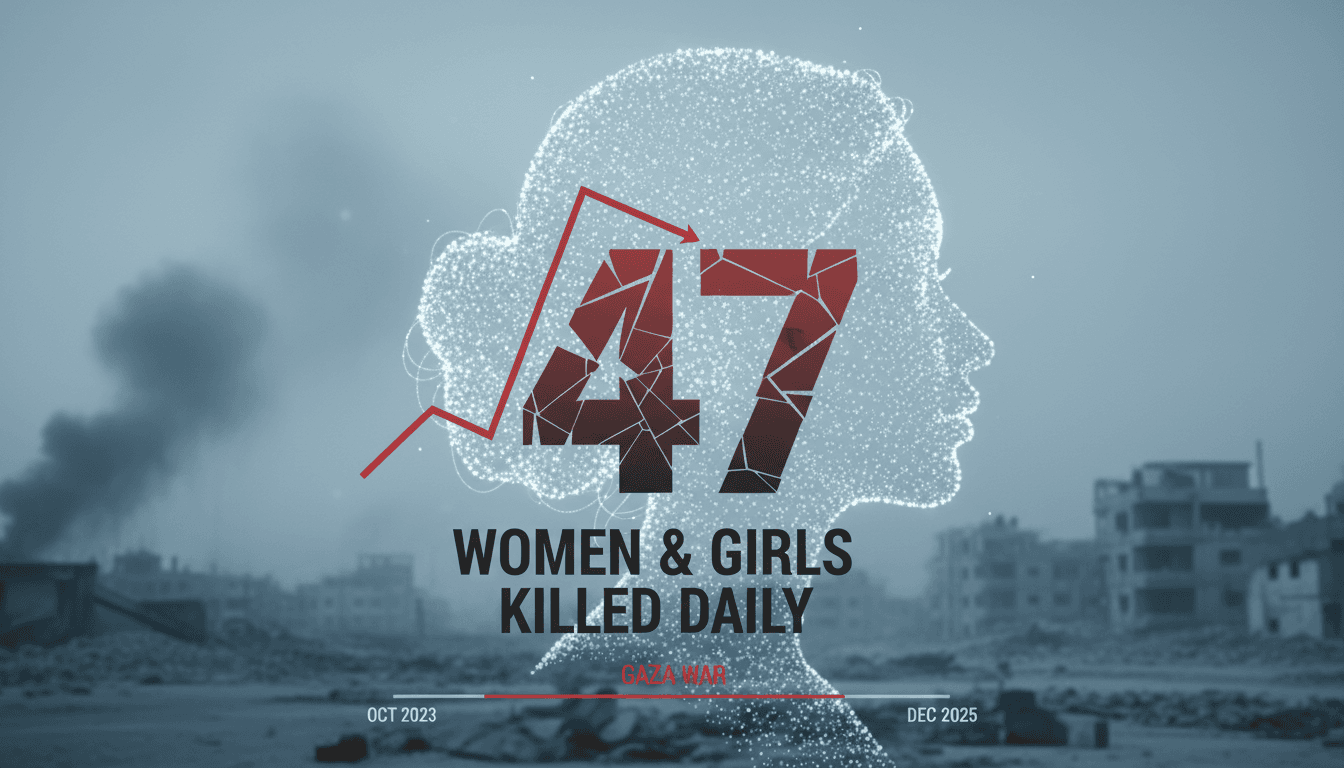
UN Women Reports Daily Average of 47 Women and Girls Killed in Gaza War
Here's what it means for you.
As a global operator, understanding the gendered impacts of conflict can reshape your approach to humanitarian efforts and corporate social responsibility.
The Vibe
The ongoing Gaza conflict has revealed a stark and troubling trend: an average of 47 women and girls are killed daily, highlighting a significant gender disparity in wartime casualties.
What it signals
This shift underscores the urgent need for gender-sensitive humanitarian responses in conflict zones. The disproportionate impact on women and girls not only reflects societal vulnerabilities but also signals a broader failure in crisis management and resource allocation. As global operators, you must recognize that addressing these disparities is crucial for maintaining social stability and fostering inclusive economic growth.
Why it's happening now
1. The escalation of violence following the October 7, 2023, Hamas attack has led to unprecedented levels of civilian casualties, particularly among women and children. 2. The collapse of essential services in Gaza has exacerbated the vulnerabilities of women and girls, leading to increased mortality rates. 3. A fragile ceasefire since October 2025 has not alleviated the humanitarian crisis, leaving many women and girls displaced and without support.
Who it's for (and who it leaves out)
The core beneficiaries of renewed humanitarian focus are women and girls in conflict zones, who face heightened risks and challenges. Conversely, the broader male population and those outside the immediate conflict area may not experience the same urgency for intervention.
What to watch next
1. Monitor shifts in international humanitarian aid directed specifically at women and girls in Gaza and similar conflict zones. 2. Observe the evolving discourse around gender equity in post-conflict recovery efforts, particularly in regions affected by prolonged violence.
Visual Directive: A striking infographic illustrating the daily toll of conflict on women and girls, emphasizing the urgent need for targeted humanitarian action.
The UN Women report highlights a staggering average of 47 women and girls killed daily in Gaza.
Continued international attention on gendered impacts of conflict will drive changes in humanitarian policies.
The long-term effects on regional stability and economic conditions remain uncertain as the ceasefire holds.
Regional and international reporting focused on Middle Eastern politics, diplomacy, and economics.
"Asharq Al-Awsat is a Saudi-owned international newspaper reflecting mainstream Gulf political perspectives."
— A47 Editor
UN: Average of 47 Women and Girls Killed Daily During Gaza War
The United Nations has reported that an average of 47 women and girls are killed daily during the ongoing conflict in Gaza, highlighting the severe toll the war is taking on vulnerable populations. This alarming statistic underscores the urgent human...
Arabic-language UAE newspaper coverage focused on domestic affairs, public institutions, business, society, and regional developments.
"Al Khaleej coverage generally reflects a mainstream UAE editorial lens with strong attention to public affairs, institutions, and regional developments."
— A47 Editor
الأمم المتحدة: 47 امرأة وفتاة قُتلن يومياً خلال حرب غزة
The United Nations reported that at least 47 women and girls are killed daily during the ongoing conflict in Gaza, highlighting the severe impact of the war on vulnerable populations. This alarming statistic was released by UN Women, emphasizing the ...
UAE-based English-language newspaper covering regional politics, economics, and global affairs.
"The National reflects Emirati policy perspectives while maintaining international editorial standards."
— A47 Editor
Women and girls comprise more than half of Gaza war dead
Recent reports indicate that women and girls make up more than half of the fatalities in the ongoing conflict in Gaza, highlighting the severe impact of the violence on vulnerable populations. This alarming statistic underscores the urgent humanitari...