
Majority of Israelis Oppose US-Iran Ceasefire Amid War Fatigue
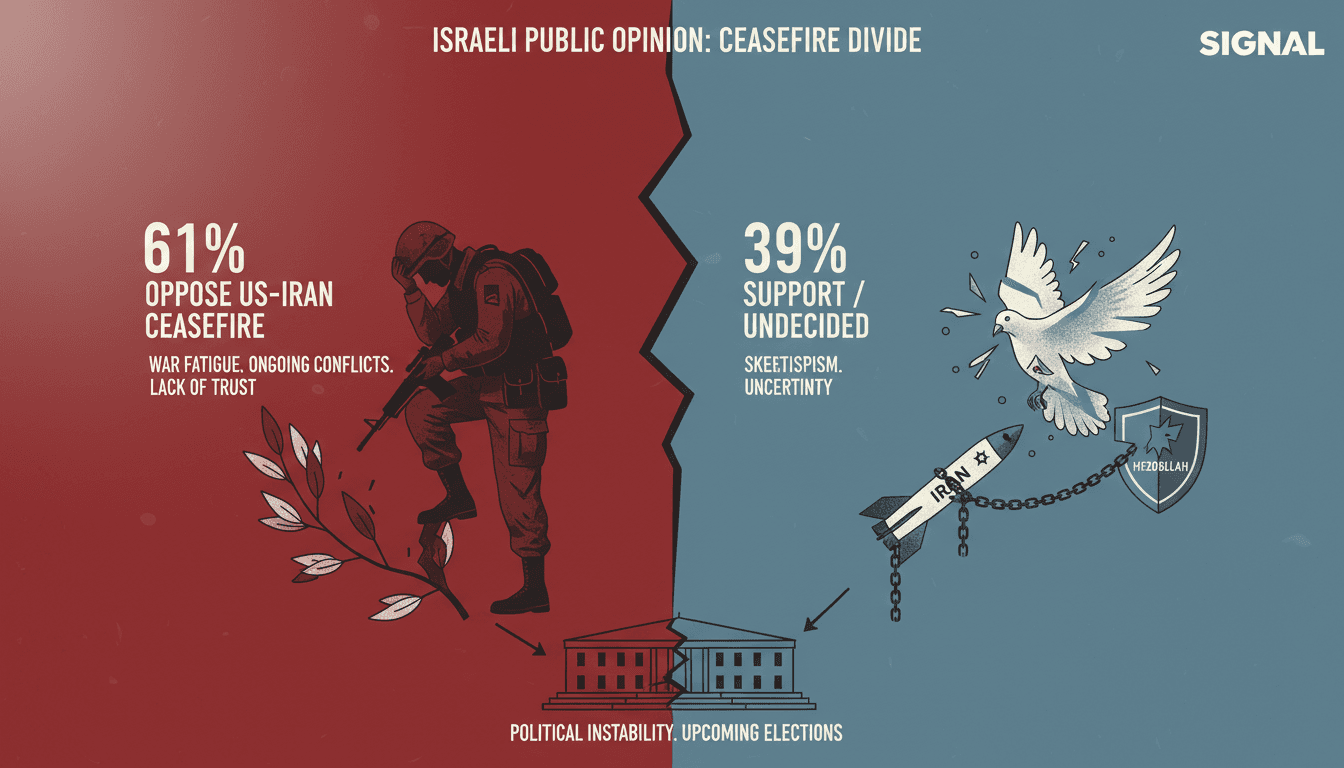
Here's what it means for you.
The ongoing conflict and public sentiment are reshaping the geopolitical landscape, impacting global markets and professional networks.
The Vibe
A palpable sense of war fatigue is settling over Israel, with a significant portion of the population expressing skepticism about the effectiveness of a recent ceasefire.
What it signals
This shift indicates a growing disillusionment with traditional power dynamics in the region. As public sentiment turns against prolonged conflict, it reflects a broader trend of questioning established military strategies and their economic implications. The opposition to the ceasefire suggests that many Israelis are prioritizing security over diplomatic gestures, which could influence future negotiations and alliances.
Why it's happening now
1. The prolonged nature of the Israel-Iran conflict has led to a collective sense of despair, with over one-third of Israelis feeling the weight of ongoing hostilities. 2. The recent ceasefire, brokered by Pakistan, has been met with skepticism, as nearly 61% of Israelis doubt its effectiveness against Iran and Hezbollah. 3. Political instability is rising, with Prime Minister Netanyahu's support waning, indicating that public opinion is shifting towards a more cautious approach to foreign policy.
Who it's for (and who it leaves out)
The core beneficiaries of this sentiment are those advocating for a more robust security policy, including military and defense sectors. Conversely, the voices of peace advocates and those favoring diplomatic resolutions are increasingly marginalized.
What to watch next
1. Monitor shifts in public opinion as upcoming elections approach, particularly regarding support for Netanyahu's Likud party. 2. Keep an eye on Gulf markets, especially in the UAE, as they react to fluctuations in oil prices and geopolitical stability.
Visual Directive: A striking infographic illustrating the divide in public opinion on the ceasefire and its implications for future Israeli policy.
A significant portion of Israelis are weary of the ongoing conflict and skeptical of ceasefire agreements.
Political dynamics in Israel may shift as public sentiment influences upcoming elections.
The long-term impact of this war weariness on regional stability and international relations remains to be seen.
International coverage of politics, culture, and current affairs.
"BBC News is widely regarded as a reputable international news organization, known for its impartial tone and public service mandate."
— A47 Editor
Israelis war-weary but most oppose Iran ceasefire, poll suggests
A recent poll indicates that while Israelis are increasingly weary of ongoing conflicts, a significant majority oppose a ceasefire with Iran, reflecting concerns about the effectiveness of military actions against Hezbollah and Iran.
Regional coverage and analysis focused on politics, diplomacy, and business across the Middle East.
"Al-Monitor is known for analytical reporting on Middle East politics and policy developments."
— A47 Editor
Israelis oppose Iran ceasefire, divided over whether to respect it, poll says
A recent poll conducted by the Hebrew University of Jerusalem reveals that nearly two-thirds of Israelis oppose the ceasefire agreement between the U.S. and Iran, which was brokered by Pakistan. The survey indicates a division among the public regard...
Regional and international reporting focused on Middle Eastern politics, diplomacy, and economics.
"Asharq Al-Awsat is a Saudi-owned international newspaper reflecting mainstream Gulf political perspectives."
— A47 Editor
Israelis Oppose Iran Ceasefire, Divided Over Whether to Respect It, Poll Says
A recent poll indicates that Israelis largely oppose a ceasefire with Iran and are divided on whether to respect it, reflecting deep-seated concerns about security and regional stability. This sentiment comes amid ongoing military tensions and confli...