
Mexico, Spain, and Brazil Call for Humanitarian Aid and Dialogue in Response to Cuba's Crisis
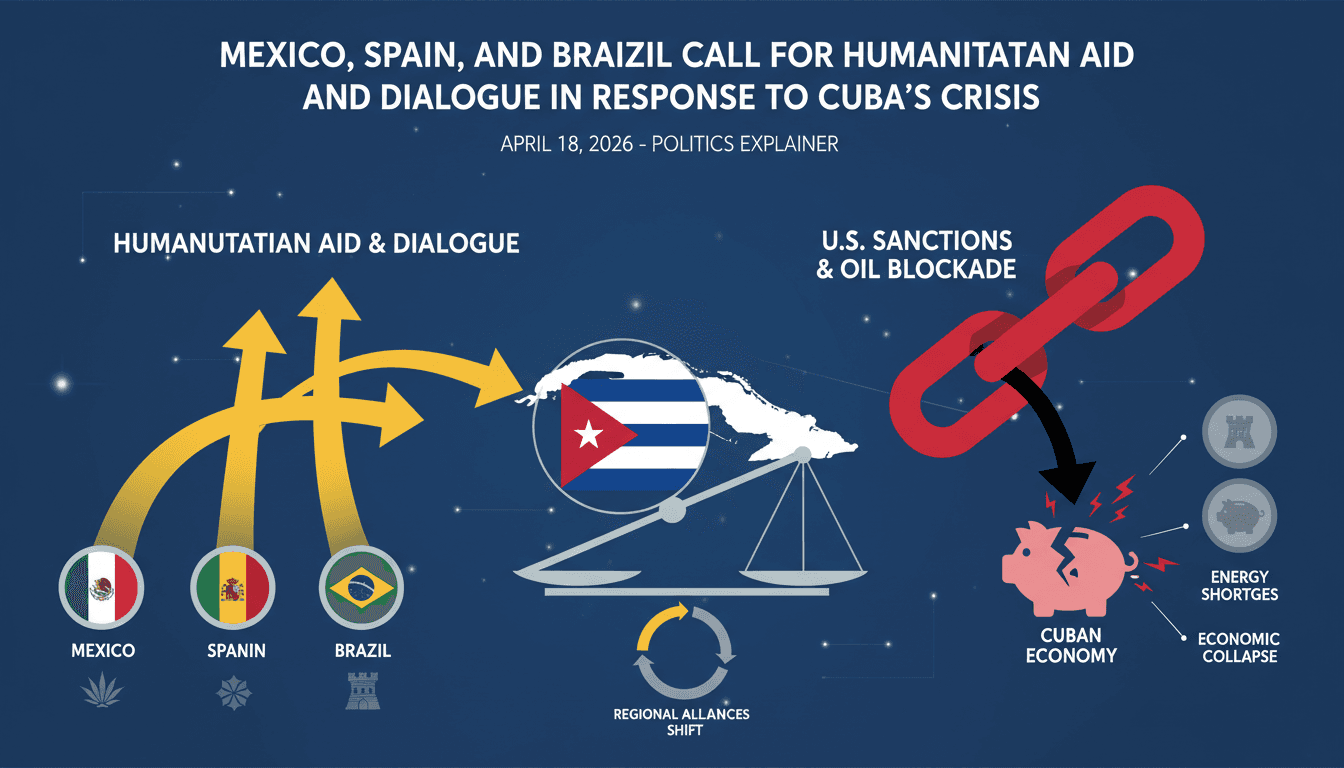
Here's what it means for you.
As global economic dynamics shift, the humanitarian crisis in Cuba may influence international relations and economic policies that could indirectly affect your professional landscape.
Why it matters
The joint statement from Mexico, Spain, and Brazil highlights a growing regional response to U.S. foreign policy, which could reshape diplomatic and economic ties in Latin America.
What happened (in 30 seconds)
- On April 18, 2026, Mexico, Spain, and Brazil issued a joint statement urging dialogue and increased humanitarian aid for Cuba amid a severe crisis.
- The crisis, exacerbated by a U.S. oil blockade, has led to widespread energy shortages, food scarcity, and a mass exodus of over one million Cubans since 2021.
- Cuban President Díaz-Canel affirmed the country's defiance against U.S. threats while the international community, particularly Latin America, pushes back against U.S. interventions.
The context you actually need
- Cuba's economic collapse has roots in U.S. sanctions and geopolitical tensions, particularly regarding Venezuela, which has historically supplied oil to Cuba.
- The humanitarian situation has deteriorated significantly, with the UN warning of severe consequences for the Cuban population, including mental health impacts.
- The joint statement reflects a shift in Latin American diplomacy, emphasizing regional solidarity and a rejection of external pressures that violate sovereignty.
What's really happening
The humanitarian crisis in Cuba is a complex interplay of geopolitical tensions, economic sanctions, and regional diplomacy. Since early 2026, the U.S. has imposed an oil blockade aimed at crippling the Cuban economy by targeting Venezuelan oil shipments, which are crucial for Cuba's energy needs. This blockade has resulted in nationwide blackouts, fuel shortages, and food scarcity, pushing the Cuban economy to the brink of collapse.
In response to the escalating crisis, Mexico, Spain, and Brazil have taken a proactive stance by issuing a joint statement during the Barcelona summit. This declaration not only calls for increased humanitarian aid but also emphasizes the importance of dialogue in accordance with the UN Charter. The commitment to respect Cuban sovereignty and self-determination is a significant pivot in Latin American foreign policy, showcasing a united front against perceived U.S. aggression.
The Cuban government, led by President Miguel Díaz-Canel, has publicly rejected the U.S. actions and reaffirmed its resilience against external threats. This defiance is crucial as it signals to both domestic and international audiences that Cuba will not capitulate to external pressures. The situation is further complicated by the fact that over one million Cubans have left the island since 2021, driven by economic despair and humanitarian pressures, which has implications for both Cuba and the countries receiving these migrants.
The humanitarian aid pledged by Mexico, Spain, and Brazil is a critical lifeline for the Cuban population, but it also serves as a strategic move to counterbalance U.S. influence in the region. By stepping up to provide assistance, these countries are not only addressing immediate needs but also reinforcing their diplomatic ties with Cuba and positioning themselves as leaders in Latin American solidarity.
As the crisis unfolds, the international community is watching closely. The response from the U.S. remains uncertain, but the lack of immediate reaction suggests a potential shift in strategy or acknowledgment of the growing pushback from Latin American nations. The implications of this crisis extend beyond Cuba, as they may influence trade, migration patterns, and diplomatic relations across the region.
Who feels it first (and how)
- Cuban citizens: Directly impacted by shortages of food, fuel, and medical supplies, leading to deteriorating living conditions.
- Cuban diaspora: Increased remittances from abroad to support families back home, affecting financial flows and community dynamics.
- Latin American governments: Engaging in diplomatic maneuvers to assert regional autonomy and counter U.S. influence, impacting foreign policy strategies.
- International NGOs: Increased demand for humanitarian assistance and advocacy efforts to address the crisis, influencing funding and resource allocation.
What to watch next
- Aid delivery effectiveness: Monitor how quickly and efficiently the pledged humanitarian aid reaches Cuba and its impact on the population.
- U.S. policy response: Watch for any shifts in U.S. foreign policy towards Cuba and Venezuela, particularly regarding sanctions and diplomatic engagement.
- Migration trends: Keep an eye on migration patterns from Cuba as the crisis deepens, which could affect neighboring countries and international relations.
The humanitarian crisis in Cuba is severe, with widespread shortages and a significant exodus of citizens.
Mexico, Spain, and Brazil will continue to coordinate humanitarian efforts and advocate for dialogue.
The U.S. government's next steps in response to the joint statement and the evolving situation in Cuba.
Frequently Asked Questions
- Why it matters?
- The joint statement from Mexico, Spain, and Brazil highlights a growing regional response to U.S. foreign policy, which could reshape diplomatic and economic ties in Latin America.
- What happened (in 30 seconds)?
- On April 18, 2026, Mexico, Spain, and Brazil issued a joint statement urging dialogue and increased humanitarian aid for Cuba amid a severe crisis. The crisis, exacerbated by a U.S. oil blockade, has led to widespread energy shortages, food scarcity, and a mass exodus of over one million Cubans since 2021. Cuban President Díaz-Canel affirmed the country's defiance against U.S. threats while the international community, particularly Latin America, pushes back against U.S. interventions.
- What's really happening?
- The humanitarian crisis in Cuba is a complex interplay of geopolitical tensions, economic sanctions, and regional diplomacy. Since early 2026, the U.S. has imposed an oil blockade aimed at crippling the Cuban economy by targeting Venezuelan oil shipments, which are crucial for Cuba's energy needs. This blockade has resulted in nationwide blackouts, fuel shortages, and food scarcity, pushing the Cuban economy to the brink of collapse. In response to the escalating crisis, Mexico, Spain, and Braz
- Who feels it first (and how)?
- Cuban citizens: Directly impacted by shortages of food, fuel, and medical supplies, leading to deteriorating living conditions. Cuban diaspora: Increased remittances from abroad to support families back home, affecting financial flows and community dynamics. Latin American governments: Engaging in diplomatic maneuvers to assert regional autonomy and counter U.S. influence, impacting foreign policy strategies. International NGOs: Increased demand for humanitarian assistance and advocacy eff
- What to watch next?
- Aid delivery effectiveness: Monitor how quickly and efficiently the pledged humanitarian aid reaches Cuba and its impact on the population. U.S. policy response: Watch for any shifts in U.S. foreign policy towards Cuba and Venezuela, particularly regarding sanctions and diplomatic engagement. Migration trends: Keep an eye on migration patterns from Cuba as the crisis deepens, which could affect neighboring countries and international relations.
Top international stories selected by The Guardian editors.
"The Guardian is known for its progressive editorial stance and in-depth analysis."
— A47 Editor
Sincere dialogue needed to ease Cuba’s ‘grave humanitarian crisis’, say Mexico, Spain and Brazil
Mexico, Spain, and Brazil have issued a joint statement expressing deep concern over the severe humanitarian crisis in Cuba, calling for sincere and respectful dialogue to address the situation. The statement highlights the ongoing pressure faced by ...
Pan-Arab news coverage spanning politics, business, sports, and regional affairs.
"Asharq Al-Awsat reflects a broad Arab editorial perspective with strong attention to regional geopolitics."
— A47 Editor
إسبانيا والمكسيك والبرازيل تحض على إجراء «حوار قائم على الاحترام» مع كوبا
Spain, Mexico, and Brazil expressed deep concern on Saturday regarding the dire situation in Cuba, which has been under pressure from U.S. President Donald Trump for several months. The three countries are advocating for a dialogue based on respect w...
Global news coverage with extensive reporting on Middle Eastern conflicts and geopolitics.
"Al Jazeera is a Qatar-based broadcaster known for wide regional coverage and alternative perspectives."
— A47 Editor
Mexico, Spain and Brazil call for Cuba’s sovereignty to be protected
Mexico, Spain, and Brazil have jointly called for the protection of Cuba's sovereignty, emphasizing that the future of the Cuban people should be determined by themselves amid ongoing pressure from the United States. The three nations have pledged to...
Comprehensive coverage of Middle Eastern and global issues.
"Al Jazeera is a prominent voice from the Global South, especially the Middle East, with an emphasis on underreported stories."
— A47 Editor
Mexico, Spain and Brazil call for Cuba’s sovereignty to be protected
Mexico, Spain, and Brazil have jointly called for the protection of Cuba's sovereignty, emphasizing that the future of the Cuban people should be determined by themselves amid ongoing pressure from the United States. The three nations have pledged to...