
Lebanon Faces Acute Food Insecurity Crisis Amid Iran-Israel-Hezbollah Conflict
Here's what it means for you.
The ongoing food insecurity crisis in Lebanon could impact global supply chains and remittances, affecting expatriates and businesses worldwide.
Why it matters
This crisis highlights the fragility of food security in conflict zones and its ripple effects on international markets and humanitarian efforts.
What happened (in 30 seconds)
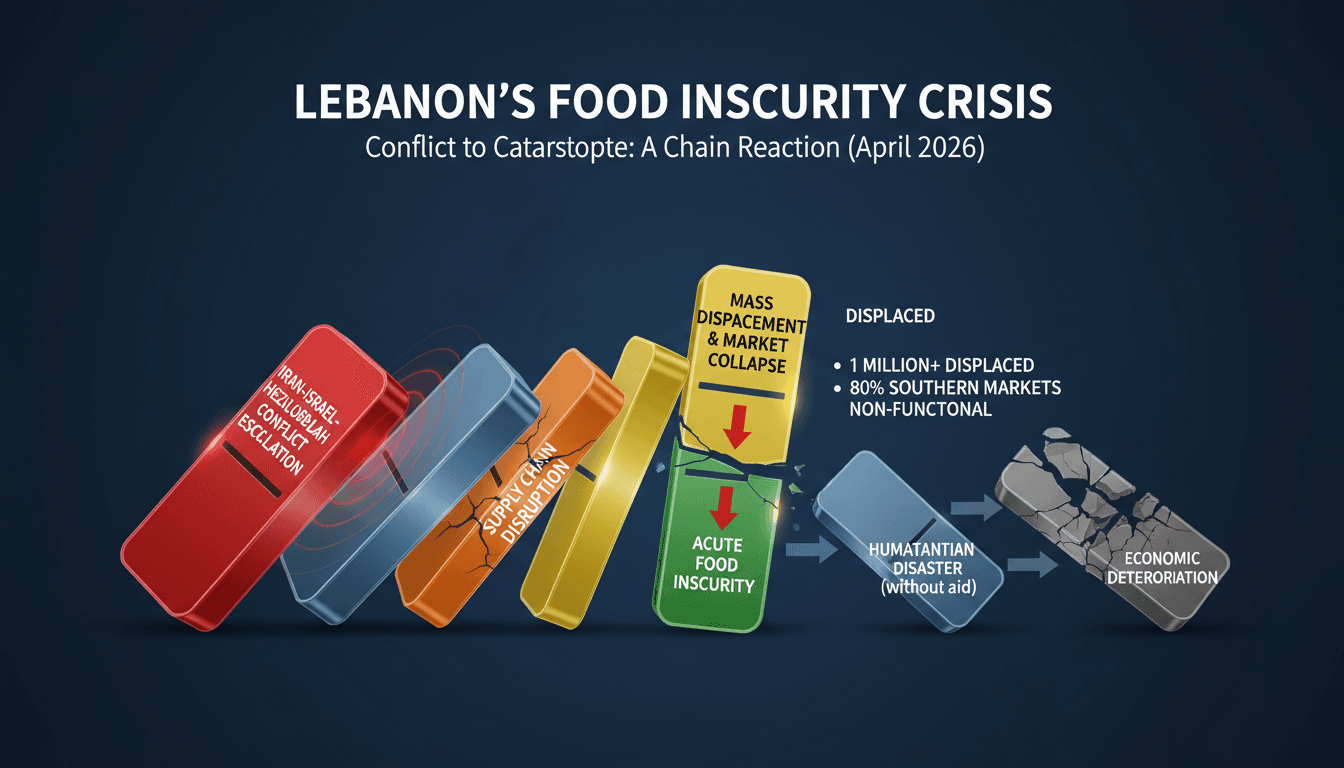
- Lebanon is facing acute food insecurity as of April 2026, exacerbated by the ongoing conflict involving Iran, Israel, and Hezbollah.
- Over 1 million people have been displaced, with 80% of southern markets non-functional and food prices surging.
- United Nations agencies warn of rapid deterioration without sustained humanitarian aid, as the situation continues to worsen.
The context you actually need
- Lebanon's food security vulnerabilities stem from a 2019 economic collapse, currency devaluation, and recurrent conflicts, including the recent Israel-Hezbollah war.
- A 2024-2025 drought significantly reduced agricultural output in key regions, compounding existing challenges.
- The current conflict has disrupted regional supply chains for essential goods, including grains and fuel, leading to skyrocketing prices and humanitarian crises.
What's really happening
The acute food insecurity crisis in Lebanon is a direct consequence of a complex interplay of geopolitical tensions and local economic failures. The backdrop of Lebanon's 2019 economic collapse has left the country vulnerable, with a devalued currency and a weakened agricultural sector. The situation deteriorated further with the 2024-2025 drought, which severely impacted crop yields in the Bekaa Valley and southern regions.
In March 2026, hostilities reignited following Hezbollah's retaliatory rocket attacks in response to the assassination of Iran's supreme leader. This escalation not only reignited the Israel-Hezbollah conflict but also drew in broader regional tensions involving the U.S. and Iran. The conflict has disrupted supply chains crucial for Lebanon, halting imports of grains, fuel, and fertilizers, which are vital for both food production and distribution.
As of April 2026, the World Food Programme reported that 80% of markets in southern Lebanon are non-functional, leading to a critical shortage of food supplies. Prices for essential items have surged, with vegetable prices increasing by 20% and bread by 17% since early March. The displacement of over 1 million people has compounded the crisis, as families struggle to find basic necessities amid ongoing violence and instability.
The Lebanese government, in collaboration with international organizations like the Food and Agriculture Organization (FAO) and the World Food Programme (WFP), is attempting to address the crisis through farmland rehabilitation and livelihood restoration initiatives. However, the scale of the humanitarian need far exceeds current aid levels, with the WFP warning of significant funding shortfalls.
This crisis not only threatens the immediate well-being of those in Lebanon but also has broader implications for global food security and economic stability. As Lebanese expatriates in places like Dubai face reduced remittances—reportedly down by 5%—the economic strain on families back home intensifies, limiting their ability to purchase food and other essentials.
Who feels it first (and how)
- Lebanese families: Struggling to afford basic food items due to skyrocketing prices and reduced income from remittances.
- Local farmers: Facing loss of income and agricultural output due to market disruptions and conflict.
- International aid organizations: Strained by increasing demand for assistance amid funding shortfalls.
- Expatriates in the UAE: Experiencing financial strain as remittances decrease, impacting their ability to support families in Lebanon.
What to watch next
- Aid funding levels: Watch for announcements regarding humanitarian aid pledges from international organizations and governments, as these will directly impact the crisis's severity.
- Market recovery indicators: Monitor the reopening of markets and stabilization of food prices in southern Lebanon, which will signal potential recovery.
- Conflict developments: Keep an eye on the escalation or de-escalation of hostilities between Israel, Hezbollah, and Iran, as this will significantly influence the humanitarian situation.
The humanitarian crisis in Lebanon is worsening, with over 1 million displaced and critical food shortages.
Without sustained international aid, the situation will continue to deteriorate, leading to increased suffering and potential regional instability.
The long-term effects of the conflict on Lebanon's economy and food security remain uncertain, particularly regarding future agricultural output and market stability.
Frequently Asked Questions
- Why it matters?
- This crisis highlights the fragility of food security in conflict zones and its ripple effects on international markets and humanitarian efforts.
- What happened (in 30 seconds)?
- Lebanon is facing acute food insecurity as of April 2026, exacerbated by the ongoing conflict involving Iran, Israel, and Hezbollah. Over 1 million people have been displaced, with 80% of southern markets non-functional and food prices surging. United Nations agencies warn of rapid deterioration without sustained humanitarian aid, as the situation continues to worsen.
- What's really happening?
- The acute food insecurity crisis in Lebanon is a direct consequence of a complex interplay of geopolitical tensions and local economic failures. The backdrop of Lebanon's 2019 economic collapse has left the country vulnerable, with a devalued currency and a weakened agricultural sector. The situation deteriorated further with the 2024-2025 drought, which severely impacted crop yields in the Bekaa Valley and southern regions. In March 2026, hostilities reignited following Hezbollah's retaliator
- Who feels it first (and how)?
- Lebanese families: Struggling to afford basic food items due to skyrocketing prices and reduced income from remittances. Local farmers: Facing loss of income and agricultural output due to market disruptions and conflict. International aid organizations: Strained by increasing demand for assistance amid funding shortfalls. Expatriates in the UAE: Experiencing financial strain as remittances decrease, impacting their ability to support families in Lebanon.
- What to watch next?
- Aid funding levels: Watch for announcements regarding humanitarian aid pledges from international organizations and governments, as these will directly impact the crisis's severity. Market recovery indicators: Monitor the reopening of markets and stabilization of food prices in southern Lebanon, which will signal potential recovery. Conflict developments: Keep an eye on the escalation or de-escalation of hostilities between Israel, Hezbollah, and Iran, as this will significantly influence th
Arabic-language digital news outlet covering UAE, regional, and international developments with broad general-news coverage.
"Al Ain News coverage typically blends UAE-focused reporting with wider Arab regional and international news."
— A47 Editor
لبنان على حافة الجوع.. الحرب تفاقم أزمة الأمن الغذائي وترفع الأسعار
The World Food Programme reported that Lebanon is facing a worsening food security crisis due to Israeli attacks, which have disrupted supply chains and caused prices to rise significantly in the country.
Arabic-language UAE newspaper coverage focused on domestic affairs, public institutions, business, society, and regional developments.
"Al Khaleej coverage generally reflects a mainstream UAE editorial lens with strong attention to public affairs, institutions, and regional developments."
— A47 Editor
الأمم المتحدة تحذِّر من انعدام متسارع للأمن الغذائي في لبنان
The United Nations World Food Programme warned on Friday of a rapidly increasing food insecurity crisis in Lebanon amid the ongoing conflict between Hezbollah and Israel. This alarming situation highlights the dire humanitarian conditions faced by th...
Arabic-language coverage of political affairs and current events.
"Okaz political coverage typically follows mainstream Saudi framing on national and regional affairs."
— A47 Editor
بعد كارثة النزوح.. «الأغذية العالمي» يحذر: أزمة أمن غذائي تهدد لبنان
The World Food Programme has warned that Lebanon is facing a severe food security crisis due to disruptions in the supply of goods caused by ongoing conflict. Alison Oman, the WFP director in Lebanon, stated that the situation is rapidly evolving fro...
Pan-Arab news coverage spanning politics, business, sports, and regional affairs.
"Asharq Al-Awsat reflects a broad Arab editorial perspective with strong attention to regional geopolitics."
— A47 Editor
«الأغذية العالمي»: لبنان يواجه أزمة أمن غذائي حادة جراء الحرب
The World Food Programme announced that Lebanon is facing a severe food security crisis due to the disruption of goods supplies caused by the ongoing war. This situation highlights the critical impact of conflict on essential resources and the well-b...