
UAE Calls for UN Action to Ensure Free Navigation in Strait of Hormuz Amid Iran Conflict
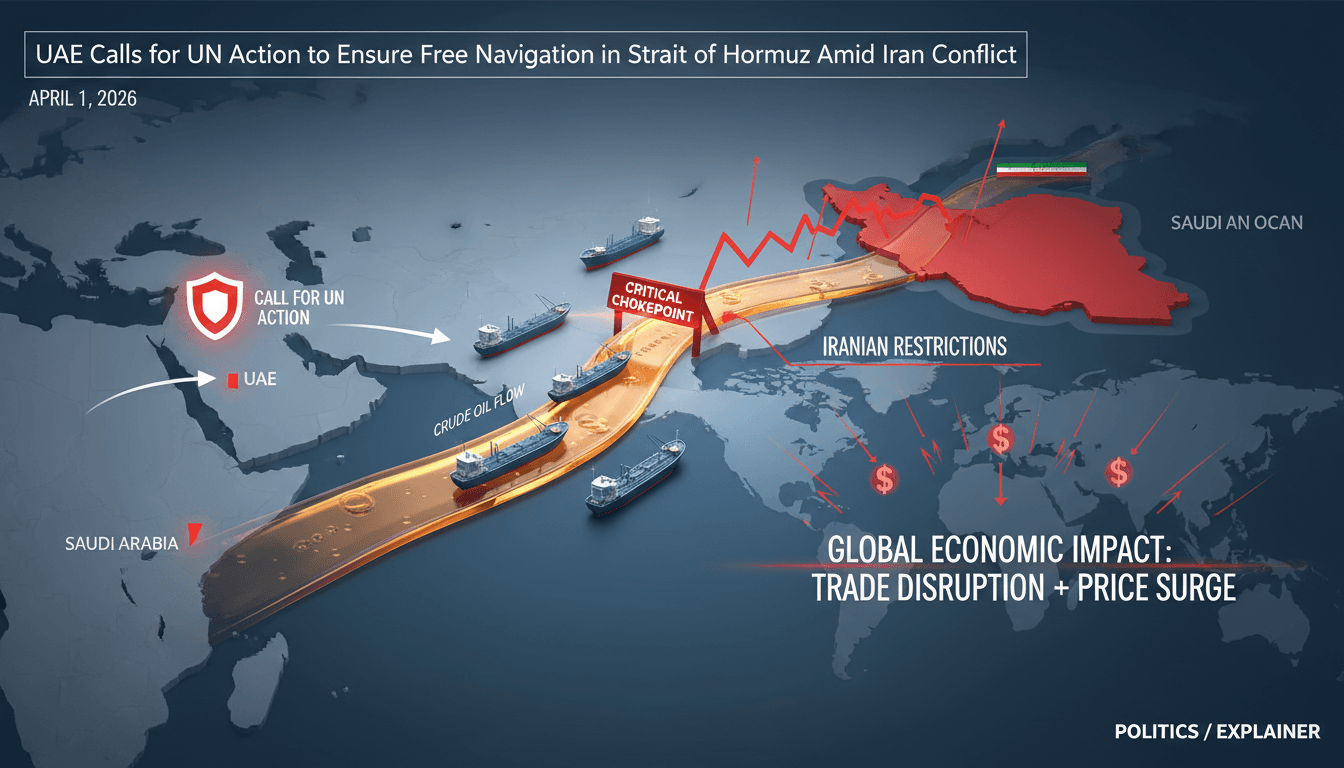
Here's what it means for you.
If you're involved in global trade or energy markets, the UAE's stance on the Strait of Hormuz could significantly impact shipping routes and oil prices.
Why it matters
The Strait of Hormuz is a critical chokepoint for approximately 20% of the world's oil supply, making its accessibility vital for global energy stability.
What happened (in 30 seconds)
- On April 1, 2026, the UAE urged the UN Security Council to authorize measures to ensure the Strait of Hormuz remains open to international navigation.
- Iran has imposed restrictions on the strait amid escalating tensions with the US and Israel, effectively limiting access to non-adversary vessels.
- UAE officials have emphasized that the strait "cannot be weaponized" and must be included in any US-Iran settlement discussions.
The context you actually need
- The Strait of Hormuz separates Iran from the UAE and Oman and is vital for global oil trade, with about 20 million barrels per day passing through it in 2025.
- Tensions escalated following US and Israeli strikes on Iran on February 28, 2026, leading to Iranian retaliatory attacks on Gulf infrastructure.
- The UAE's economic stability is at risk due to the conflict, as its crude output has declined over 50%, prompting the government to announce a $270 million relief package for affected businesses and residents.
What's really happening
The UAE's recent diplomatic maneuvers regarding the Strait of Hormuz are rooted in a complex interplay of regional security dynamics, economic imperatives, and international law. The strait is not only a vital maritime corridor for oil shipments but also a strategic geopolitical flashpoint. With Iran's recent military actions, including missile and drone strikes targeting Gulf energy infrastructure, the UAE's call for international intervention reflects a broader concern over the potential for Iran to leverage control over this critical waterway.
The UAE's appeal to the UN Security Council underscores its commitment to maintaining open navigation and its willingness to seek multilateral support against unilateral actions by Iran. By invoking Chapter VII of the UN Charter, which allows for the use of force to maintain or restore international peace and security, the UAE is signaling a readiness to escalate its diplomatic efforts into more assertive actions if necessary. This move is not merely about regional security; it is also about safeguarding the UAE's economic interests, which are heavily tied to oil exports and global trade.
The backdrop of the conflict includes a significant rise in oil prices, driven by fears of supply disruptions. The UAE's crude oil output has been severely impacted, leading to a ripple effect on its economy and prompting the government to implement relief measures for its citizens. This situation illustrates the interconnectedness of geopolitical tensions and economic realities, where a single conflict can have far-reaching implications for global markets.
As the UAE aligns itself more closely with the US and other Gulf states, the regional balance of power is shifting. The UAE's diplomatic strategy aims to solidify its role as a key player in the Gulf, advocating for collective security measures while navigating the complexities of its relationship with Iran. The ongoing situation highlights the delicate balance between asserting national interests and fostering regional stability.
Who feels it first (and how)
- Energy companies: Increased operational costs and potential disruptions in oil supply chains.
- Shipping industries: Higher insurance premiums and rerouting of vessels to avoid conflict zones.
- Consumers: Rising fuel prices impacting transportation and goods costs.
- Local businesses in the UAE: Economic strain from reduced oil exports and increased living costs due to inflation.
What to watch next
- UN Security Council actions: Any resolutions or sanctions could alter the dynamics of the conflict and impact global oil prices.
- Iran's military responses: Further Iranian aggression or retaliatory actions could escalate tensions and disrupt shipping routes.
- Global oil price fluctuations: Watch for spikes in oil prices as markets react to news from the region, affecting economies worldwide.
The Strait of Hormuz is critical for global oil trade, with 20% of the world's oil passing through it.
Increased military presence in the region as countries respond to the UAE's call for action.
The long-term implications of the UAE's diplomatic strategy on its relationship with Iran and regional stability.
Frequently Asked Questions
- Why it matters?
- The Strait of Hormuz is a critical chokepoint for approximately 20% of the world's oil supply, making its accessibility vital for global energy stability.
- What happened (in 30 seconds)?
- On April 1, 2026, the UAE urged the UN Security Council to authorize measures to ensure the Strait of Hormuz remains open to international navigation. Iran has imposed restrictions on the strait amid escalating tensions with the US and Israel, effectively limiting access to non-adversary vessels. UAE officials have emphasized that the strait "cannot be weaponized" and must be included in any US-Iran settlement discussions.
- What's really happening?
- The UAE's recent diplomatic maneuvers regarding the Strait of Hormuz are rooted in a complex interplay of regional security dynamics, economic imperatives, and international law. The strait is not only a vital maritime corridor for oil shipments but also a strategic geopolitical flashpoint. With Iran's recent military actions, including missile and drone strikes targeting Gulf energy infrastructure, the UAE's call for international intervention reflects a broader concern over the potential for I
- Who feels it first (and how)?
- Energy companies: Increased operational costs and potential disruptions in oil supply chains. Shipping industries: Higher insurance premiums and rerouting of vessels to avoid conflict zones. Consumers: Rising fuel prices impacting transportation and goods costs. Local businesses in the UAE: Economic strain from reduced oil exports and increased living costs due to inflation.
- What to watch next?
- UN Security Council actions: Any resolutions or sanctions could alter the dynamics of the conflict and impact global oil prices. Iran's military responses: Further Iranian aggression or retaliatory actions could escalate tensions and disrupt shipping routes. Global oil price fluctuations: Watch for spikes in oil prices as markets react to news from the region, affecting economies worldwide.
Arabic-language digital news outlet covering UAE, regional, and international developments with broad general-news coverage.
"Al Ain News coverage typically blends UAE-focused reporting with wider Arab regional and international news."
— A47 Editor
الإمارات: مضيق هرمز ينبغي أن يظل مفتوحا أمام الجميع
The United Arab Emirates expressed deep regret over the inability of the Security Council to adopt a clear framework for international cooperation aimed at ending the illegal attacks and threats posed by Iran against the global economy.
Arabic-language UAE newspaper coverage focused on domestic affairs, public institutions, business, society, and regional developments.
"Al Khaleej coverage generally reflects a mainstream UAE editorial lens with strong attention to public affairs, institutions, and regional developments."
— A47 Editor
الإمارات تأسف لإخفاق مجلس الأمن في اعتماد قرار يحمي الملاحة في مضيق هرمز
The United Arab Emirates expressed deep regret over the failure of the United Nations Security Council to adopt a clear framework for international cooperation to protect navigation in the Strait of Hormuz. This decision comes amid ongoing tensions i...
Pan-Arab news coverage spanning politics, business, sports, and regional affairs.
"Asharq Al-Awsat reflects a broad Arab editorial perspective with strong attention to regional geopolitics."
— A47 Editor
مجلس الأمن يفشل في اعتماد قرار حول مضيق هرمز
The United Nations Security Council failed to adopt a resolution concerning the Strait of Hormuz on Tuesday, as proposed by Bahrain on behalf of Saudi Arabia, Bahrain, Jordan, the UAE, Qatar, and Kuwait. This failure highlights the ongoing geopolitic...