
Honda Motor to Close Gasoline Plants in China Amid EV Transition
Here's what it means for you.
If you’re in the automotive sector or a consumer of Honda vehicles, this shift signals a significant transition towards electric vehicles that could reshape market dynamics.
Why it matters
Honda's decision to cut gasoline production capacity reflects broader trends in the automotive industry, emphasizing the urgent pivot to electric vehicles amid declining sales.
What happened (in 30 seconds)
- Honda Motor Co. plans to close a gasoline-powered joint venture plant with Guangzhou Automobile Group in June 2026 and potentially another with Dongfeng Motor Group in 2027.
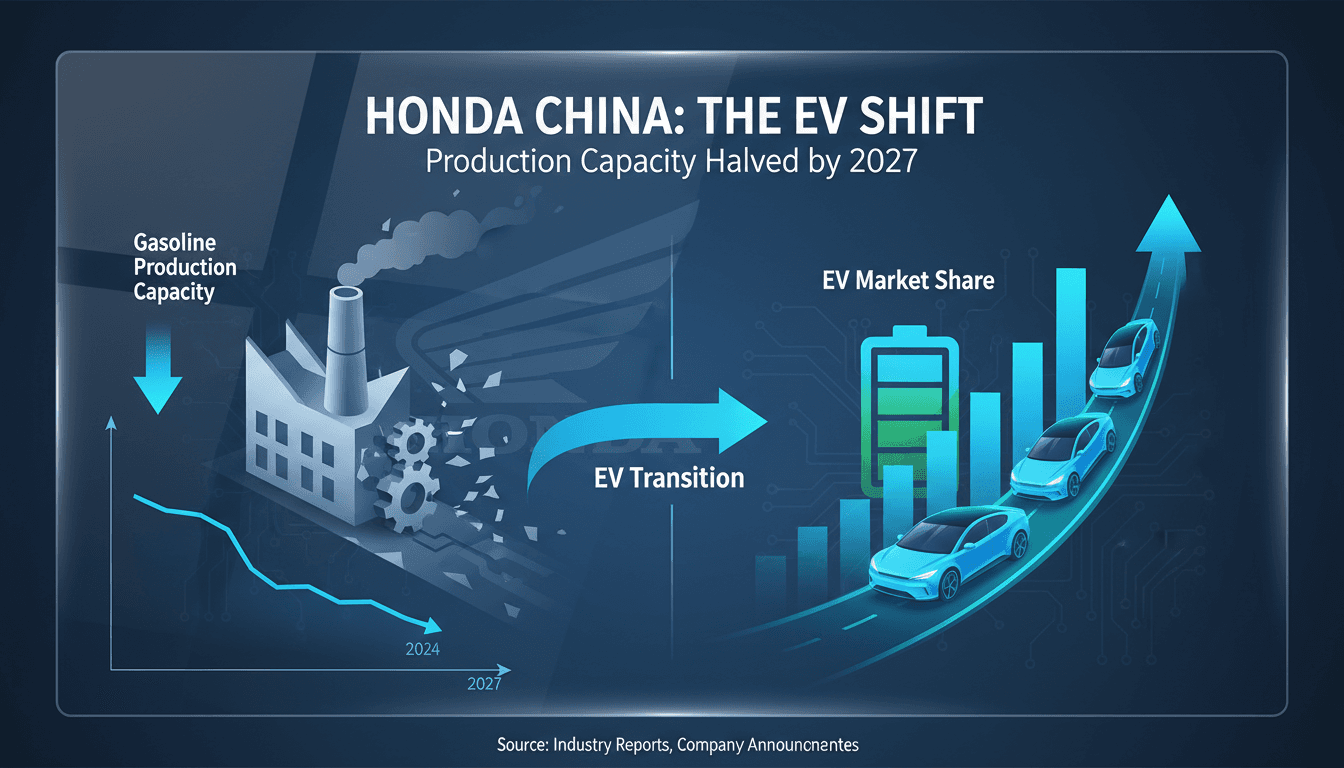
- The closures aim to halve petrol car production capacity from 960,000 to 480,000 units annually, aligning with a strategic shift towards electric vehicles.
- Total production capacity will reduce to approximately 720,000 vehicles per year as part of a broader $15.7 billion restructuring initiative.
The context you actually need
- Honda has experienced a 34% drop in retail sales in March 2026 compared to the previous year, continuing a five-year decline.
- Competition from domestic electric vehicle manufacturers like BYD is intensifying, with new energy vehicles (NEVs) surpassing 54% market penetration in 2025.
- Previous production halts at GAC and Dongfeng plants in 2024 were due to weak demand and semiconductor shortages, indicating ongoing challenges in the market.
What's really happening
Honda's planned closures of its gasoline-powered joint venture plants in China are a direct response to a confluence of market pressures and strategic realignment. The automotive landscape in China has shifted dramatically, with electric vehicles (EVs) gaining significant traction. In 2025, NEVs accounted for over 54% of the market, a clear signal that consumer preferences are rapidly evolving towards more sustainable options. This shift is not merely a trend; it reflects a fundamental change in how vehicles are powered and perceived.
The decision to halve petrol car production capacity from 960,000 to 480,000 units annually is a strategic move to align with these market realities. Honda's restructuring plan, which involves a $15.7 billion investment, underscores the urgency of this transition. The closures of the Guangzhou and potentially the Wuhan plants are not isolated incidents but part of a broader strategy to pivot away from gasoline vehicles, which are increasingly viewed as outdated in the face of rising environmental concerns and regulatory pressures.
Moreover, Honda's sales figures illustrate the urgency of this shift. A 34% decline in retail sales in March 2026 compared to the previous year highlights the challenges the company faces in maintaining its market position amidst fierce competition from domestic players like BYD. These competitors have not only captured market share but have also set new standards for innovation and consumer expectations in the EV space.
The closures also reflect Honda's response to previous operational challenges, including production halts due to weak demand and semiconductor shortages. These factors have compounded the difficulties in maintaining profitability in a declining market. By reducing its reliance on gasoline vehicles, Honda aims to streamline operations and focus on developing electric models that resonate with the changing consumer landscape.
In summary, Honda's decision to close its gasoline plants is a calculated response to declining sales, competitive pressures, and a strategic pivot towards electric vehicles. This move is indicative of a larger trend within the automotive industry, where traditional manufacturers are being forced to adapt or risk obsolescence.
Who feels it first (and how)
- Automotive workers in Guangzhou and Wuhan may face job losses due to plant closures.
- Consumers looking for gasoline vehicles may find fewer options as production capacity decreases.
- Investors in Honda and its joint ventures may experience fluctuations in stock prices as the market reacts to restructuring news.
What to watch next
- Sales performance of Honda's electric vehicles: Monitoring how well Honda's EVs perform in the market will indicate the success of its strategic pivot.
- Market share changes among competitors: Observing shifts in market share, particularly for domestic EV manufacturers like BYD, will provide insights into the competitive landscape.
- Regulatory developments in China: Any new policies promoting electric vehicles or penalizing gasoline cars could further influence Honda's strategy and market dynamics.
Honda plans to close its gasoline-powered joint venture plants in China.
The automotive market will continue to shift towards electric vehicles, impacting traditional gasoline car manufacturers.
The long-term effects on Honda's overall market position and profitability remain to be seen.
Frequently Asked Questions
- Why it matters?
- Honda's decision to cut gasoline production capacity reflects broader trends in the automotive industry, emphasizing the urgent pivot to electric vehicles amid declining sales.
- What happened (in 30 seconds)?
- Honda Motor Co. plans to close a gasoline-powered joint venture plant with Guangzhou Automobile Group in June 2026 and potentially another with Dongfeng Motor Group in 2027. The closures aim to halve petrol car production capacity from 960,000 to 480,000 units annually, aligning with a strategic shift towards electric vehicles. Total production capacity will reduce to approximately 720,000 vehicles per year as part of a broader $15.7 billion restructuring initiative.
- What's really happening?
- Honda's planned closures of its gasoline-powered joint venture plants in China are a direct response to a confluence of market pressures and strategic realignment. The automotive landscape in China has shifted dramatically, with electric vehicles (EVs) gaining significant traction. In 2025, NEVs accounted for over 54% of the market, a clear signal that consumer preferences are rapidly evolving towards more sustainable options. This shift is not merely a trend; it reflects a fundamental change in
- Who feels it first (and how)?
- Automotive workers in Guangzhou and Wuhan may face job losses due to plant closures. Consumers looking for gasoline vehicles may find fewer options as production capacity decreases. Investors in Honda and its joint ventures may experience fluctuations in stock prices as the market reacts to restructuring news.
- What to watch next?
- Sales performance of Honda's electric vehicles: Monitoring how well Honda's EVs perform in the market will indicate the success of its strategic pivot. Market share changes among competitors: Observing shifts in market share, particularly for domestic EV manufacturers like BYD, will provide insights into the competitive landscape. Regulatory developments in China: Any new policies promoting electric vehicles or penalizing gasoline cars could further influence Honda's strategy and market dyna
Market-moving headlines impacting equities, bonds, and related risk assets.
"Real-time catalysts and volatility drivers across indices and sectors."
— A47 Editor
Honda plans JV plant closures in China, Reuters reports
Honda is reportedly planning to close its joint venture plants in China, a move that reflects the ongoing challenges faced by the automotive industry in the region. This decision comes amid a broader decline in demand for vehicles, particularly affec...
Business, markets, economy, and corporate news with strong UAE and regional relevance.
"Emirates 24|7 business coverage tends to center UAE markets, property, regulation, and regional economic developments."
— A47 Editor
Honda to shut down at least one joint venture car plant in China Honda to shut down at least one joint venture car plant in China
Honda Motor plans to reduce petrol car production in China by shutting down at least one of its joint venture plants this year, with the possibility of closing another next year. This decision comes as the company faces challenges in the world's larg...